
Flashcards
Ceramics
Cards in this deck (23)
- 1Technical Ceramics DefinitionA material based on inorganic non metallic compounds and produced by the action of heat.
- 2Aspects to conciderShrinkage, typically 20% linear – 50% - --- Volume shrinkage
- Firing Temperatures 1200C to >2000C
- Fired in air or in a protective atmosphere (nitrogen/argon)
- Pressure assisted and protected firing for highest grades (Zirconia, Silicon Nitride)
- Additives to assist processing, firing, modify the structure or chemistry - 3High-Performance CeramicsHighly specialised materials with superior mechanical, electrical, thermal, biological, and chemical properties.
- 4Conventional Ceramics- Traditional clay and porcelain products for home use (Tableware - Sanitary ware)
- Heat-resistant and friction-resistant
products for industry. - 5Technical/ Engineering/Industrial Ceramics- Technology began from Porcelain / Chinaware processes – Porous, Glazed
-Firstly for Electrical Ceramics – insulators for power applications, fuses, insulators etc
-Typically Oxides, Carbides, Nitrides of Al, Si, B, Mg, Zr Silicates, Alumina, Zirconia, Silicon Carbide, Silicon Nitride, Boron Carbide etc
- Fired to reach high density - some types can be porous (filters, catalysts)
- High performance materials developed in the last few decades – still developing
- The ceramic materials are VERY different to each other – need good advice in specifying type and design - 6Why use a Ceramic? Mixed oxide and metallic bonding- Corrosion resistance
- Hardness
- Dimensional stability – not ductile
- High temperature capability
- Controlled porosity is possible
- Processing routes offer shape complexity
Special attributes:
- Electrically insulating or conducting
- Controlled dielectric properties – for radar/microwave, capacitors
- Piezoelectric properties
- Non-magnetic properties
- Ion-conducting properties - 7Disadvantages- Brittle = Lack of ductility/toughness
- Defect sensitive
- Thermal shock sensitive
- Localised stresses to be avoided
- Unpredictable strength (especially tensile)
- As-fired tolerances larger than in conventional machining
- Post-firing machining relatively slow and costly
- Joining not straightforward
- Restrictions on size and shape
- Properties may depend on size and shape
- Few minimum performance specifications
- Higher unit costs especially for small runs - 8Manufacturing Process- Powder preparation
- Forming
- sinthering
- Hard machining
- End product - 9Powder Preparation- Millling
- Spray drying - 10Shape forming- Die presssing
- Isopressing
-Tape casting_ injection moulding
- Slip casting
- Excrusion - 11Grinding – Diamond or Silicon Carbide Abrasives- Gives very accurate polished and ground surfaces
- Micron –submicron tolerances possible - 12Finishing processesMetallising
Glazing
Brazing
Soldering - 13MetallisingMetallising with high adhesion strength systems for brazing and soldering
e.g. electronics, semiconductor and TV/radio transmission - 14GlazingMelting glasses on the outside to ensure a cleaner/sealed outer surface
- 15Brazing Soldering-Brazing with Copper/silver and gold brazes – leak tight high strength seals
- Soldering with tins etc for connectivity
Ceramic circuit boards - 16Design Sequence- Specify materials requirements
- Look at tolerances, dimensions
- Investigate available manufacturing methods
- Check costs and viability
- Are their joining problems?
- Often takes 1-2 years to develop a new ceramic product – several design iterations
-Lead times 8-12 weeks typically for new parts - 17Good and Bad Design Guide- avoid sudden changes in cross-sectional area
- minimise notch-like structures
- provide large contact areas
- Avoid corners and sharp edges, round inner edges and cut outs
- avoid long, sharp edges (risk of breakage)
- do not locate holes too close together - 18Piezo Applications- High-energy ultrasonic transducers
-Hydroacoustic applications, sonar applications
- Material testing
- Medical applications
- Gas ignition
- Level meters, flow meters
-Ultrasonic transmitters and receivers
-Force, pressure, and acceleration sensors
-Actuators - 19Metallized aluminum oxide ceramics uses- Surge arresters
- High-energy rectifier and thyristor housings
- Vacuum components - 20Future Ceramic Developments- Composites technologies – ceramic fibres in ceramic matrix or Cermets.
- Ceramic Coatings
- Miniaturisation / Biomimetic – MEMS
- Nanotechnology, powders and grain size / boundary engineering
- Energy Harvesting
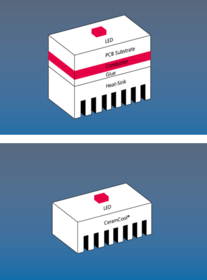
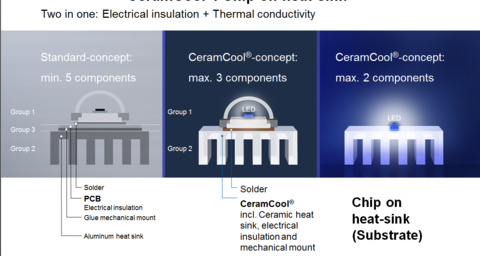
For tougher ceramics, cheaper advanced ceramics, smaller electronics and sensors, fuel cells, cheap renewable energy. - 21Benefits of CeramCool®-Simplified System
-No TCE Mismatch
-Electric Isolation
-No Corrosion
-Superb Thermal Management
-Air and Liquid Based
-Miniaturization
-Long – Term Stability
-Approved Material Combinations
-Reflow Possible - 22CeramCool®: Chip on heat-sink
- 23Nanotherm Thermal Performance
Information
- Description
- Bachelors Materials & manufacturing Flashcards on Ceramics, created by Natalia Rehakova on 12/05/2016.
- Created by
- Natalia Rehakova
- Views
- 2
- Rating