
Materials: Classification and Uses
756 resources created by 624 users
This Materials: Classification and Uses page on GoConqr gathers community-made mind maps, flashcards, quizzes and notes on woods, metals, plastics, composites, ceramics, adhesives and smart materials. It's built for school students revising a topic and teachers after ready-made material. There are over 700 resources here, including more than 10 quizzes and over 600 mind maps, with many aimed at GCSE and A-level Design and Technology. Pick a topic, try a quiz to spot your gaps, then build your own maps and flashcards.
Select topic
- Raw and processed materials12
- Material structure and bonding5
- Properties and testing of materials131
- Material selection and sustainability10
- Wood and wood products75
- Paper and cardboard6
- Metals and alloys142
- Plastics and polymers80
- Ceramics, glass and stone30
- Composite materials13
- Smart and advanced materials12
- Manufacturing and joining processes13
Top Materials: Classification and Uses resources
-
40 cardsY8 Tools and materials Tools used in the Y8 Resistant Materials Project
-
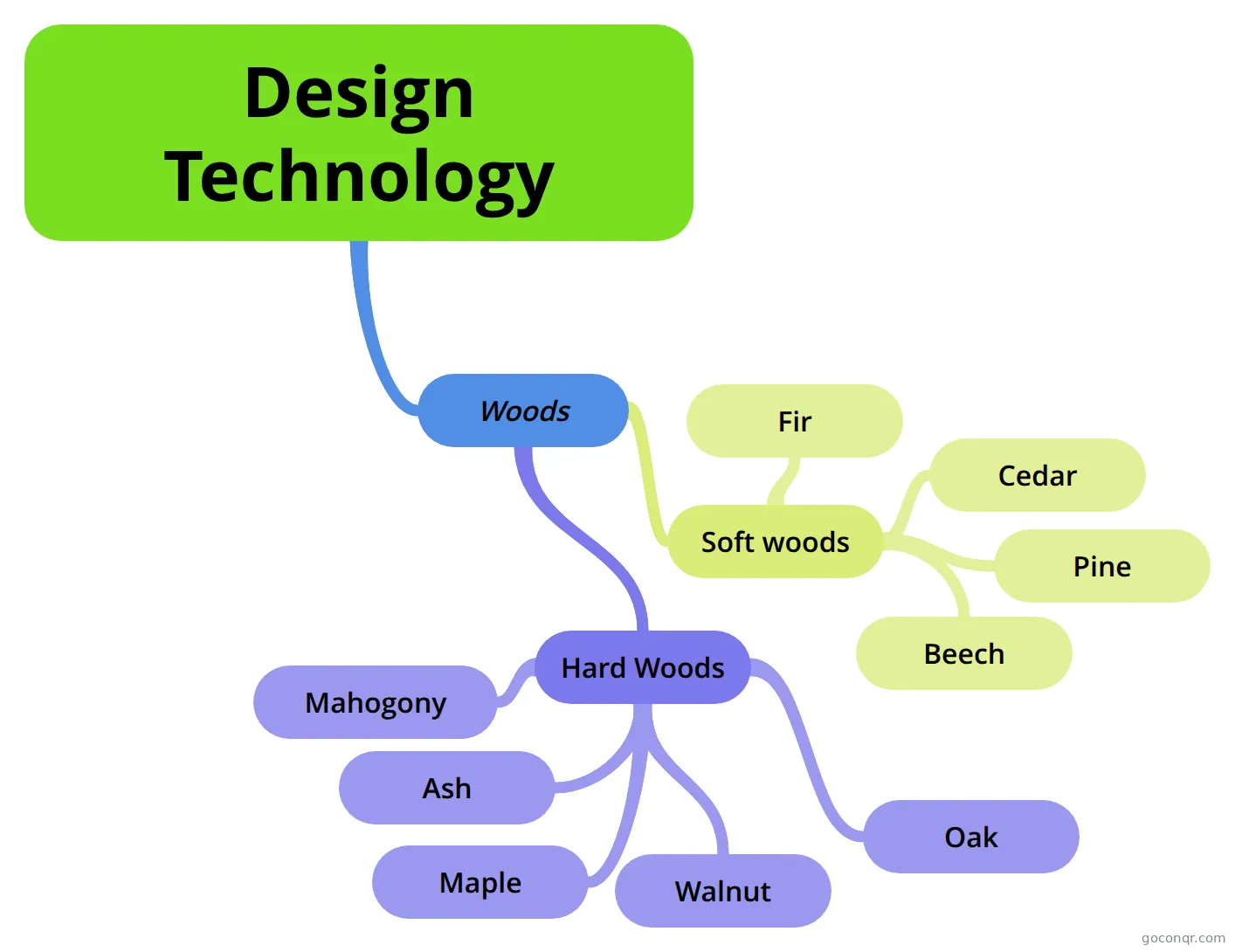
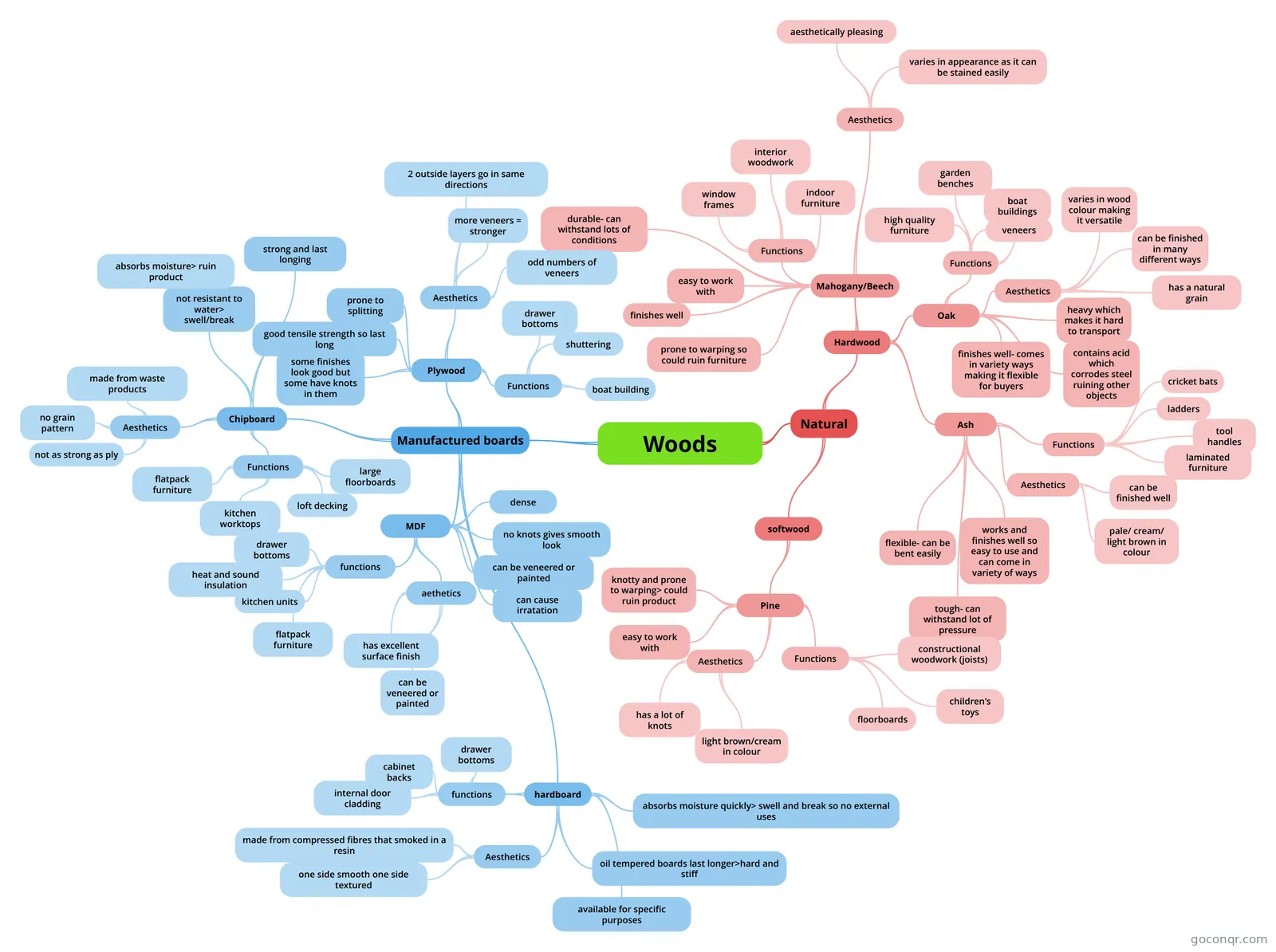 Mind map Woods
-
26 cardsA LEVEL PRODUCT DESIGN - WOODS Softwoods: Scots Pine (properties)
-
6 cardsMaterials - Composites and Laminates
-
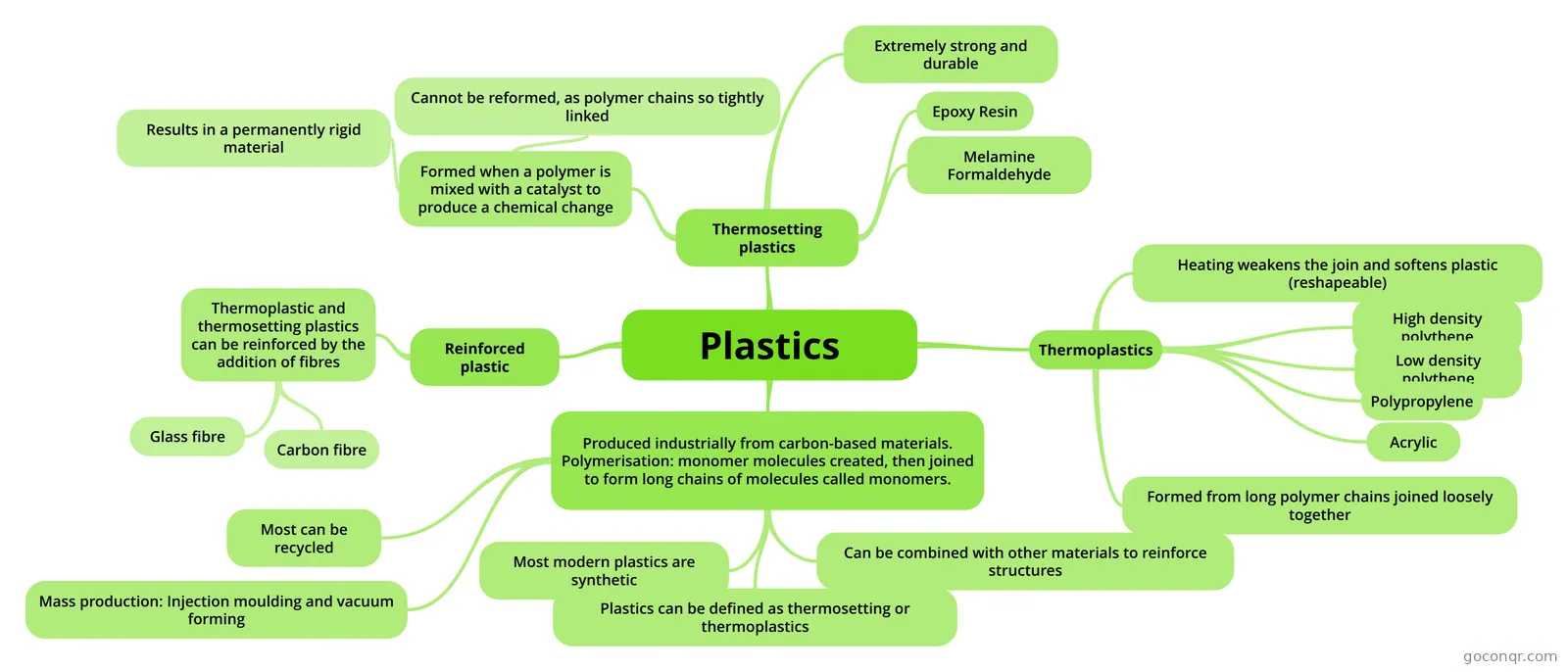 Mind map Plastics Product Design GCSE AQA Specification
-
40 cardsRaw materials You have to decide if the material is raw or processed
-
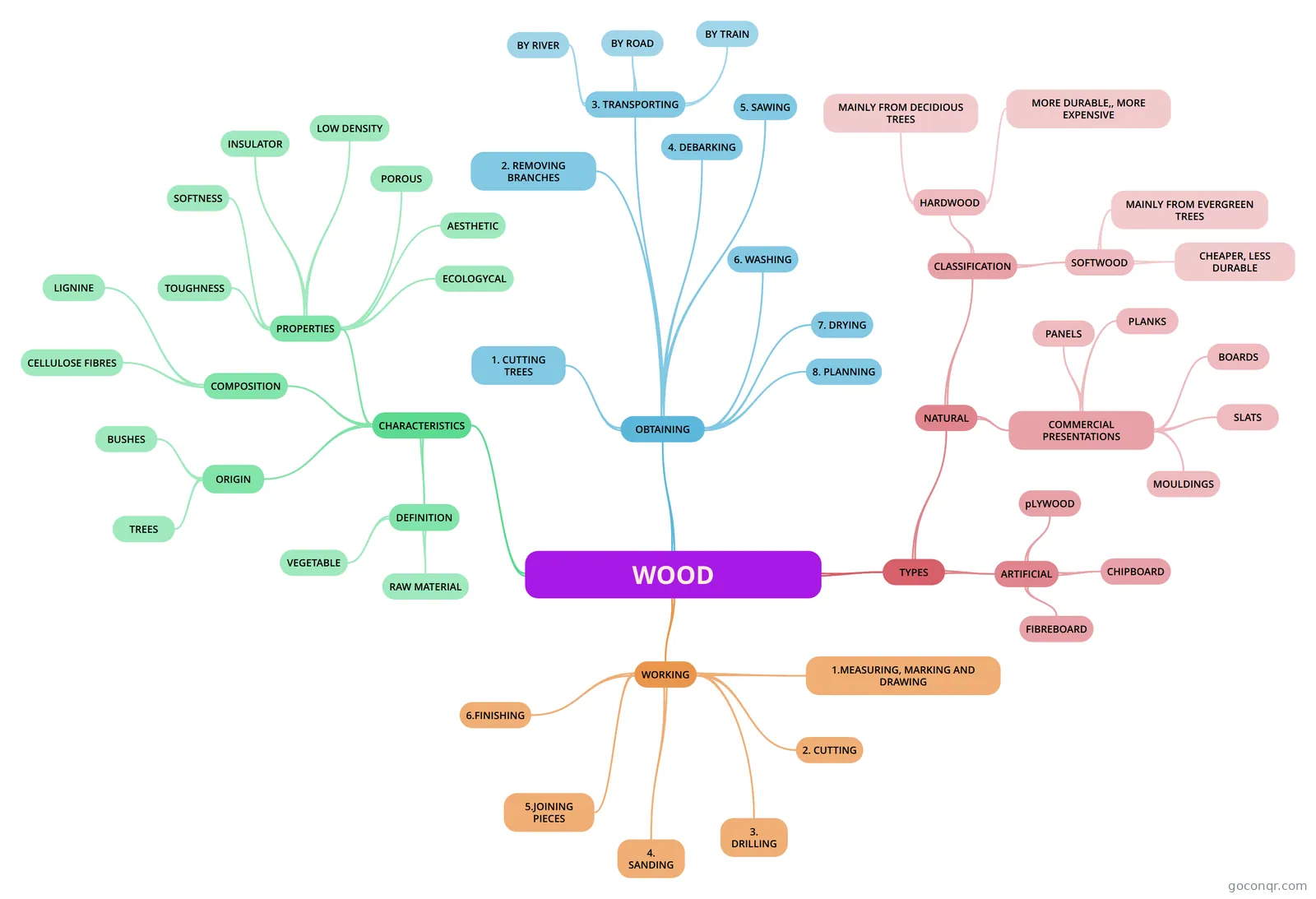 Mind map WOOD
-
 Mind map Natural woods and man-made board
Quizzes
See all 26 quizzes-
7 questionsChapter 4 Label each diagram.
-
8 questionsEXAM TEST: INDUSTRIAL PROCESS What is the function of the cambium in tree growth?
-
46 questionsClassification of plastics
-
20 questionsSenior Design Chapter 5: Selecting Materials The quantity that characterizes the behavior of a material in response to an external or applied force is c...
-
26 questionsMaterial Science midterm - easy Choose all primary material selection issues
-
20 questionsPlastics Test Choose a property related to heat and electricity
-
10 questionsPaper, Card and Board What has a high quality bleached surface and is ideal for printing on?
-
10 questionsChipboard / particle board Chipboard is a completely different type of product to particle board
Mind maps
See all 645 mind maps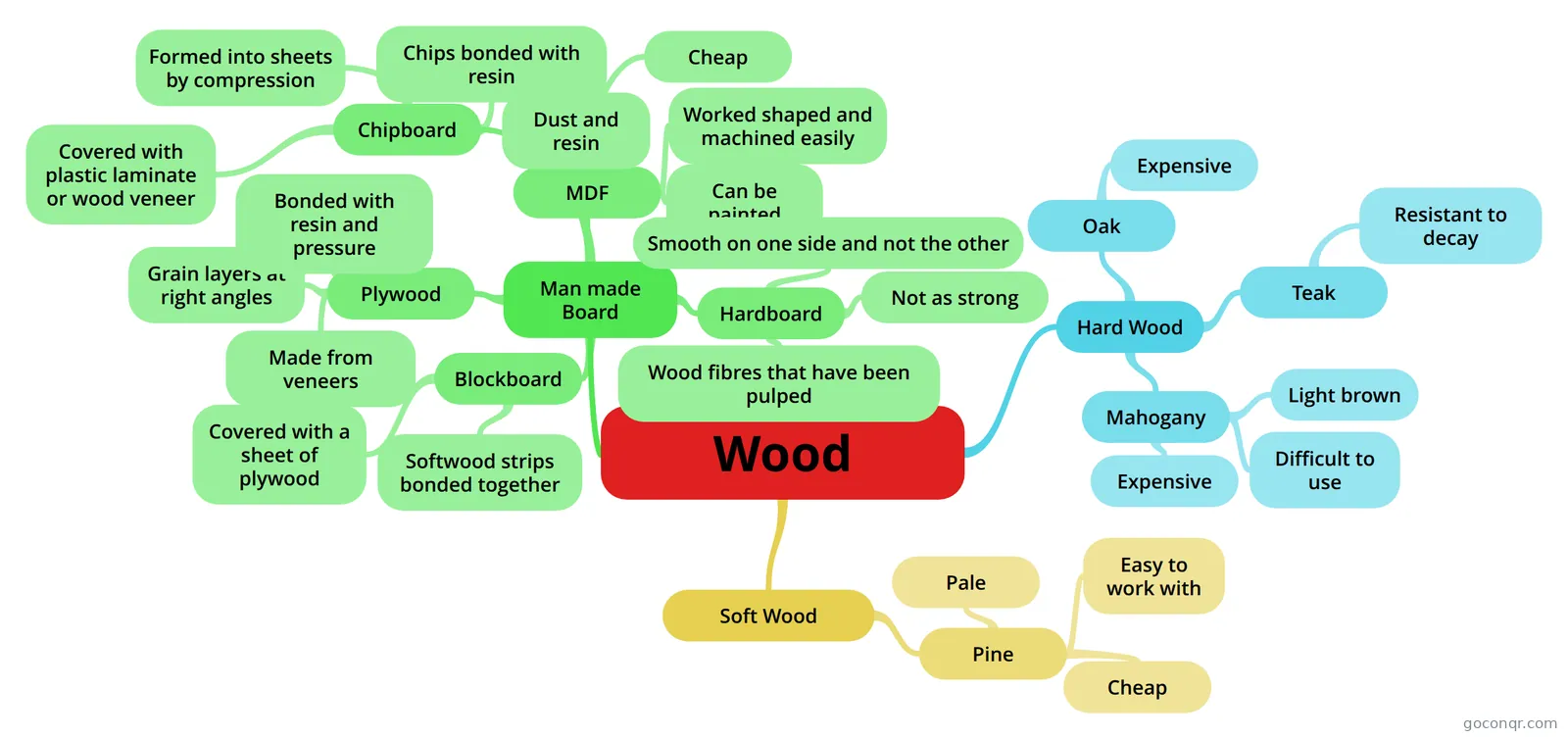
Flashcards
See all 59 flashcards-
40 cardsY8 Tools and materials Tools used in the Y8 Resistant Materials Project
-
26 cardsA LEVEL PRODUCT DESIGN - WOODS Softwoods: Scots Pine (properties)
-
6 cardsMaterials - Composites and Laminates
-
40 cardsRaw materials You have to decide if the material is raw or processed
-
97 cardsProduct Design HSE (Health and safety executive) 'five steps to risk assessment'
-
27 cardsA LEVEL PRODUCT DESIGN - PLASTICS Thermoplastics: ABS (properties)
-
58 cardsMaterials Structure What are crystalline structures?
-
72 cardsFIRST EVALUATION REVIEW: MATERIALS BEHAVIOR MSE (Materials Science and Engineering)
Flowcharts
Notes
See all 18 notes-
Alloying Metals/Thermal Equilibrium Diagrams What are Alloys/Why are metals alloyed. Alloys are combinations or mixtures of elements. Metals are alloyed to improve on properties of pure metals such as hardness, strength, corrosion resistance, etc. Alloys may beh...
-
graphics products- techniques & processes Finishing techniques Laminating Laminating involves applying a transparent plastic film to paper and board.Useslaminating has a wide range of uses across the whole spectrum of printed products due to its properties- f...
-
Science test review Mechanical constraints Compression- crushing or squeezing forces( like crushing a can) Tension- pulling or stretching force(like pulling a rope) Torsion- Twisting something( like ringing out a towel) Deflection- Bendi...
-
Metals Point 1 Metals:substances form minerals which contain one or more metallic elements. Many uses and key elements in much things Point 1.1
-
Chapter 1 Materials & Components Materials & Components Types of woods:HardwoodsSoftwoods Hardwoods:Comes from deciduous trees (leaf-loosing trees).Slow growing, making them denser.Expensive
-
TENSILE TESTING GRAPHS - created from Mind Map Stress Strain Graphs Load Extension Graphs Key Words
-
Fracture - created from Mind Map Ductile Fracture Brittle Fracture Polymers exhibit a variety of behaviors when stress applied
-
Untitled_2 pros of manufactured boards- available in large sheets- good dimensional stability- easily decorated- easily bent and shaped- waste products can be used to make manufactured boards cons of manufactured boards- blunt t...
Slides
Topics in Materials: Classification and Uses
More Engineering and technology (general or other) topics
About Materials: Classification and Uses
GoConqr OriginalWhat this unit covers
The unit groups resources on how materials are sorted and what they are used for. Woods are the biggest strand. The Woods mind map splits natural wood into hardwood, with oak used for high quality furniture, garden benches, boat building and veneers. Other maps cover softwoods, man-made boards and engineered timber.
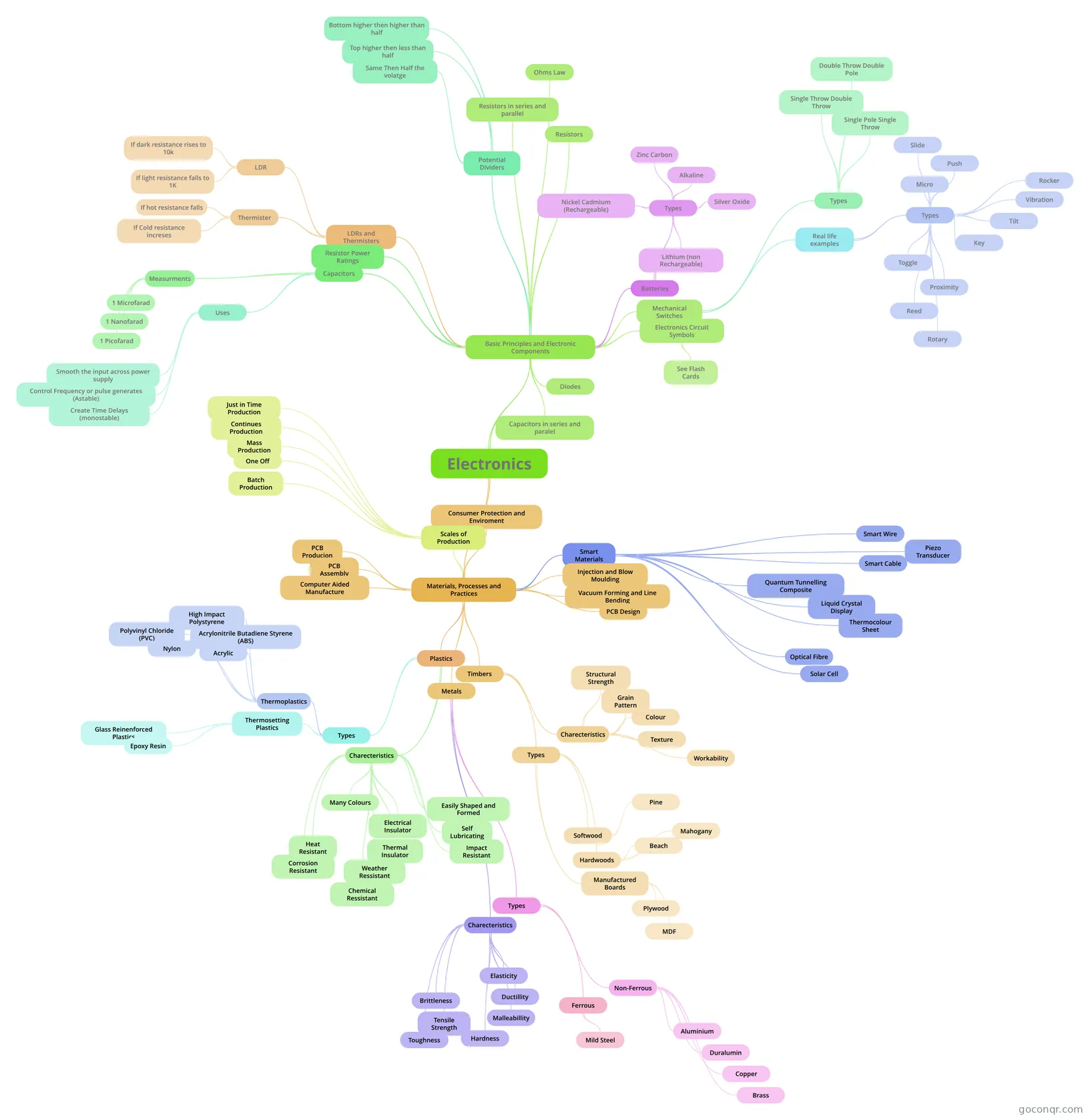
Plastics, metals, composites, adhesives, paper and board, ceramics and smart materials each have their own maps or flashcard decks too.
Where to start
- Begin with a broad mind map such as Woods or Plastics. The plastics map separates thermoplastics from thermosetting plastics and reinforced plastic.
- Move to flashcards for detail. The A LEVEL PRODUCT DESIGN - WOODS deck gives properties and uses for softwoods such as Scots Pine, Parana Pine and Spruce.
- Use Materials - Composites and Laminates to learn plywood, blockboard, carbon fibre, GFRP, MDF and chipboard. Plywood, for example, is layers of veneer bonded with glue, each with its grain at 90° to the last.
- Look at the note on alloying metals to see why metals are alloyed to improve hardness, strength and corrosion resistance.
Using quizzes and maps together
Read a map first, then test yourself. The quizzes include Wood and plastic, Paper, Card and Board and Chipboard / particle board. Note what you miss, go back to the matching map or deck, and try the quiz again.
Most resources suit secondary school work, with GCSE Design and Technology, A-level Design and Technology and A-level Product Design all mentioned. Teachers can pick a map or deck to use in lessons or set as revision.
Where it sits
This unit belongs to the Materials strand within Engineering and technology (general or other). It is a good base before looking at processes, tools and electronics, which also appear in some listed maps.
Choose one material, open its map and then try a quiz, or make your own set of flashcards from what you find.
Frequently asked questions
Where should I start on this page?
Start with a mind map such as Woods or Plastics to get the overall picture. Then open a flashcard deck for detail, such as Materials - Composites and Laminates, and finish with a quiz like Wood and plastic to see what has stuck.
What do the mind maps cover?
They cover woods, plastics, metals, composites, adhesives, casting, forming methods, engineered timber and smart or modern materials. Some focus on uses and characteristics, such as Uses of Metals and Characteristics of Woods, so you can compare materials side by side.
Which exams do the resources suit?
Most of the resources are at secondary level. The listed ones mention GCSE Design and Technology, A-level Design and Technology and A-level Product Design. Check each resource's content against your own course, since they were made by GoConqr users.
Are the resources free to use?
Yes. Every resource here is free to open, study and take, with no account needed. They were made by GoConqr users, not by GoConqr itself. A free account also saves your quiz scores and lets you make your own quizzes, mind maps, flashcards and notes.
What if the topic I need is missing?
Try a nearby resource first. Material types overlap, so a plastics map or composites deck may cover what you need. You can also build your own mind map or flashcards on the missing topic and use them for revision.