
Flashcards
particles
Cards in this deck (49)
- 1In the atom which force keeps the electrons in the atom?there is an electrostatic force of attraction between the electron and the nucleus
- 2define isotopes?atoms which have the same number of protons and different number of neutrons in the nucleus
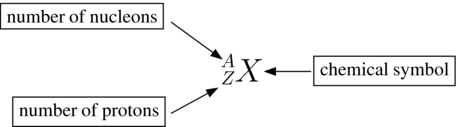
- 3label a nuclide notation
- 4formula for specific chargecharge / mass
unit is Ckg^-1 - 5which particle has the largest specific charge?electron
- 6what keeps the protons and neutrons in the nucleus?The strong nuclear force because it overcomes the electrostatic force of repulsion between the protons in the nucleus and keeps the protons and neutrons together.
- 7what the diameter of a small nucleus?1 Fm
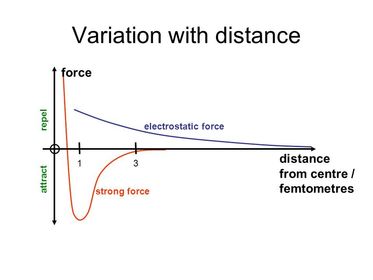
- 8tell me about the strong nuclear force?* if the separations of the nucleons are less than 0.5 Fm the strong nuclear force acts repulsive
* if its range is no more than from 0.5 to 3-4 Fm the strong nuclear force becomes attractive - 9particles relative massProton 1
Neutron 1
Electron 0.0005 - 10the range for electromagnetic repulsive forceits range is infinite
- 11graph of the strong nuclear force and electromagnetic force
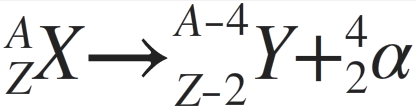
- 12alpha radiation decay equation
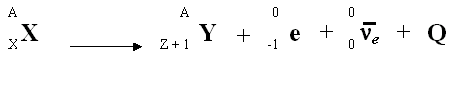
- 13beta minus decay equation
- 14Two objects that produce neutrinosthe sun emits neutrinos and beta plus decay
- 15what is gamma radiationits an electromagnetic radiation emitted by an unstable nucleus. it is uncharged and its emitted by a nucleus with too much energy.
- 16formula for wavelength
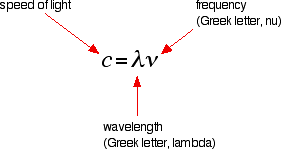
- 17define a photoneach photon is a wave packet of electromagnetic radiation. the energy of a photon is E= h x f
- 18Formula for photon energy
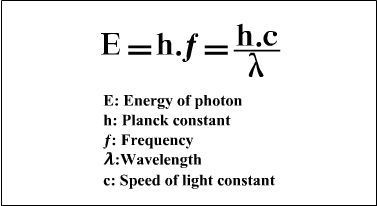
- 19formula for power of the beampower of the beam= n x h xf
- 20define anti matterantiparticles that each have the same rest mass, if charged have equal and opposite charge to its corresponding particle.
- 21beta plus decay equation

- 22when does beta minus decay take place?when a neutron changes into proton in an unstable nucleus with a neutron rich nucleus
- 23when does beta plus decay take place?when a proton changes into a neutron in an unstable necleus that is proton rich.
- 24when does annihilation occur?annihilation occurs when a particle and a corresponding antiparticle meet and their mass is converted into 2 gamma photons. the momentum before is 0 and the momentum after is 0 ( this is why the 2 gamma photons are produced
- 25can anti-atom be formedyes mate
- 26for annihilation what is the formula for the minimum energy of each photon produced?rest mass = h x f min
- 27how does pair production occur?when a gamma photon creates a particle and its corresponding antiparticle and vanishes in the process.
- 28For pair production what is the formula for the minimum energy of a photon needed ?2 rest mass = h x f min
- 29what is the exchange particle of the weak nuclear force?w bosons which are charged, have a non- zero rest mass and have a short range.
- 30explain electron capturea proton in proton-rich nuclei turns into a neutron as a result of interacting through the weak interaction with an inner shell electron from outside the nucleus. a neutrino is emitted
proton + electron -> neutron + ve
exchange particle is a +w boson to the right - 31which w boson decays into which beta decay?* the - w boson decays into beta minus decay
*the + w boson decays into the beta plus decay - 32how can we find new particlesusing accelerators that collide protons head-on with each other at high speed.
- 33what can a kaon decay into?a pion and other particles.
they interact through the strong interaction
they decay via the weak interaction. - 34what can pions decay into* + pion decays into a anti-muon and an neutrion
* - pion decays into a muon and anti- muon
* 0 pion decays into high energy photons - 35what does muon decay into* - muon decays into and electron and antineutrino
* + muon decays into a positron and a neutrino - 36which interactions does a kaon decay viathe weak interaction
- 37what are hadronsThe interact through strong interaction and through the electromagnetic interaction if charged.
apart from proton which is stable hadrons tend to decay through the weak force. - 38leptonsdon't interact through strong interactions.
interact via electromagnetic if charged. - 39proton quark compostionuud
- 40neutron compositionudd
- 41what is sigma particlea baryon that contains a strange quark
- 42what are baryonsare protons and other hadrons that decay into protons.
have 3 quarks or 3 anti quarks - 43measonsare hadrons that dont include a proton in their decay. have a quark and anti quark
- 44formula for rest energy of the products= total energy before - the KE of the products
- 45what is electron-proton collisionwhen an electron collides at high speed with a proton.
proton + electron -> neutron + Ve
exchange particle -w boson to the left - 46what is electromagnetic repulsionwhen two particles of equal charge e close to each other they repel.
- 47specific charge of an ionelectron removed charge / mass of the atom
- 48strong interaction exchange particleis a gluon
- 49in what interaction is strangeness conserved and not conservedits conserved in the strong interaction
not conserved in the weak interaction.,
Information
- Description
- A level Physics (Particles) Flashcards on particles, created by Mohamed Essa on 03/04/2017.
- Created by
- Mohamed Essa
- Views
- 1
- Rating