
Mind map
Situations

Map content
Situations
Classifying situations
- Type
- Label for the typology of situations encoded in the semantics of a language
- Tense
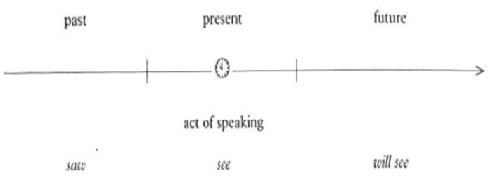
- To locate a situation in time relative to the “now” of the act of speaking or writing
- Aspect
- The speaker may choose how to describe the internal temporal nature of the situation
- Type
Verbs and situation types
- Stative verbs
- The speaker does not overtly focus on the beginning or end of the state
- Dynamic verbs
- A number of types, based on the semantic distinctions, these different verb types correlate to different dynamic situation types
- Distinction
- Events and processes
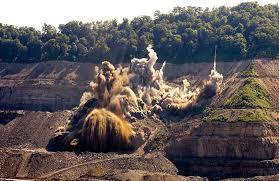
- The speaker views the situation as a whole
- The mine blew up
- The internal structure of a Dynamic situation
- He walked to the shop
- The speaker views the situation as a whole
- Durative
- Applied to verbs which describe a situation or process which lasts for a period of time
- John slept
- Applied to verbs which describe a situation or process which lasts for a period of time
- Punctual
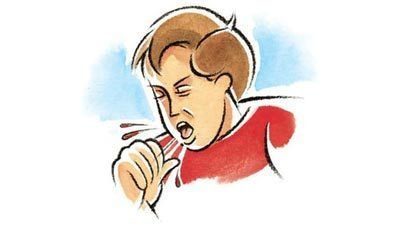
- Describes an event that seems so instantaneous that it involves no time
- John coughed
- Describes an event that seems so instantaneous that it involves no time
- Telic
- Refers to those processes which are seen as having a natural completion
- Atelic
- Can continue indefinitely
- Events and processes
- Stative verbs
A system of situation types
- Some verbs are inherently stative, like know, love and resemble, while others, like learn, die and kill, are non stative
- We have seen that some verbs, like paint, draw and build, are inherently telic while others like talk, sleep and walk are atelic.
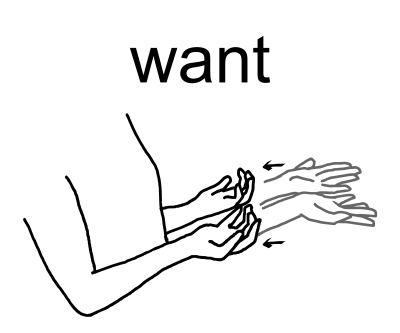
- States (desire, want, love, hate, know, believe
- Activities with unbounded processes (run, walk, swim, push a cart, drive a car)
- Accomplishments with bounded processes (run a mile, draw a circle, walk to school)
- Achievements such as point events (recognize, find, stop, start, reach the top)
Tense and aspect
- Tense and aspect systems both allow speakers to relate situations to time, but they offer different slants on time
Past events as presente tense
- It is sometimes called as Historical present
- It gives immediacy to a description
- Perfectives and imperfectives
- Perfectives: Views a situation externally, from outside, with no reference to its internal temporal structure and includes the viewing of the beginning and the end of a situation
- Imperfectives: Allows the viewing of situation for within, making explicit reference to the internal temporal structure and focuses on the middle prhase, with not specified end
Modality
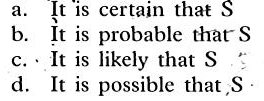
- Modality is a cover term for devices which allow speakers to express varying degrees of commitment to , or belief in , a proposition
- Niamh has gone to the airpot
- The speakers may be wrong.
- If we discover that Niam hasn´t gone to the to tell the airport then our reactions will be very different depending on whether we think the speaker was simply wrong in her belief ,or intentionally misleading us
- Modal systems allow speakers to modulate this guarantee: to signal stronger and weaker commitment to the actually of statements. There are a number of possible linguistic strategies
- Sentence can be emmbeded under a higer clause whit an adejetive or adverb modality
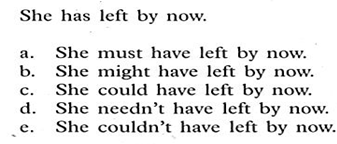
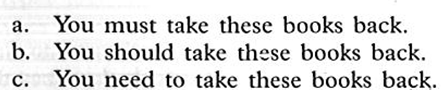
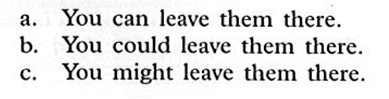
- A third strategy we find in English is to employ auxiliary verbs
- These mark the variations of commitment towards the asscription
- Auxiliary verbs in this role are calle modal verbs
- Epistemic modality , so called because the speaker is signalling degrees of knoledge. Deonic modality, where the verbs mark the speaker attitude to social factos
- Epistemic
- Deonic
- The relationship of epistemic and deotic is complicated, but the speakers can use an epistemic modal to imply a deontic interpretation
- Epistemic modality , so called because the speaker is signalling degrees of knoledge. Deonic modality, where the verbs mark the speaker attitude to social factos
- Auxiliary verbs in this role are calle modal verbs
- These mark the variations of commitment towards the asscription
- A third strategy we find in English is to employ auxiliary verbs
- Modality is a cover term for devices which allow speakers to express varying degrees of commitment to , or belief in , a proposition
Images and files in the map















Information
- Description
- Mind Map on Situations, created by Giovanna Cardenas on 29/04/2018.
- Created by
- Giovanna Cardenas
- Views
- 0
- Rating