
Mind map
Classification of modal verbs
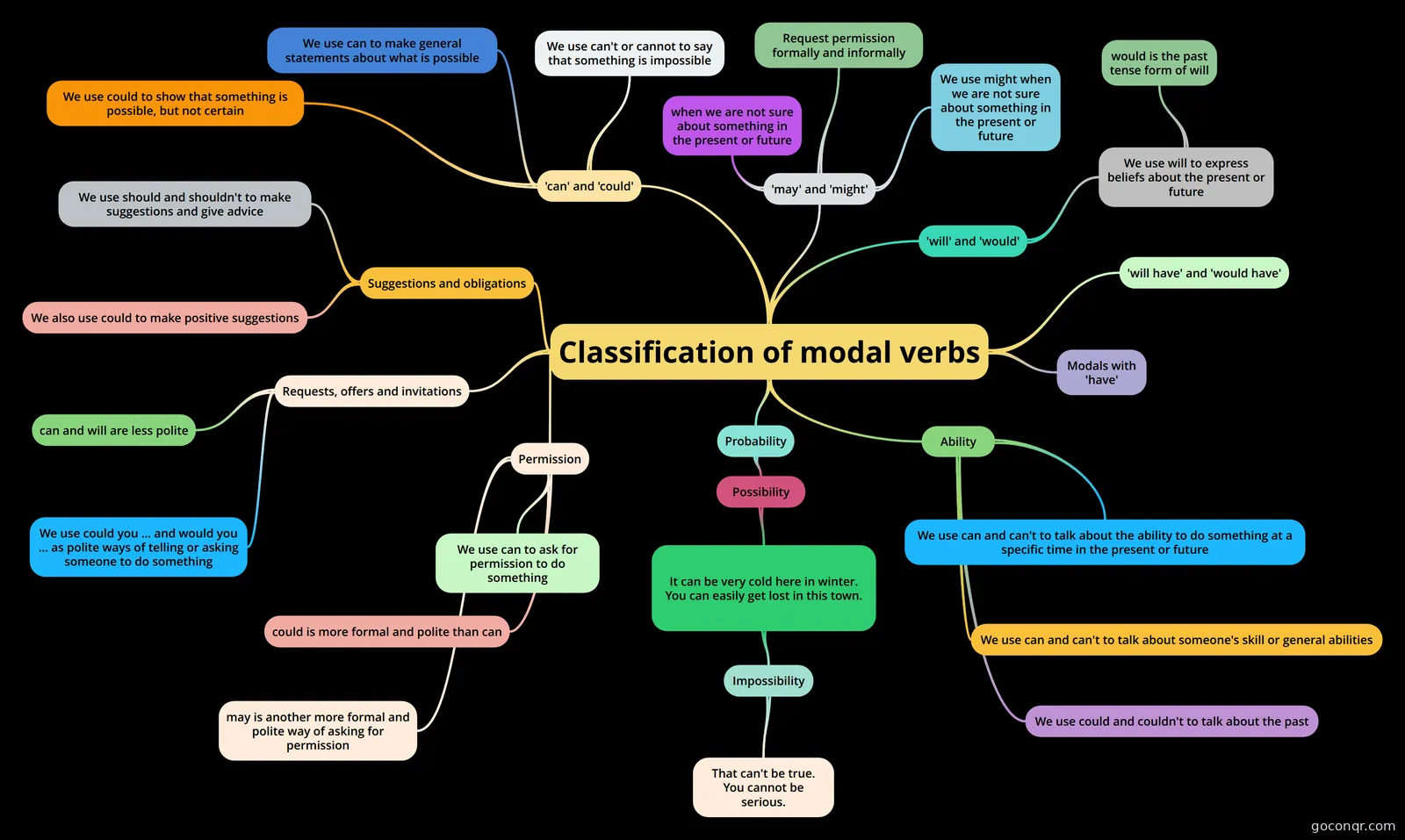
Mind map: Classification of modal verbs
Map content
Classification of modal verbs
Ability
- We use can and can't to talk about someone's skill or general abilities
- We use can and can't to talk about the ability to do something at a specific time in the present or future
- We use could and couldn't to talk about the past
Probability
- Possibility
- It can be very cold here in winter. You can easily get lost in this town.
- Impossibility
- That can't be true. You cannot be serious.
- Impossibility
- It can be very cold here in winter. You can easily get lost in this town.
- Possibility
Permission
- We use can to ask for permission to do something
- could is more formal and polite than can
- may is another more formal and polite way of asking for permission
Requests, offers and invitations
- We use could you … and would you … as polite ways of telling or asking someone to do something
- can and will are less polite
Suggestions and obligations
- We use should and shouldn't to make suggestions and give advice
- We also use could to make positive suggestions
'can' and 'could'
- We use could to show that something is possible, but not certain
- We use can to make general statements about what is possible
- We use can't or cannot to say that something is impossible
'may' and 'might'
- when we are not sure about something in the present or future
- Request permission formally and informally
- We use might when we are not sure about something in the present or future
'will' and 'would'
- We use will to express beliefs about the present or future
- would is the past tense form of will
- We use will to express beliefs about the present or future
'will have' and 'would have'
Modals with 'have'
Information
- Description
- Mind Map on Classification of modal verbs, created by Manuel Martinez Garcia on 23/05/2020.
- Created by
- Manuel Martinez Garcia
- Views
- 1
- Rating