
Mind map
Glycoconjugates
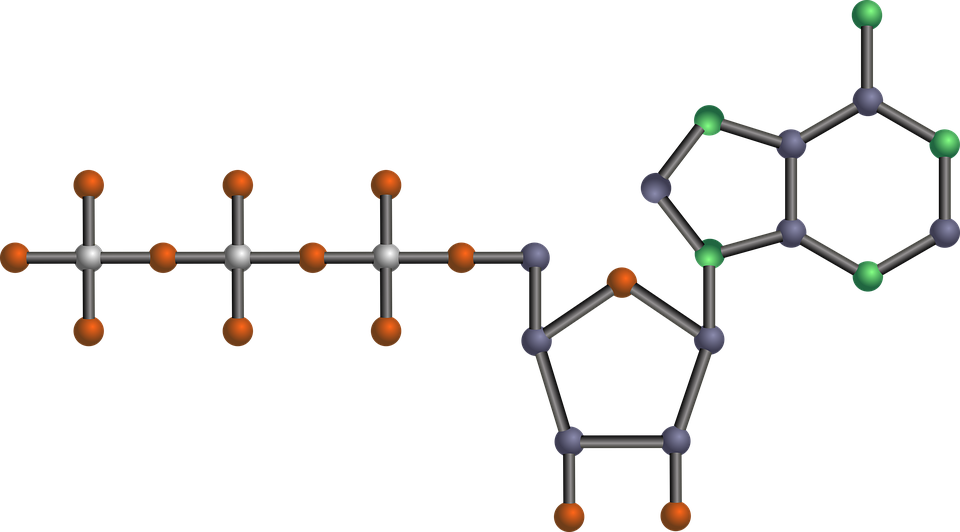
Map content
Glycoconjugates
They are glycosides
- Linked to proteins or lipids
- Through covalent bonds
- Linked to proteins or lipids
Function
- Transport information
- They act on cell recognition and addition
- Provide structural integrity
- To cells and tissues
- Structural Glycans
- Passive Signaling Functions
- Influences
- Control systems
- Protein quality
- Secretory pathway
- Protein quality
- Control systems
- Interactions between receptor and ligand
- Regulation of endocytosis
- And
- Protein trafficking
- And
- Membrane organization and signaling
- Nutrient storage
- Immune recognition and evasion
- Cell-cell interactions
- During fertilization
- Glucans play
- Key role in human health and disease
Where are they found?
- With proteins
- Proteoglycans
- They can be from
- Hyaluronic acid
- Chondroitin sulfate
- Keratan sulfate
- They can be from
- Glycoproteins
- Linked by –O to
- Serine or threonine bonds
- Linked by –N to
- Asparagine links
- Immunoglobulins
- Major histocompatibility complex
- Linked by –O to
- Proteoglycans
- With lipids
- Glycolipids
- Found in
- Plasma membrane
- Found in
- Lipopolysaccharides
- Found in
- Bacterial membrane
- Immune system
- Reception mechanisms
- To attack bad bacteria
- Reception mechanisms
- Found in
- Glycolipids
- With proteins
How do we obtain the sugars that can be incorporated?
- They are modified sugars
- And
- They become
- Other types of sugars
- This is due to
- Glucose bound to any biomolecule
- Harmful
- Glucose bound to any biomolecule
- Nucleotides are added to them
- To be recognized
- Uridine dysphosphate
- Galactose and glucose
- Guanusine diphosphate
- This is due to
- Other types of sugars
- They become
- And
- They are modified sugars
How is the incorporation process done?
- One is made
- Interconversion between sugars
- Special sugars
- what is called
- Sialic acid
- N acetyl glucosamine
- what is called
- Special sugars
- Interconversion between sugars
- One is made
Types of glycocongugates
- Glycosaminoglycans
- There are 7
- Ialuronate or yaluronic acid
- Glucoronate + N acetyl glucosamine
- Dermatan sulfate
- Iduronate + N acetyl galactosamine sulfate
- Chondroitin sulfate
- Glucoronate + N acetyl galactosamine sulfate
- Heparin and heparan sulfate
- Iduronate + Sulfo N acetyl glucosamine phosphate
- Keratan sulfate 1 and 2
- D galactose + N acetyl glucosamine sulfate
- Where are they found?
- Ialuronic acid
- Synovial fluid
- Vitreous humor
- Extracellular matrix of connective tissue
- Chondroitin sulfate
- Cartilage
- Bone
- Heart valves
- Heparan sulfate
- Basement membranes
- Components of cell surfaces
- Heparin
- Component of
- The intracellular granules
- Of the mast cells
- Which cover
- The arteries
- Lungs
- Liver
- Skin
- Which cover
- Of the mast cells
- The intracellular granules
- Component of
- Dermatan sulfate
- Blood vessels
- Skin
- Heart valves
- Keratan sulfate
- Cornea
- Bone
- Cartilage added
- Ialuronic acid
- Ialuronate or yaluronic acid
- Polysaccharide
- Made up of
- Repeated sequences of
- Disaccharides
- Where one of its components is
- Amino sugar
- G-glucosamine
- G-glucosamine
- Where one of its components is
- Disaccharides
- Repeated sequences of
- Made up of
- They do not have branches
- They only form
- Chains (linear)
- They only form
- They are the heteropolysaccharides
- Most abundant in the body
- Almost all
- Possess
- Sulfate groups
- Possess
- They are molecules
- Negatively charged
- There are 7
- Glycosaminoglycans
Excess or deficit
- Excess
- Eliminated
- Deficiency in
- Degradation of those already synthesized
- Old or damaged
- Cause
- Mucopolysaccharidosis diseases
- They belong to the group of
- Orphan diseases
- They do not occur frequently
- Orphan diseases
- Occurs due to
- The enzymes that degrade glycosaminoglycans
- They are not present or are deficient
- Which causes them
- They are accumulated in
- The tissues where they are
- They are accumulated in
- Which causes them
- They are not present or are deficient
- The enzymes that degrade glycosaminoglycans
- Diseases
- Autosomal recessive disease
- Or gargolismoa
- San Philipo syndrome
- Morquio syndrome
- Hunter syndrome
- Hurler syndrome
- Sly syndrome
- Treatment
- Inject the deficient enzyme
- Autosomal recessive disease
- They belong to the group of
- Mucopolysaccharidosis diseases
- Cause
- Old or damaged
- Degradation of those already synthesized
- Excess
Others
- Glycoproteins
- Protein + oligosaccharides
- Linked by
- Covalent bond
- Linked by
- Major component
- Protein
- Found in
- Golgi Complex
- MEC
- Lysosomes
- Protein + oligosaccharides
- Types of glycosylation
- Enzyme-regulated sugar addition process
- N glycosylation
- Or glycosylation
- Enzyme-regulated sugar addition process
- Proteoglycans
- High molecular weight
- Protein Core Block
- Linear Sugar Chains
- Protein Core Block
- Found in
- Extracellular Matrix
- High molecular weight
- Glycobiology
- Study of biosynthesis
- Structures
- Interactions
- Functions
- Evolution of glucans
- Functions
- Interactions
- Structures
- Study of biosynthesis
- Building Blocks of Glycans
- Monosaccharides or individual sugars
- From protein and lipid scaffolds
- Cells create glucans
- Through glycosidic bonds
- Attachment of one monosaccharide to another
- Through the hydroxyl of the anomeric carbon
- Attachment of one monosaccharide to another
- Through glycosidic bonds
- Cells create glucans
- Stereochemistry is important
- They can be almost the same
- But have
- Different biological properties
- Combinatorial complexity
- Different biological properties
- But have
- They can be almost the same
- Glycoproteins
In eukaryotic cells
- Most of
- Glycoproteins and glycolipids
- They biosynthesize in
- The endoplasmic reticulum and Golgi
- Through the sequential action of
- Series of glycosyltransferases and glycosidases
- Located in specific subdomains
- Of these organelles
- Forming a
- Assembly line
- Building glycans as they
- Lipid and protein substrates
- Transit the secretory pathway
- Some
- Extracellular glucans
- Biosynthesize and extrude
- On the plasmid membrane
- Biosynthesize and extrude
- Extracellular glucans
- Some
- Transit the secretory pathway
- Lipid and protein substrates
- Building glycans as they
- Assembly line
- Forming a
- Of these organelles
- Located in specific subdomains
- Series of glycosyltransferases and glycosidases
- Through the sequential action of
- The endoplasmic reticulum and Golgi
- They biosynthesize in
- Glycoproteins and glycolipids
- Most of
Glycosylation
- It is abundant within
- Animal and plant cells
- Thousands of soluble proteins
- Nuclear and cytoplasmic
- They are dynamically modified in
- Serine and threonine residues
- By O-GlcNAc
- Transient modification of a single sugar
- Regulating
- Localization and protein function
- Regulating
- Transient modification of a single sugar
- By O-GlcNAc
- Serine and threonine residues
- They are dynamically modified in
- Nuclear and cytoplasmic
- Thousands of soluble proteins
- Animal and plant cells
- It is abundant within
Final glycoforms
- Protein and lipid
- Depend on
- Interaction between
- Glycan biosynthetic machinery
- Available nucleotide sugars
- And
- Signals from
- Intracellular and extracellular environments
- Not driven by
- Pre-existing template molecule
- Not driven by
- Intracellular and extracellular environments
- Signals from
- And
- Available nucleotide sugars
- Glycan biosynthetic machinery
- Interaction between
- Depend on
- Due to
- Biosynthetic complexity
- A given protein
- Multiple glycoforms
- Within a single cell or tissue
- Phenomenon known as
- Microheterogeneity
- Additionally
- A single protein
- May glycosylate
- Differently
- In a tissue or organ
- In front of another
- Also producing
- Macroheterogeneity
- Also producing
- In front of another
- In a tissue or organ
- Differently
- May glycosylate
- A single protein
- Phenomenon known as
- Within a single cell or tissue
- Multiple glycoforms
- A given protein
- Biosynthetic complexity
- Protein and lipid
Biological imperatives
- Driving
- Variety of glycoconjugates
- Little known
- But many organisms
- Use multiple glycoforms
- To generate
- Greater functional diversity
- From
- Limited set of scaffolds
- Of proteins or lipids- or
- To confuse viruses and other parasites
- Which could explode
- More easily simple and predictable
- Which could explode
- To confuse viruses and other parasites
- Of proteins or lipids- or
- Limited set of scaffolds
- From
- Greater functional diversity
- To generate
- Use multiple glycoforms
- But many organisms
- Little known
- Variety of glycoconjugates
- Driving
Important diseases
- Characterized by
- Aberrant glycosylation
- Cancer
- Neurodegeneration
- Diabetes
- Congenital disorders
- Aberrant glycosylation
- Several critical treatments
- They are themselves glycoconjugates
- Heparin
- Aminoglycoside antibiotics
- Erythropoietin
- Monoclonal antibodies
- Many vaccines
- They are themselves glycoconjugates
- Characterized by
Glycobiology
- Little studied
- Compared to
- Other aspects of cell biology
- One reason for this delay is
- The chemical complexity
- And
- Analytical challenges of glucans
- They have presented formidable barriers
- To research
- They have presented formidable barriers
- Analytical challenges of glucans
- And
- The chemical complexity
- One reason for this delay is
- Other aspects of cell biology
- Compared to
- Little studied
A large number of intracellular proteins
- They are reversibly modified by
- O-GlcNAc in animals and plants
- O-GlcNAc is added to substrates
- By OGT glycosyltransferase
- Using UDP-GlcNAc
- As its nucleotide
- Sugar donor
- A predominant notion is
- O-GlcNAc often
- Serves a role de
- Nutrient detection
- Because UDP-GlcNAc itself
- It biosynthesizes from
- Various essential metabolites
- Such as
- Glucose
- Glutamine
- ATP
- Uridine
- Acetyl-coenzyme A
- Such as
- Various essential metabolites
- It biosynthesizes from
- Because UDP-GlcNAc itself
- Nutrient detection
- Serves a role de
- O-GlcNAc often
- A predominant notion is
- Sugar donor
- As its nucleotide
- Using UDP-GlcNAc
- By OGT glycosyltransferase
- Global levels
- Of O-GlcNAc
- Fluctuate in response
- To nutrient changes
- Fluctuate in response
- Of O-GlcNAc
- O-GlcNAc is added to substrates
- O-GlcNAc in animals and plants
- They are reversibly modified by
It has been related
- With metabolically important pathways and processes
- Such as cardiac calcium signaling
- Circadian entrainment
- Mitochondrial motility in neurons
- Epigenetic transcriptional control
- Of metabolic genes
- The Hippo -Control pathway
- Of the size of YAP organs
- With metabolically important pathways and processes
Images and files in the map




Information
- Description
- Mind Map on Glycoconjugates, created by Liz Jhorimar Herrera Moron on 15/10/2020.
- Created by
- Liz Jhorimar Herrera Moron
- Views
- 2
- Rating