
Mind map
Punctuation Marks
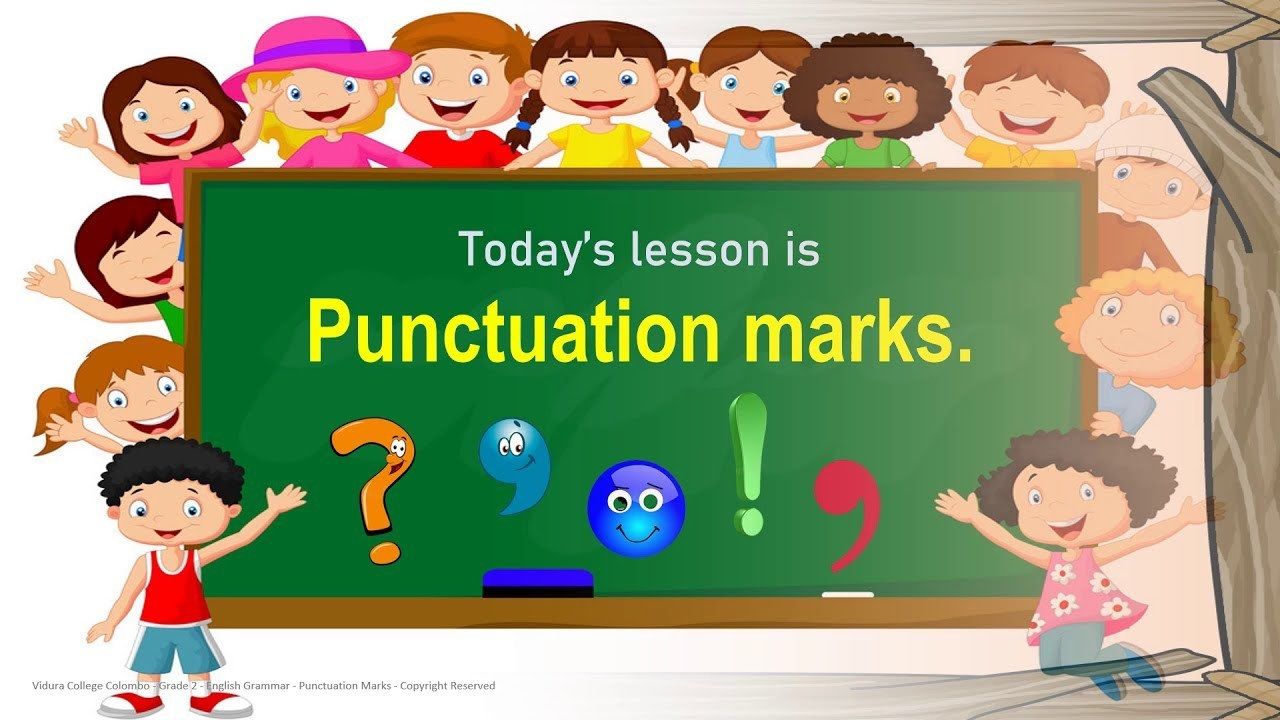
Map content
Punctuation Marks
Period
- The period, known as a full stop in British English is used to clarify where one sentence ends and another begins.
- Use the period with the following rules:
- At the end of sentences that are intended to instruct or command.
- Example
- Open your books on page 73.
- Example
- Use a period at the end of indirect questions.
- Example
- She asked me how old my brother is.
- Example
- Use a period after abbreviations.
- Examples
- a.m., vol., Inc., Jr., Mrs., Tex., Dr., and others.
- Examples
- Use a period with Quotation Marks
- Example
- Sandra told me: “Alex was looking for you yesterday.”
- Example
- Use a period to end a declarative sentence or statement.
- Example
- My dad’s car is white.
- Example
- Use a period with Parentheses
- With complete sentences, the period goes inside the parentheses.
- I went to El Pital (It was amazing.)
- With incomplete sentences, the period goes outside.
- She is from San Salvador (the capital of El Salvador).
- With complete sentences, the period goes inside the parentheses.
- At the end of sentences that are intended to instruct or command.
- Use the period with the following rules:
- The period, known as a full stop in British English is used to clarify where one sentence ends and another begins.
Exclamation Mark
- It is also known as the exclamation point that is used to express strong feelings or emotions.
- Rules
- It should be mainly used to demonstrate shock, surprise, anger or a raised voice.
- Oh my God! What a beautiful voice!
- It is used at the end of an interjection.
- Hey! Stop playing with that flower vase!
- It is used at the end of a strong command.
- Shut Up!
- It should be mainly used to demonstrate shock, surprise, anger or a raised voice.
- Rules
- It is also known as the exclamation point that is used to express strong feelings or emotions.
Brackets
- This terms refers to all types of brackets:
- Square Bracket [ ]
- Used to help the reader understand the text.
- Angled brackets < >
- The most common use for angled brackets is for placing URLs.
- Example
- <https://padlet.com/erikagriselda/i66w86xw2ghu1xjz>
- Example
- The most common use for angled brackets is for placing URLs.
- Braces or Curly Brackets { }
- They are mostly used for math, computer programming, or music.
- Square Bracket [ ]
- This terms refers to all types of brackets:
Quotation marks
- They are used to highlight and represent the exact language (spoken or written) that comes from another person.
- Direct Quotation
- It involves incorporating someone else's exact words into their own writing.
- Rules
- When we want to take an appointment where it is already has quotes, we should only use single quotes.
- Example
- “‘The Kissing Booth’ is my favorite movie,” Cindy said.
- Example
- If a direct quotation is interrupted mid-sentence, do not capitalize the second part of the quotation.
- Example
- “I went to pick up Maria,” Carlos said, “but she wasn’t there.”
- Example
- Once they are opened, they must be closed
- Example
- Karla said, “I really like this kind of music.”
- Example
- When the sentence is complete, it should start with a capital letter; otherwise, it does not have to start with a capital letter.
- Example
- My father called my brother “stupid boy” when he was angry.
- Example
- When we want to take an appointment where it is already has quotes, we should only use single quotes.
- Rules
- It involves incorporating someone else's exact words into their own writing.
Colon
- It is used to express pauses longer than a comma and shorter than a period.
- These are the uses of the colon:
- Introduce list, series, quotations and explanation.
- Example
- There are different genres of music that I like: classical music, pop music, romantic music, and rock music.
- Example
- Separate independent clauses.
- Example
- You can come to my house: I don’t have coronavirus.
- Example
- Show emphasis.
- Example
- You have two choices: study hard for the exam, or fail it.
- Example
- Separate units of time
- Example
- The job interview is at 7:00 a.m.
- Example
- Biblical references
- Example
- Philippians 4:3
- Example
- Introduce list, series, quotations and explanation.
Parentheses
- This are used to contain text that is not part of the main sentence, but that is important as well.
- Reasons to use parentheses:
- To include extra information.
- To cite authors.
- To introduce abbreviations.
- To translate words or short phrases.
- To give examples by prefacing your list with “e.g.” or other clarifying text.
- To define or restate a word.
- Reasons to use parentheses:
- This are used to contain text that is not part of the main sentence, but that is important as well.
Question Mark
- This is used following a question in a sentence.
- Rules
- Use it after a direct question.
- Do you want to go out with me?
- It replaces a period at the end of a sentence
- Do not use it with indirect questions.
- I wonder if you want to be my girlfriend.
- Rhetorical questions should be written without question marks.
- Why don’t you think of it deeply.
- Use it with tag questions
- The class was interesting, wasn’t it?
- If a question is within the quoted material, a question mark should be placed inside the quotation marks.
- Maria asked, “Will you go with me”?
- Use it after a direct question.
- Rules
- This is used following a question in a sentence.
Semicolon
- It shows a pause in a sentence. It is commonly used to join two independent clauses without using a conjunction.
- These are the uses of semicolon:
- Semicolons Connect Related Independent Clauses
- I will eat more food; life is too short to be always on a diet.
- Delete the Conjunction When You Use a Semicolon
- I bought a beautiful house; it is a little bit small.
- Use Semicolons in a Serial List
- In the airplane were people from; Spain, France, Brazil, Honduras and other countries as well.
- Use semicolons with Conjunctive Adverbs
- Moreover, nevertheless, however, otherwise, then, finally, and others.
- I do not like vegetable; likewise, I eat them to be healthy.
- Moreover, nevertheless, however, otherwise, then, finally, and others.
- Semicolons Connect Related Independent Clauses
- These are the uses of semicolon:
- It shows a pause in a sentence. It is commonly used to join two independent clauses without using a conjunction.
Ellipsis
- Rules
- Use it to show an omission of a word or words in a quote to make it shorter, and without changing the meaning.
- Example
- “One day, I found a dog in a street… and then the owner called him.”
- Example
- Use it to show a pause in a thought or to create suspense.
- Example
- Maria heard a noise… and saw… a mouse!
- Example
- Use it to show an omission of a word or words in a quote to make it shorter, and without changing the meaning.
- Rules
Comma
- It is used to indicate a pause in a sentence.
- A comma can separate the following ones:
- A dependent clause from an independent clause.
- Example
- If I won the lottery, I would like to buy a house.
- Example
- Nonessential word or phrase from the rest of the sentence.
- Example
- Karla, my cousin, got pregnant without knowing who the father is.
- Example
- Independent clauses joined by the following conjunctions:
- For, and, nor, but, or, yet, so (FANBOYS)
- Example
- I want to travel around the world, but I do not have money.
- Example
- For, and, nor, but, or, yet, so (FANBOYS)
- A quotation from the rest of a sentence.
- Example
- Teacher Olivia told us, “We will not have classes today.”
- Example
- Items in a series of three or more things.
- Noun, verb, adjective.
- Example
- Alexandra likes to sing, dance, and play basketball in her free time.
- Example
- Noun, verb, adjective.
- The name of a city from a country or state.
- Example
- I live in Coatepeque, Santa Ana.
- Example
- The day of the week, day of the month, and the year.
- Example
- My best friend’s birthday is on Tuesday, August 31, 2021.
- Example
- An introductory element from the rest of a sentence.
- Example
- Good morning, I would like to make an appointment.
- Example
- A dependent clause from an independent clause.
- A comma can separate the following ones:
- It is used to indicate a pause in a sentence.
Dash
- This is a mark of separation stronger than a comma, less formal than a colon, and more relaxed than parentheses.
- Types of dash:
- Em-dash
- It can replace parentheses, colons, and commas.
- They can be used:
- To join independent clauses.
- They gave me a terrible service—and they did not even solve my doubt!
- • To set off extra information in a sentence.
- Most of the cellphone brand— Samsung, IPhone, Alcatel— are considered useful nowadays.
- Lists placed in a sentence.
- All the subjects— Math, Social Studies, Literature and Science—are becoming difficult every year.
- Create emphasis in a sentence.
- Of course, I will approve your fiancé—as long as he show me that he deserves you!
- To join independent clauses.
- They can be used:
- It can replace parentheses, colons, and commas.
- En-dash
- This is considered formal, but their uses are limited.
- Rule
- The en-dash can only be used between times, dates, and forms of indexing.
- I have been working in the mind map from 1:00 to 10:00 p.m. this day.
- The en-dash can only be used between times, dates, and forms of indexing.
- Rule
- This is considered formal, but their uses are limited.
- Em-dash
- Types of dash:
- This is a mark of separation stronger than a comma, less formal than a colon, and more relaxed than parentheses.
Apostrophe
- It is used to indicate that one or more letters have been left out of a word.
- Functions
- Marks possession.
- Rules
- To show ownership, add apostrophe + s to the end of a word.
- Example
- Alexandra’s bike is fast.
- Example
- Plural noun that does not end in s, add an apostrophe + s ('s).
- Example
- The women’s role in a house is very important.
- Example
- Plural nouns already ending in “s” add only the apostrophe.
- Example
- Butterflies’ colors are beautiful.
- Example
- Never use an apostrophe with possessive pronouns:
- his, hers, its, theirs, yours, whose, and ours.
- To show ownership, add apostrophe + s to the end of a word.
- Rules
- They are used in contractions.
- It takes the place of one or more letters.
- Example
- They’re my best friends.
- Example
- It mark the omission of the sound of one or more letters or numbers.
- Example
- It is 10 o’clock (“of the clock”).
- Example
- It takes the place of one or more letters.
- Marks possession.
- Functions
- It is used to indicate that one or more letters have been left out of a word.
Images and files in the map
Information
- Description
- Idiomas Mind Map on Punctuation Marks, created by KATHERIN ALEXANDRA MARROQUIN ASCENCIO on 29/08/2021.
- Created by
- KATHERIN ALEXANDRA MARROQUIN ASCENCIO · Aug 2021
- Updated
- Aug 29, 2021
- Views
- 2
- Rating