
Mind map
Prokaryotic and Eukaryotic cells
Map content
Prokaryotic and Eukaryotic cells
Cell cytoskeleton
- The cytoplasm has a network of protein threads running through it this is called the cytoskeleton
- In eukaryotic cells the protein threads are arranged as microfilaments and microtubules
- Function
- 1. The microtubules and microfilaments support the cells organelles keeping them in position
- 2. They also help strengthen the cell and maintain its shape
- 3. Responsible for movement of materials within the cell
- 4. The proteins of the cytoskeleton can also cause cells to move
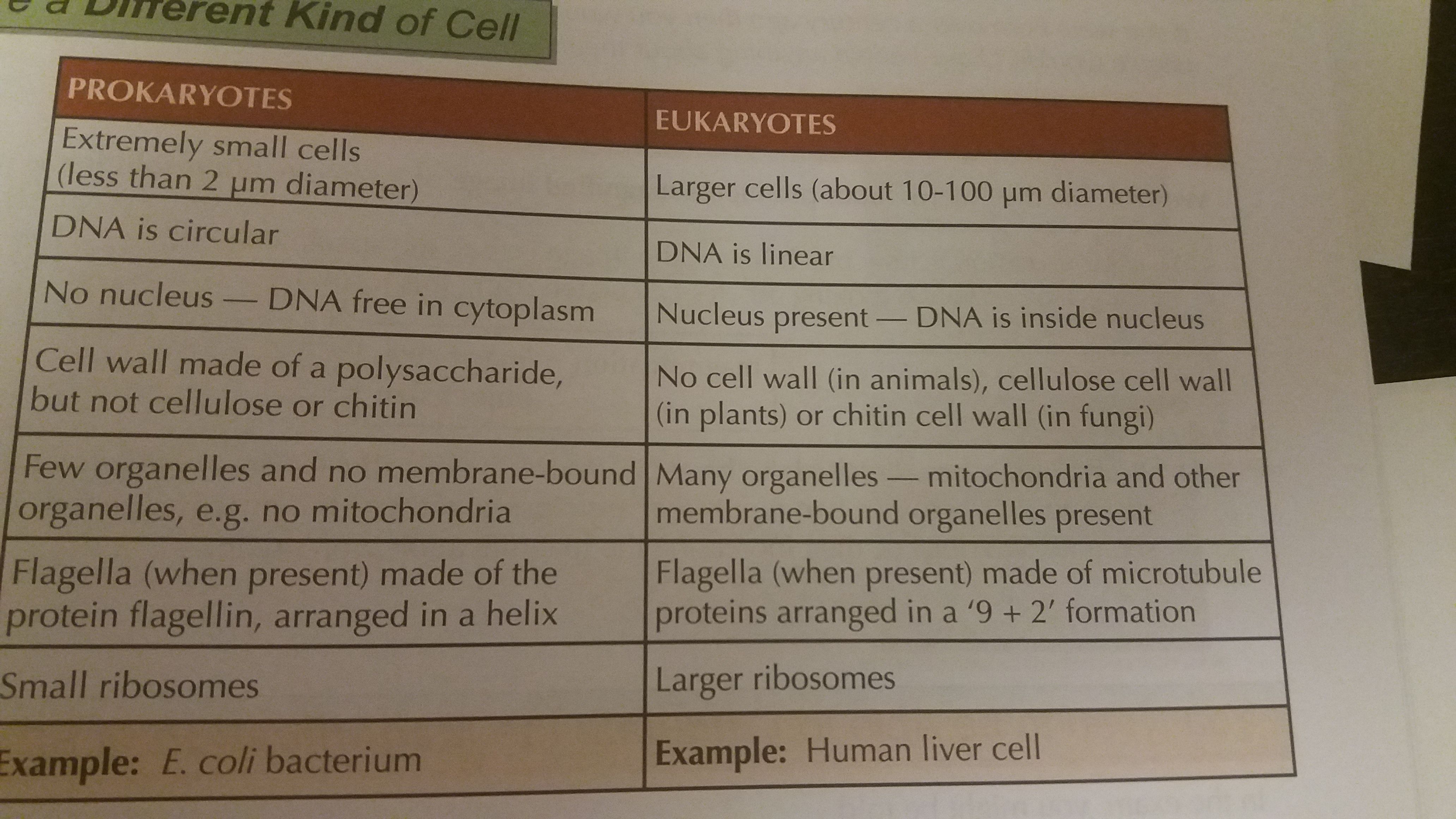
Organisms can have prokaryotic or eukaryotic cells
Plants and animals are both Eukaryotic - Eukaryotic cells are more complex
Organelles
- Plasma cell surface membrane
- Made of phospholipids and protein
- It regulates the movement of substances into and out of the cell
- Cell wall
- Made of cellulose
- Supports plant cells, prevents them from bursting
- Nucleus
- Nucleus contains chromatin and a nucleolus and is surrounded by a double membrane nuclear envelope
- Controls cells activities, contains DNA - instructions to make proteins.
- The pores allow substances to move between the nucleus and the cytoplasm
- Nucleolus makes ribosomes
- Lysosome
- A round organelle surrounded by a membrane
- Contains digestive enzymes - can digest invading cells or break down worn components of the cell
- Ribosome
- Very small organelle found in cytoplasm or attached to rough ER - made up of protein and RNA
- Site where proteins are made
- Rough endoplasmic reticulum
- Surface covered with ribosomes
- Folds and processes proteins that the ribosomes made
- Smooth endoplasmic reticulum
- Similar to rough ER but with no ribosomes
- Synthesises and processes proteins
- Vesicle
- Small fluid filled sac in the cytoplasm surrounded by a membrane
- Transports substances in and out of the cell and between organelles
- Golgi apparatus
- Group of fluid filled, membraned, flattened sacs - vesicles seen at the edges
- Processes and packages new lipids and proteins and also makes lysosomes
- Mitochondria
- Double membrane - usually oval-sausage shaped
- Site of aerobic respiration where ATP is produced
- Chloroplast
- Small flattened structure found in plant cells - surrounded by a double membrane
- Where photosynthesis takes place
- Centriole
- Small hollow cylinders made of microtubules
- Involved in separation of chromosomes in cell division
- Cilia
- Small hair like structure found on cell surface membrane to increase surface area - made of 9 pairs of microtubules and 2 in the middle
- The microtubules allow the cilia to move - this movement is used by the cell to move substances along the cell surface
- Flagellum
- Like cilia but longer - stick out the cell surface - like cilia 9+2
- Microtubules contract to make the flagellum move
- Plasma cell surface membrane
Organelles in protein production
- 1. Proteins made at ribosomes
- 2. Ribosomes on rough ER make proteins that are excreted or attached to the cell membrane
- 3. New proteins made at the rough ER are folded and processed in the rough ER
- 4. Then theyre transported from the ER to the golgi apparatus in vesicles
- 5. At the golgi apparatus the proteins may undergo further processing
- 6. The proteins enter more vesicles and are transported around the cell
Prokaryotic cells
- Bacteria cells are prokaryotic
- Prokaryotes are the tenth of the size of eukaryotic cells
- Microscopes arent good enough to see inside
- Bacteria cells are prokaryotic
Images and files in the map
Information
- Description
- Mind Map on Prokaryotic and Eukaryotic cells, created by Fin Carson on 07/11/2017.
- Created by
- Fin Carson
- Views
- 33
- Rating