
Mind map
Geomorphology Introduction
Map content
Geomorphology Introduction
Summary
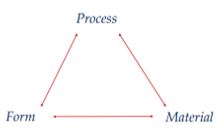
- "Processes acting on materials over time, produces results expressed as landforms" (Gregory, 2000)
- What 3 things are important to investigate?
At a Local Scale
- Weathering systems, coastal systems, fluvial systems, glacial systems, aeolian systems
How can we observe changes in landforms over large timescales?
- Ergodic Reasoning
- To do this we can: - Look at similar landforms at different stages of development
- Ergodic Reasoning
Magnitude and Frequency
- "the size of an event and the frequency of its occurence" (Gregory & Lewin, 2014)
- Recurrenc Interval - "the frequency of which an event of specific magnitude occurs is expressed as the recurrence interval" (Huggett, 2007)
- Gradualism - change occurs slowly over long periods of time Catastrophism - changes occur quickly over short periods of time Neocatastrophism - changes occur over long periods of time that are interrupted by rapid changes over short periods
Biogeomorphology
- How plants and animals interact with the landscape and environment to help shape it
2 Concepts to Consider
- Endogeny - related to plate tectonics and processes in the interior of Earth
- Processes - Earthquakes, Tectonic Uplift, Seafloor Spreading & Folding
- Landforms - Rift Valleys, Ocean Trenches, Island Arcs & Mountain Ranges
- Exogeny - processes at or above Earth's surface
- Processes - Fluvial Erosion, Glacial Erosion, Rainfall & Coastal Processes
- Landforms - Dunes, Glacial Valleys, Waterfalls & Flood Plains
- Endogeny - related to plate tectonics and processes in the interior of Earth
Approaches
- Process Geom - Processes responsible for landform development
- (Bagnold) studied how blown sand particles constructed complex dune systems
- Historical Geom - Histories and Projection of landform evolution
- Structural Geom - allowing the influence of geological structures upon landforms
- Climatic Geom - each climatic zone shapes landforms and processes
- Applied Geom
- Process Geom - Processes responsible for landform development
landforms
- What are they? - "clearly defined topographic features"(Goudie & Viles, 2010)
- Classifying Landforms
- Genetic - Mode of Formation
- Morphologic - Areas of similar physiography
- Problems: 1) Terminology is often vague (non-genetic) 2) Differnet terminology used in different areas
Images and files in the map
Information
- Description
- Mind Map on Geomorphology Introduction, created by Emily Harrison on 29/01/2018.
- Created by
- Emily Harrison
- Views
- 10
- Rating