
Mind map
SOAPStone
Map content
SOAPStone
This is a strategy I want to use to assist students with the reading of non-fiction first, and then extend it to their own writing.
- Jen Smith EDT 540
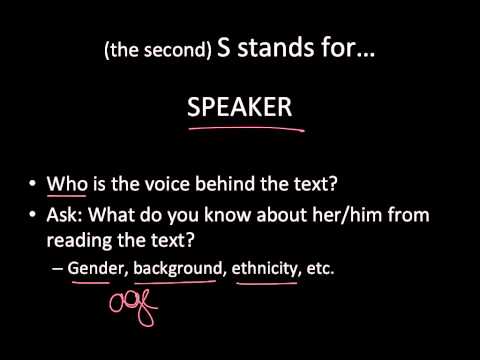
Who is the Speaker?
- AS A READER: Who is the speaker? Does the voice belong to a fictional character? Or does it belong to the authors themselves? Is there more than one speaker? What do you know about this person from historic references or from what you’ve previously read? How does this background information form his or her opinions? The speaker and his or her characteristics play a defining part in the meaning of a work of literature. Spend some time thinking about the background of the piece. This can be helpful in identifying the speaker or source of the work.
- AS A WRITER: Who are YOU? It isn’t necessary to directly and specifically mention yourself in your essays. In fact, some readers will even mark off points for writing in the first person point of view. However, you can still identify yourself as the speaker without directly using the words “I” or “me.” You can do this by carefully revealing details about yourself within your writing. For instance, if your AP free response prompt tells you to construct an argument based on a passage you’ve read, show the reader what side you agree or disagree with. Include credible references to back your opinions up. This will indirectly establish you as more than just an author; you are now a student with a well-developed opinion.
What is the Occasion?
- AS A READER: What is the occasion? This is another way of asking about did it occur? Is it a memory, delusion, or an actual event?Environmental factors often affect the meaning within the the setting of a work. When did the piece take place? Where text. There are two types of occasions: larger occasions and immediate occasions. Larger occasions are factors in the environment of attitudes, ideas, and emotions that are involved in the broad issue at hand. Immediate occasions are situations or events that are more specific than larger occasions and are used to catch the reader’s attention and make them think. Most of the time, immediate occasions are designed to trigger a response from the audience.
- AS A WRITER: This particular piece of the model can be a little more difficult to pin down. You really need to identify the larger and immediate occasions. How are they alike? How are they different? How do they work hand in hand? Together, how do they affect the subject you’re writing about? Be sure to use occasions as an opportunity to grab your reader’s attention. Here’s another helpful hint: If you can’t fully grasp the meaning of occasions, think of them as another “O” word—origin. What is the origin of the piece of work or historical event you’re writing about? What is the origin of your knowledge about the subject? How does this affect how you view the matter?
Who is the Audience?
- AS A READER: Who is the audience? Specifically, what group of readers is this piece directed towards? What would be the ideal audience for this piece of literature? Understanding the audience of a literary work can often help decipher the meaning behind it.
- AS A WRITER: Who are you trying to address in your writing? What do they already know? What do they need to know? Avoid dancing around the subject and get straight to the point with accurate information and well formed arguments. This will make you look very organized and professional.
What is the Purpose?
- AS A READER: What is the purpose? For what reason did the author write this piece? What does the author want to accomplish when addressing the audience with his or her work? Ultimately, why was this piece written?This is perhaps the most important letter in the acronym to consider when analyzing text. It can singlehandedly unlock the meaning of a work.
- AS A WRITER: Why are you writing this essay? Well, of course to get a good score. But, how are you going to do that? By writing an essay with a well-established purpose. Think about the questions asked in the prompt. Make the answers your purpose. Also think about the way the prompt is worded. Did it ask you to construct an argument? If so, try to persuade your audience into seeing your point of view on the matter. Did the prompt ask you to explain an event? Set out to write your essay with the purpose of informing your readers about whatever happened.
What is the Subject?
- AS A READER: What is the subject? What is the piece about specifically? How do you know? What was the intended task the author was trying to accomplish when writing his or her piece?Summarizing this in a few words or sentences can help build your comprehension of the text you are studying.
- AS A WRITER: This is perhaps the most straightforward of all the letters in the model. What did the prompt tell you to write about? Be sure to stay on topic, and keep the subject in mind at all times. Don’t pad your essay with unneeded references or stories. Only use what is vital to proving your point or argument.
What is the Tone?
- AS A READER: What is the tone of the author? What is his or her attitude towards the actions unfolding in their work? How is the tone conveyed in the author’s syntax (construction of sentences), diction (word choice), and imagery (similes, metaphors, other types of figurative language)?
- AS A WRITER: What attitude do you want to convey towards your audience? Is it an attitude that will help you convey your purpose to your audience? Or will it harm your work? Try to stick with tones that reflect your purpose and subject. Use an appropriate amount of imagery in your essays. Pair this with good diction and syntax, and you’re on your way to a great essay.
Video about using it as a reading strategy!
PDF about using it as a writing strategy!
Images and files in the map
Information
- Description
- Mind Map on SOAPStone, created by Ms. Jen Smith ELA Teacher on 02/08/2018.
- Created by
- Ms. Jen Smith ELA Teacher
- Views
- 3
- Rating