
13483900
Description

Mind Map by Cecilia Jensen, updated more than 1 year ago

|
Created by Cecilia Jensen
over 8 years ago
|
|
Cardiovascular System
- Heart
- Anatomy
- 4 valves
- prevent back flow, keeps blood flowing
through heart in one direction
- prevent back flow, keeps blood flowing
through heart in one direction
- 4 chambers
- About the size of a fist.
weighs 250g-350g
- Left side is
bigger/stronger
than the right, since
the left has to
pump the blood to
the whole body
and right only to
the lungs
- Heart wall
- Pericardium - double
walled sack that
surrounds and
protects the heart
- epicardium
- epicardium
- myocardium
- endocardium
- Pericardium - double
walled sack that
surrounds and
protects the heart
- 4 valves
- Blood
flow
- Vena cava (superior
and inferior)
- Right Atrium
(chamber)
- Tricuspid valve
- Right ventricle
(chamber)
- Pulmonary valve
(Semilunar valve)
- Pulmonary artery
- Lungs
- Pulmonary vein
- Left atrium
(chamber)
- Mitral valve (bicuspid
valve)
- Left ventricle
(chamber)
- Aortic valve
(semilunar valve)
- Aorta
- Body
- Body
- Aorta
- Aortic valve
(semilunar valve)
- Left ventricle
(chamber)
- Mitral valve (bicuspid
valve)
- Left atrium
(chamber)
- Pulmonary vein
- Lungs
- Pulmonary artery
- Pulmonary valve
(Semilunar valve)
- Right ventricle
(chamber)
- Tricuspid valve
- Right Atrium
(chamber)
- pumps blood completely around the
body about 1000 times a day
- Vena cava (superior
and inferior)
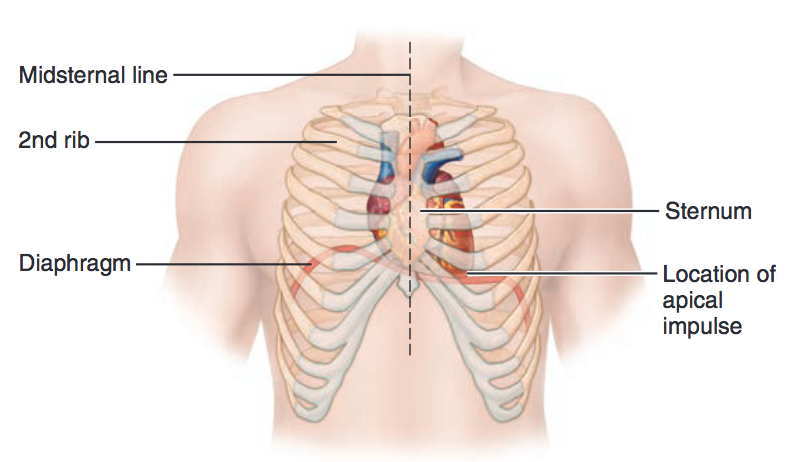
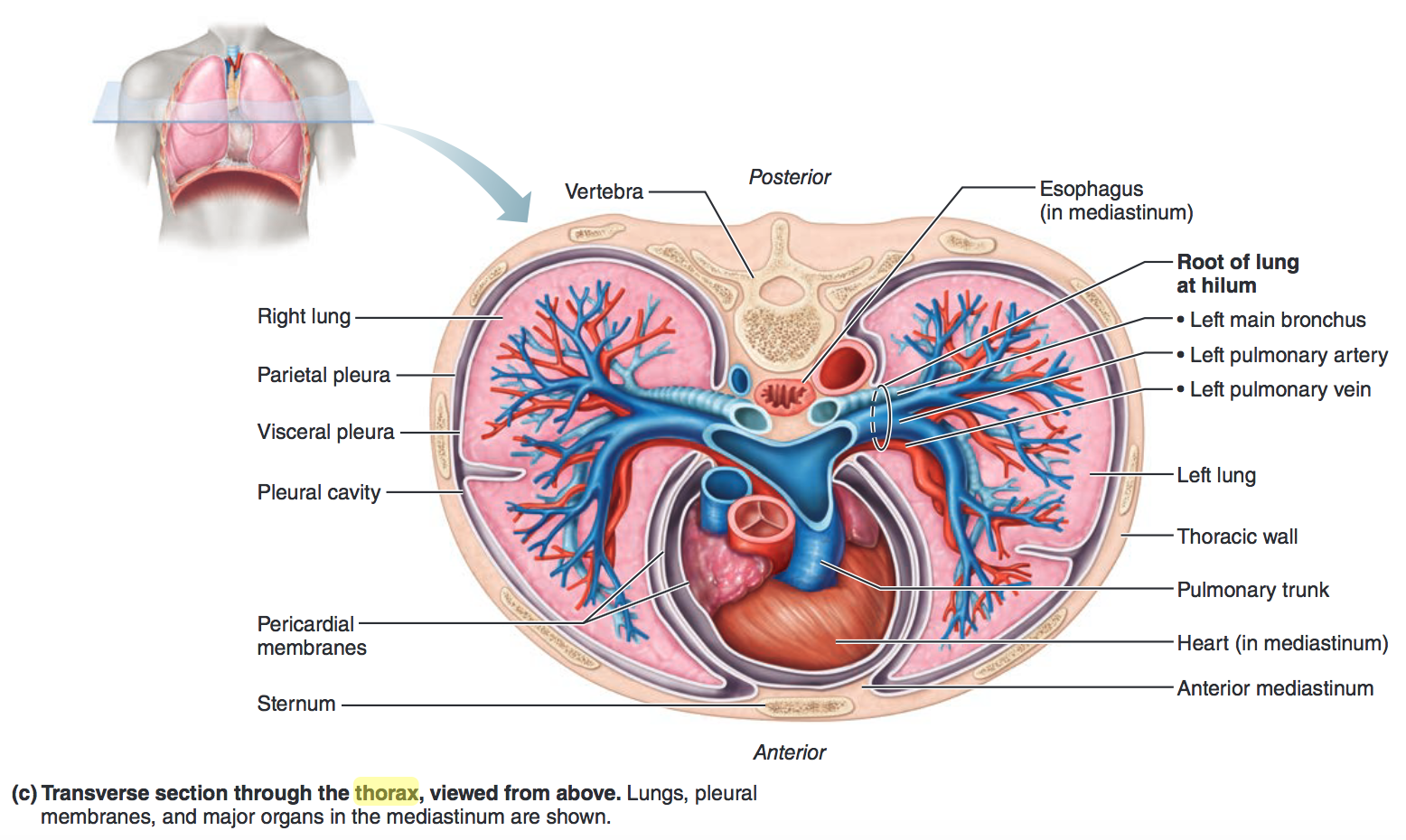
- Located in the
thorax cavity
- heart is anterior to vertebral column,
posterior to sternum
- Lungs flank heart & partially obscure it
- heart is anterior to vertebral column,
posterior to sternum
- Between 2nd rib
and 5th intercostal
space
- rests on diaphragm
- approx. 2/3 of mass
lies left of midline
- Between 2nd rib
and 5th intercostal
space
- Anatomy
- Blood
vessels
- Veins,
carry
blood to
the heart
- deoxygenated blood
(except for pulmonary
vein)
- Venues, collects
outflow of blood from
capillaries
- Thinner muscular walls which
are less elastic. Large lumen
- Valves in all vessels
- deoxygenated blood
(except for pulmonary
vein)
- Arteries,
carry blood
away from the
heart
- Oxygenated blood
(except for pulmonary
artery)
- Arterioles, carry
blood from arteries
to capillaries
- Thick muscular walls
which are elastic. Small
lumen
- No valves
- Oxygenated blood
(except for pulmonary
artery)
- Capillaries
- Walls are one cell thick
- gas exchange
- Diffuses oxygen and
carbon dioxide in the
muscles and organs
- Diffuses oxygen and
carbon dioxide in the
muscles and organs
- Walls are one cell thick
- Blood Pressure
- Is the pressure blood
exerts against the inner
walls of blood vessels
- Systolic
- Max pressure
- Result of
ventricular
contraction
- Normal
120mmHg
- Max pressure
- Diastolic
- Min pressure
- Result of
ventricular
relaxation
- Normal 80mmHg
- Min pressure
- Hypertension
(High blood
pressure)
- Leads to wear and
tear on heart and
blood vessels
- Combined with
blood vessel
rigidity (salt/age)
and globs of fat
(LDLs) leads to
blocked arteries
- LDL = Low density lipid
- i.e. saturated fat
- i.e. saturated fat
- HDLs won't clog arteries
- HDL = High density lipid
- i.e. polyunsaturated and monounsaturated
- oily fish, avocado, nuts
- oily fish, avocado, nuts
- i.e. polyunsaturated and monounsaturated
- HDL = High density lipid
- LDL = Low density lipid
- Combined with
blood vessel
rigidity (salt/age)
and globs of fat
(LDLs) leads to
blocked arteries
- Leads to wear and
tear on heart and
blood vessels
- Is the pressure blood
exerts against the inner
walls of blood vessels
- Veins,
carry
blood to
the heart
- Purpose
- Transport oxygen, nutrients and
hormones to the cells throughout
the body
- Removal of waste
from cells, carbon
dioxide and
nitrogenous waste
- Transport oxygen, nutrients and
hormones to the cells throughout
the body
Media attachments
Want to create your own Mind Maps for free with GoConqr? Learn more.