
Mind map
The Norman Monastery reform
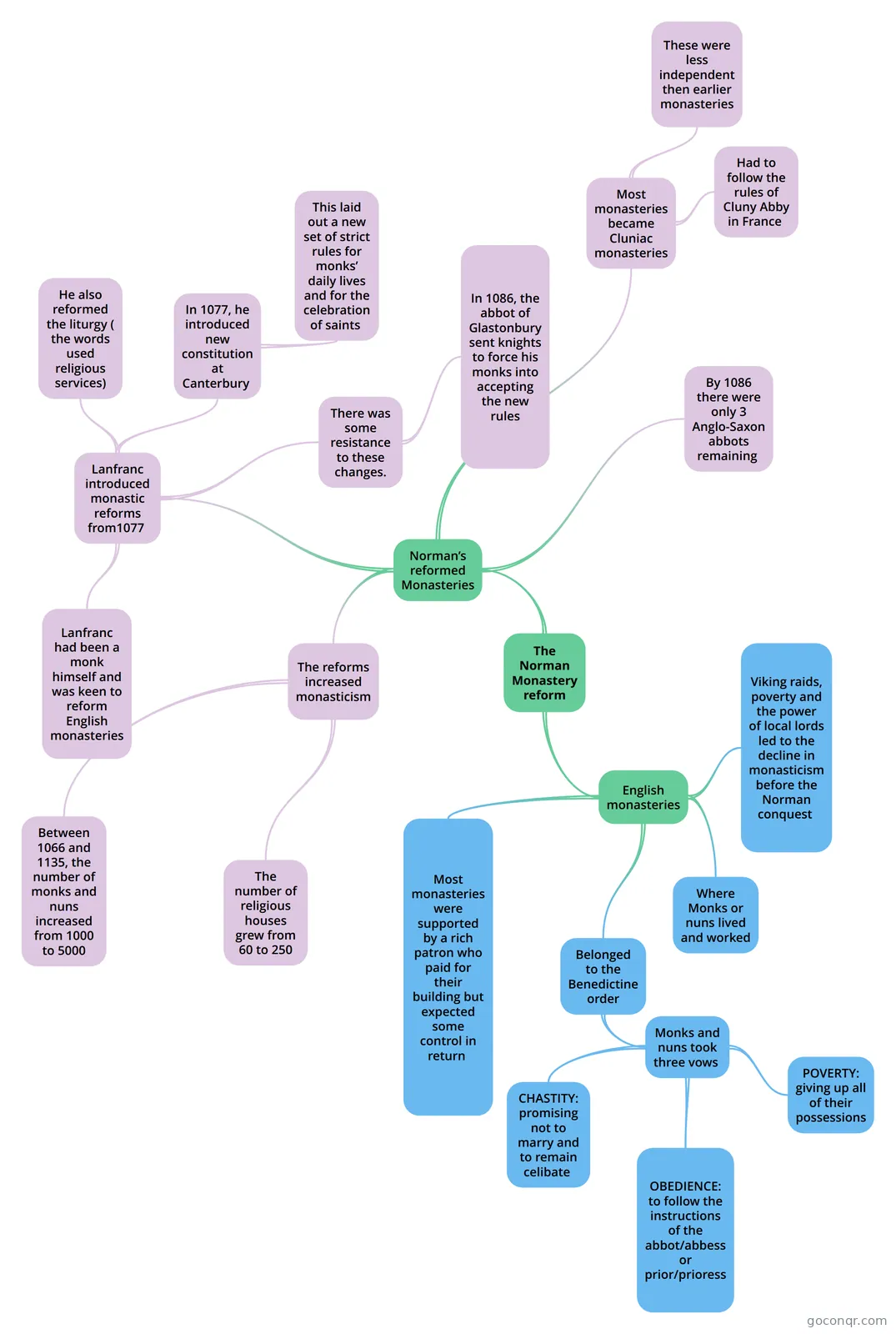
Mind map: The Norman Monastery reform
Map content
The Norman Monastery reform
English monasteries
- Where Monks or nuns lived and worked
- Belonged to the Benedictine order
- Monks and nuns took three vows
- POVERTY: giving up all of their possessions
- CHASTITY: promising not to marry and to remain celibate
- OBEDIENCE: to follow the instructions of the abbot/abbess or prior/prioress
- Monks and nuns took three vows
- Most monasteries were supported by a rich patron who paid for their building but expected some control in return
- Viking raids, poverty and the power of local lords led to the decline in monasticism before the Norman conquest
Norman’s reformed Monasteries
- Lanfranc introduced monastic reforms from1077
- Lanfranc had been a monk himself and was keen to reform English monasteries
- In 1077, he introduced new constitution at Canterbury
- This laid out a new set of strict rules for monks’ daily lives and for the celebration of saints
- He also reformed the liturgy ( the words used religious services)
- There was some resistance to these changes.
- In 1086, the abbot of Glastonbury sent knights to force his monks into accepting the new rules
- By 1086 there were only 3 Anglo-Saxon abbots remaining
- The reforms increased monasticism
- Between 1066 and 1135, the number of monks and nuns increased from 1000 to 5000
- The number of religious houses grew from 60 to 250
- Most monasteries became Cluniac monasteries
- These were less independent then earlier monasteries
- Had to follow the rules of Cluny Abby in France
- Lanfranc introduced monastic reforms from1077