
Mind map
GENETIC PROCESSES
Map content
GENETIC PROCESSES
MEIOSIS
- SEXUAL REPRODUCTION
- The production of new living organisms by combining genetic information from two individuals of different sexes.
- HAPLOID
- (Of a cell or nucleus) having a single set of unpaired chromosomes.
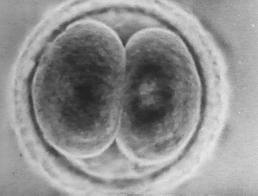
- FERTILIZATION
- The action or process of fertilizing an egg, female animal, or plant involving the fusion of male and female gametes to form a zygote.
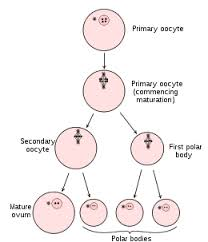
- OOGENESIS
- The production or development of an ovum.
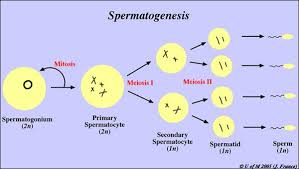
- SPERMATOGENESIS
- The production or development of mature spermatozoa.
- GAMETE
- A mature haploid male or female germ cell that is able to unite with another of the opposite sex in sexual reproduction to form a zygote.
- ZYGOTE
- A diploid cell resulting from the fusion of two haploid gametes; a fertilized ovum.
- ASEXUAL REPRODUCTION
- Mode of reproduction by which offspring arise from a single organism and inherit the genes from that parent only.
- SEX CELLS
- A cell responsible for transmitting DNA to the next generation.
- HOMOLOGOUS CHROMOSMES
- A set of one maternal chromosome and one paternal chromosome that pair up with each other inside a cell during meiosis.
- GENES
- A unit of heredity that is transferred from a parent to offspring and is held to determine some characteristics of the offspring.
- CROSSING OVER
- The exchange of genes between homologous chromosomes, resulting in a mixture of parental characteristics in offspring.
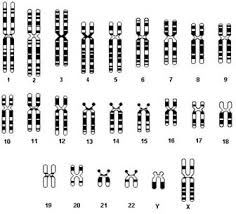
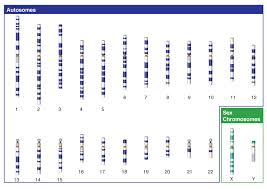
- KARYOTYPE
- The number and visual appearance of the chromosomes of the nuclei of an organism or species.
- SEX CHROMOSOMES
- A chromosome involved with determining the sex of an organism, typically one of two kinds.
- KARYOTYPE
- The number and visual appearance of the chromosomes in the cell nuclei of an organism or species.
- SYNAPSIS
- The fusion of chromosome pairs at the start of meiosis.
- SEXUAL REPRODUCTION
DNA
- PHOSPHATES
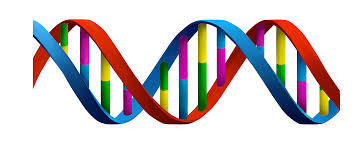
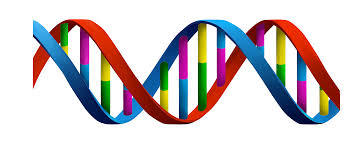
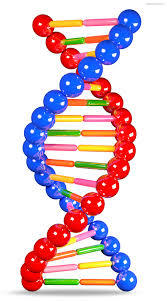
- DOUBLE HELIX
- A pair of parallel helices intertwined about a common axis, especially that in the structure of the DNA molecule.
- NUCLEOSIDES
- A compound (cytosine, adenine, etc.) commonly found in DNA or RNA, consisting of a purine or pyrimidine base linked to a sugar.
- NITROGENOUS BASES
- A nitrogen containing molecule that has the same chemical properties as a base.
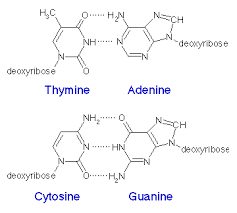
- THYMINE
- COMPLEMENTARY BASE PAIRS
- COMPLEMENTARY BASE PAIRS
- GUANINE
- COMPLMENTARY BASE PAIRS
- Either of the nucleotide bases linked by a hydrogen bond on opposite strands of DNA or double-stranded RNA.
- COMPLMENTARY BASE PAIRS
- ADENINE
- CYTOSINE
- DEOXYRIBOSE
- A sugar derived from ribose.
MITOSIS
- DIPLOID
- (Of a cell or nucleus) containing two complete sets of chromosomes, one from each parent.
- SOMATIC CELLS
- Any cell of a living organism other than the reproductive cells.
- AUTOSOMES
- Any chromosome that is not a sex chromosome.
- CELL CYCLE
- Stages of mitosis.
- INTERPHASE
- - Cells grow. - Make structural proteins. - Transport nutrients to where they are needed. - Eliminate waste. - Prepares for the next stages of mitosis.
- PROTEINS
- Repair damaged parts
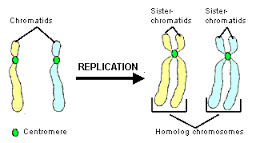
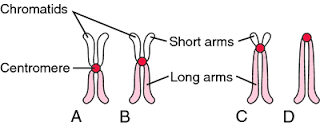
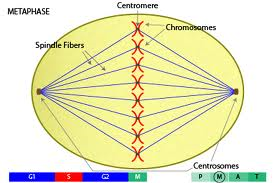
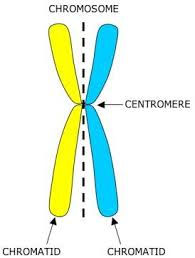
- CENTROMERE
- The structure that holds chromatids together
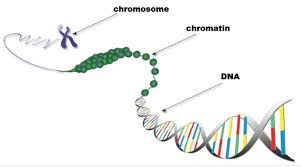
- CHROMATIN
- The tangled fibrous complex of DNA and protein within a eukaryotic nucleus.
- PROPHASE
- 1st stage of cell division.
- CHROMOSOMES
- Chromatin condenses into chromosomes.
- CENTROSOMES
- Small protein bodies that are found in the cytoplasm of animals cells.
- SPINDLE FIBRES
- Protein structures that guide chromosomes during cell division. Formed from centrosomes.
- METAPHASE
- The chromosomes line up along the center axis of the cell.
- ANAPHASE
- The chromosomes split up and chromatids are pulled to the opposite ends of the cell.
- CHROMATIDS
- Each of the two threadlike strands into which a chromosome divides during cell division. Each contains a double helix of DNA.
- TELOPHASE
- A nuclear membrane forms around each set of chromatids.
- CYTOKINESIS
- Pinching off the cell into 2 parts.
- SISTER CHROMATID
- Pieces of identical DNA that are crucial in the process of cell replication and division.
- DIPLOID
Images and files in the map
Information
- Description
- Mind Map on GENETIC PROCESSES, created by safeawija on 22/11/2014.
- Created by
- safeawija · Nov 2014
- Updated
- Feb 19, 2016
- Views
- 52
- Rating