
Mind map
UNITED NATIONS
Map content
UNITED NATIONS
Why it was formed
- Founded after WWII as an international organisation to preserve world peace and prevent another major war.
- Representatives from 50 countries met in San Francisco to draw up the United Nations Charter and the final Charter was signed on 26 June 1945
- Founded after WWII as an international organisation to preserve world peace and prevent another major war.
Aims
- Maintain world peace and security
- Develop friendly relations among nations
- Cooperate internationally to solve international economic, social cultural and humanitarian problems
- Promote respect for human rights and basic freedom regardless of race, religion and gender
- To be a centre for harmonising the actions of nations in attaining the aims listed
Organisations of UN
- Security Council
- Maintains peace and security among member countries
- Economic and Social Council
- Helps the people of the world to improve their lives
- General Assembly
- Functions like a world parliament where all the member countries can vote on various matters
- Trusteeship Council
- Currently suspended. Function is to help countries gain self-government or independence
- International Court of Justice
- Functions as a world court to help member countries settle disputes peacefully
- Secretariat
- Implement the decision taken by member countries of UN
- Security Council
Singapore's UN membership benefits
- Allowed Singapore to gain recognition as a sovereign state
- UN helped by sending experts to advise and help in the economic and social development of the country
- Dr Albert Winsemius, an economic expert from the UN, helped Singapore in its industrial planning and development from the period of its independence to the late 1970s
- UN helped by sending experts to advise and help in the economic and social development of the country
- Allowed Singapore to gain recognition as a sovereign state
Singapore's contributions to UN
- UN Law of the Sea Conference
- Defines how countries can draw terrirorial borders in the sea and states clearly the rights of landlocked states
- The conference was organised to decide on the territorial rights of a country over its water. Professor Tommy Koh, Singapore's former representative to the UN, was President of the Third UN conference on the Law of the Sea from 1980 to 1982
- Defines how countries can draw terrirorial borders in the sea and states clearly the rights of landlocked states
- Security Council
- Singapore was elected by the UN General Assembly to serve as a non-permanent Security Councilmember for two years from 2001 to 2002
- Singapre served as the President of the Council in January 2001 and May 2002. The election to the council showed the confidence member countries have in Singapore as well as Singapore's commitment to the UN
- Singapore was elected by the UN General Assembly to serve as a non-permanent Security Councilmember for two years from 2001 to 2002
- UN Peacekeeping Operations
- Peacekeeping is a way to help countries torn by conflict to create conditions for long-term peace. Authorised by UN Council.
- Singapore has been involved in UN's peacekeeping efforts sinace 1989. By 2005, Singapore was involved in 13 operations in 11 different countries and contributed approximately 1500 personnel for these UN Missions
- Peacekeeping is a way to help countries torn by conflict to create conditions for long-term peace. Authorised by UN Council.
- UN Law of the Sea Conference
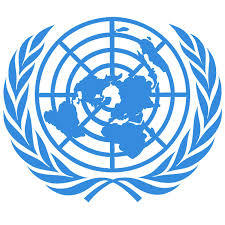
What does the UN logo symbolise
- Olive branches symbolize peace. The world map depicts the area of concern to the United Nations in achieving its main purpose, peace and security
Success of UN
- UN has prevented any more world wars ever since it was create after World War II
Failure of UN
- At the creation of the UN in 1945, the United States was the only nation in the world to own and test nuclear weapons. In 1970, the nuclear non-proliferation treaty was signed by 190 nations, including five nations that admitted to owning nuclear weapons: France, England, Russia, China, and the US
- Despite this treaty, nuclear stockpiles remain high, and numerous nations continue to develop these devastating weapons, including North Korea, Israel, Pakistan, and India. The failure of the non-proliferation treaty details the ineffectiveness of the United Nations, and their inability to enforce crucial rules and regulations on offending nations
- At the creation of the UN in 1945, the United States was the only nation in the world to own and test nuclear weapons. In 1970, the nuclear non-proliferation treaty was signed by 190 nations, including five nations that admitted to owning nuclear weapons: France, England, Russia, China, and the US
Images and files in the map
Information
- Description
- Mind Map on UNITED NATIONS, created by tohchanhik on 30/12/2014.
- Created by
- tohchanhik
- Views
- 7
- Rating