
International Organisations and Global Governance
21 resources created by 15 users
This International Organisations and Global Governance page on GoConqr gathers community-made mind maps, flashcards, notes, slides and quizzes, from the United Nations and ASEAN to the EU, the World Bank and NGOs. It's built for school students revising a topic, university students and professional candidates filling gaps, and teachers after ready-made material. There are over 300 resources here, including more than 200 mind maps and 8 quizzes, with GCSE Citizenship and A-level Politics among the exams mentioned. Pick a mind map, try a quiz to find your gaps, then make your own flashcards.
Top International Organisations and Global Governance resources
-
Mind map ASEAN
-
Mind map INTERGOVERNMENTAL ORGANIZATIONS Una breve descripción de las organizaciones
-
Mind map SDGs negotiation and results analysis
-
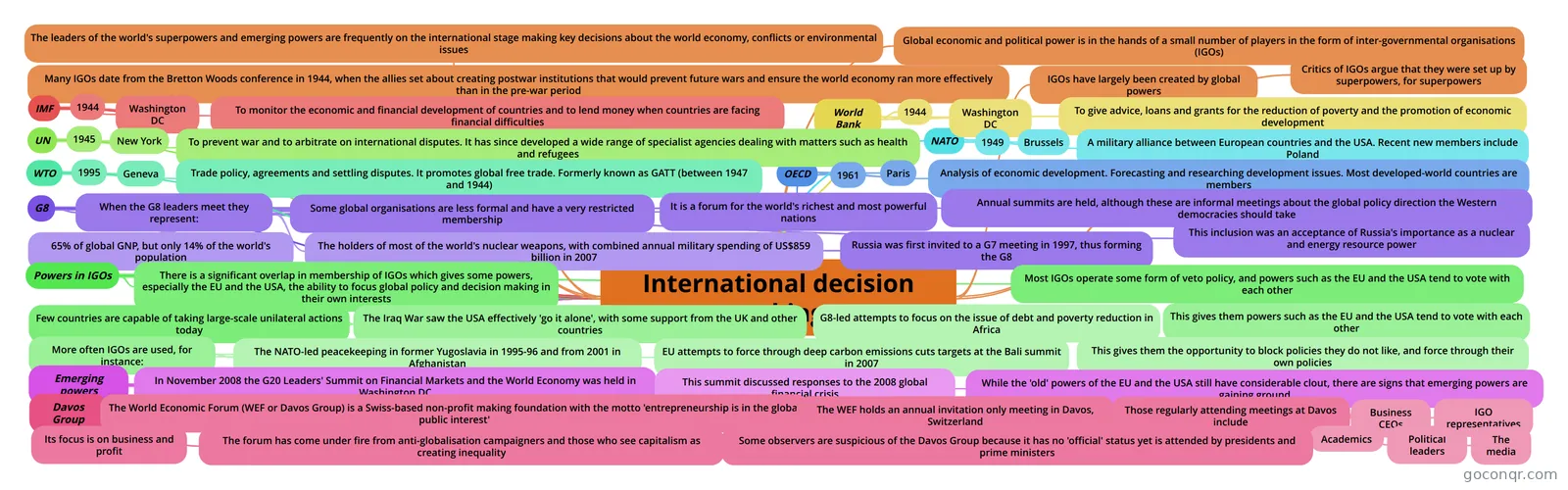 Mind map International decision making
-
17 cardsInternational relations in the Circumpolar Arctic
-
Mind map UNITED NATIONS
-
9 cardsGrugel and Piper, 2016 Economic globalization - destabilizes the nation state and place-based politics.
-
12 cardsThe United Nations The United Nations: Background information
Quizzes
Mind maps
See all 10 mind maps-
ASEAN
-
INTERGOVERNMENTAL ORGANIZATIONS Una breve descripción de las organizaciones
-
SDGs negotiation and results analysis
-
International decision making
-
UNITED NATIONS
-
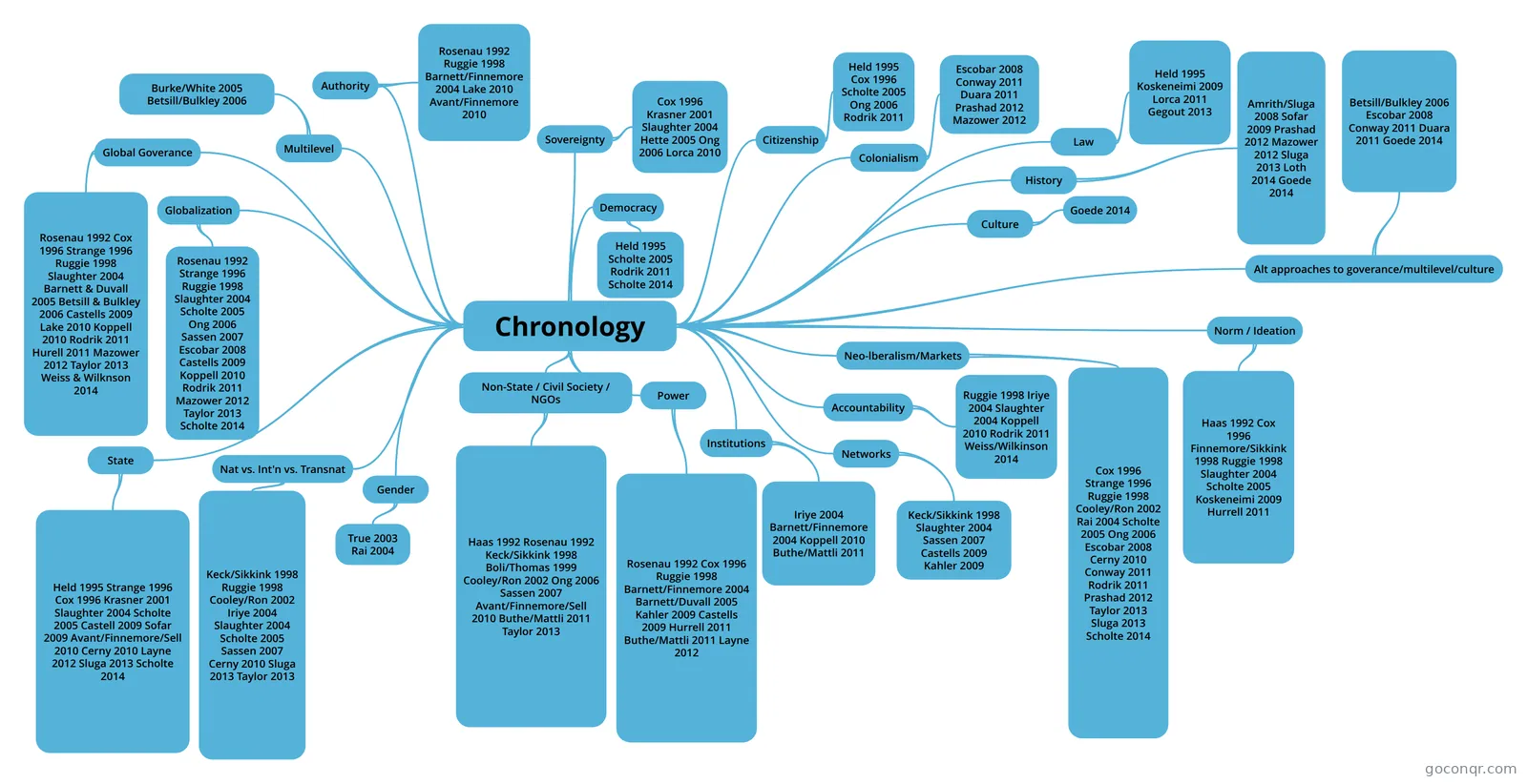 Chronology
-
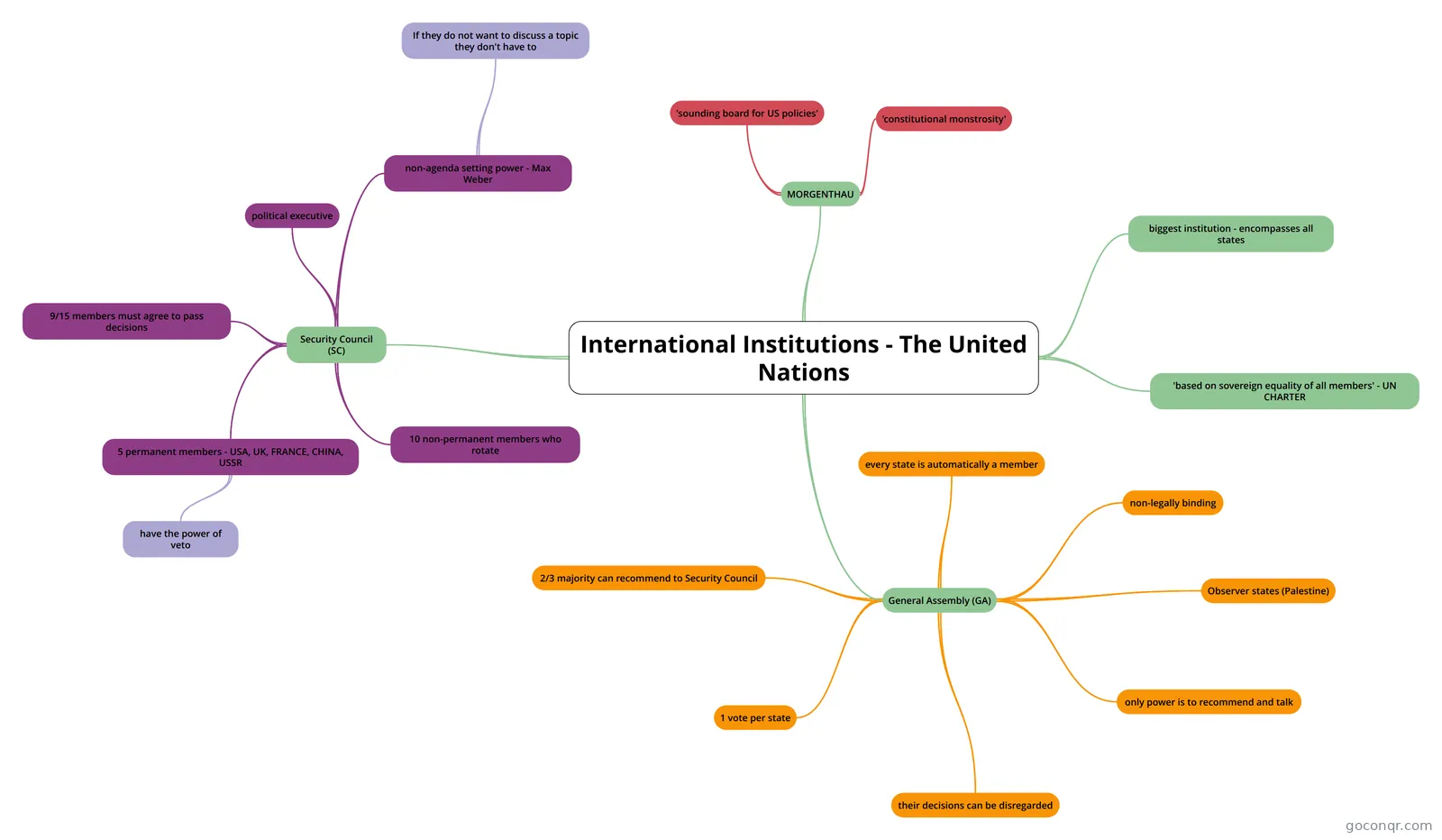 International Institutions - The United Nations General notes
-
Intergovernmental Organizations Intergovernmental Organizations
Flashcards
-
17 cardsInternational relations in the Circumpolar Arctic
-
9 cardsGrugel and Piper, 2016 Economic globalization - destabilizes the nation state and place-based politics.
-
12 cardsThe United Nations The United Nations: Background information
-
20 cardsInternational Instituions Key Words Lecture 1- Overview
-
9 cardsThe United Nations Basic rights included in the Atlantic Charter.
Notes
-
International Institutions - The EU THE EUROPEAN UNION (EU) 1952 - creation of the European Coal and Steel Community (ECSC), 'make war not only unthinkable but materially impossible', France, W Germany, Italy and 3 Benelux countries signed: Treaty of Ro...
-
International Institutions - Climate Change CLIMATE CHANGE USA - currently one of the largest CO2 producers, domestic public polarisation, senate and house intransigence, difficulty in bringing much to the table AUSTRALIA - one of the world's most intensive CO2...
-
International Institutions - World Bank Robert H. Wade - 'US hegemony and the World Bank: the right over people and ideas' Alan Greenspan, Chairman of the Federal Reserve - "markets are an expression of the deepest truths about human nature... as a result, ...
-
International Institutions- The United Nations THE UNITED NATIONS Discussions on UN stated at the end of WW2 Secure peace in the world: collective security remained Very realist organisation SECURITY COUNCIL - 5 permanent members (US, Russia, UK, France and China)...
Slides
More Political science topics
About International Organisations and Global Governance
GoConqr OriginalWhat the resources cover
Most of the page is mind maps, and many of them focus on the United Nations. Several maps simply called United Nations sit beside United Nations System and The United Nations. The UNITED NATIONS map sets out purposes and goals, including keeping worldwide peace and developing friendly relations among nations. The Peace and Conflict map looks at the UN formed at the end of WWII, the Security Council, sanctions and the authorising of force by member states.
Regional bodies get their own maps. The ASEAN maps introduce the Association of Southeast Asian Nations, formed on 8 August 1967, and its aims.
Definitions and types
To understand what an international organisation is, try INTERGOVERNMENTAL ORGANIZATIONS, which describes an entity created by treaty between two or more nations. The INTERNATIONAL ORGANIZATIONS map lists roles and functions, such as forum, instrument and actor, along with rule making and adjudication. The flashcard deck IGOs, International Law, and NGOs extends this to non-governmental bodies.
Suggested order
- Start with the definitions in INTERGOVERNMENTAL ORGANIZATIONS and INTERNATIONAL ORGANIZATIONS.
- Move to the United Nations maps and the The United Nations flashcards.
- Look at regional and specific bodies: ASEAN, the EU notes, World Bank notes and the climate change and COP21 notes.
- Check yourself with the Self test quiz - United Nations and the UNHCR/REFUGEES quiz.
Using quizzes and maps together
Read a map first, then take a quiz without looking. Any question you miss tells you which branch to reopen. Turn those branches into flashcards for a quick second pass. UK-focused material, such as the slides on the UN, Commonwealth, NATO and the World Trade Organisation, may suit those preparing for A-level Politics or GCSE Citizenship.
Where it fits
This unit belongs to the Global Governance and Political Economy strand of Political science. It suits school students, university students and professional candidates, and teachers can use the maps as ready-made starting points. Open a map today and see which topic to tackle first.
Frequently asked questions
Which resource should I open first?
Begin with the INTERGOVERNMENTAL ORGANIZATIONS mind map, which explains what an international organisation is and how it is formed by treaty. Then open the INTERNATIONAL ORGANIZATIONS map for roles and functions, and move on to the United Nations maps once the basic terms feel familiar.
What do the mind maps cover?
The mind maps cover the United Nations, its goals and its role in peace and conflict, plus ASEAN, intergovernmental organisations, international decision making and institutions such as the United Nations Economic Commission for Europe. Some are short outlines, while others are more detailed.
Are there quizzes on this page?
Yes. There are 8 quizzes, including a Self test quiz on the United Nations, a quiz on UNHCR and refugees, and two quizzes on international organisations. They work well after reading a map, because they show which areas you still need to revisit.
Are the resources free to use?
Yes. Every resource listed here is free to open, study and take, with no account needed. They were made by GoConqr users, not by GoConqr itself. A free account also saves your quiz scores and lets you create your own quizzes, mind maps, flashcards and notes.
Which exams and levels do these suit?
The listed resources mention GCSE Citizenship and A-level Politics, and the page also holds university-level material. School students, university students and professional candidates can all find something useful, and teachers can pick maps or slides to share with a class.
What if I cannot find my topic?
Look at the related maps, notes and flashcards on the page, since topics such as NGOs, the EU, the World Bank and climate change appear under different formats. If a topic is still missing, you can make your own map or flashcards once you have a free account.