
Mind map
working towards a sustainable future NEA
Map content
working towards a sustainable future NEA
what is sustainability?
- according to the Bruntland Report for the World Commission on Environment and Development (1992) sustainability is the "Development that meets the needs of the present without compromising the ability of future generations to meet their own needs." today this mainly effects ideas surrounding the preservation of the environment for future generations; however, the term sustainability can be linked to any environmental or social issue regarding preserving things for the future generations.
What are the key environmental issues that the world currently faces?
- currently environmental issues are the greatest threat to our future living. these problems focus on the environment and how we interact with it. without solving these issues we degrade our environments perhaps to the point they are uninhabitable.
- deforestation
- deforestation is the over harvesting of our worlds trees, forests, jungles and woodlands; destroying and degrading habitats across the world. according to the natural geographic approximately 30% of the earths landmass is woodland yet according to the world bank between the years of 1990 and 2016, the world lost 502,000 square miles (1.3 million square kilometres) of forest. to put that to scale that's an area larger than south Africa. This leading to numerous environmental problems which if left could have a detrimental effect on our planet:
- habitat loss
- global warming
- the green house effect is the most prominent cause of global warming. this is where molecules and particulates like carbon dioxide and methane insulate our planet and prevent heat from escaping by reflecting back to the earth. this is similar to how a greenhouse works hence the name. this is a totally normal effect and without we would be under a wall of ice however the production of carbon dioxide and the other greenhouse by humans is adding to it to the point where it threatens to overheat the planet. now we have past the point where we can simply stop producing these particulates to reduce the problem. in order to save our planet we need to start scrubbing the atmosphere and this is where deforestation comes in. trees and planets turn carbon dioxide into glucose and oxygen which is not a green house gas. by removing these trees we are removing the planets natural "scrubers" and further adding to the greenhouse effect and the difficulty of solving the greenhouse problem
- effects
- sea level rise
- habitat loss
- climate change
- global warming is the heating of the general environment due to the greenhouse effect and other factors. Global warming is a natural effect: as the sun gets larger and our rotation shifts, the globe naturally experienced periods of increased and decreased tempuratue; however, the worry is that we as humans are increasing the rate of this warming beyond its natural limits potentially leading to disastrous effects for us. Since 1906, the global average surface temperature has increased by more than 1.6 degrees (national geographic) while this seems minimal a rise of two more degrees has the potential to have disastrous effects on our environment:
- biodiversity
- The energy crisis
- ocean trash
- ocean trash is the largest threat to the stability of our oceans. currently about 4 million to 12 million metric tons of plastic enters our oceans each year with that set to double by 2020
- the ocean trash problem is the largest threat to the stability and sustainability of our oceans. each year approximately about 4 million to 12 million metric tons of plastic enters our ocean with that set to double by 2020. the main problem with this plastic is that as soon as it reaches the ocean scientists don't actually know where 99%of it ends up(sciencemag). this is causing great worry for scientist as they struggle to find reasons for the plastics disappearance. so far there are two main repercussions found with this plastic waste
- microplastics are plastics that have been worn down by the ocean to a near microscopic level by the ocean. these microplastics are beinmg mistaken and eaten by small plankton the foundation of the ocean food chain. now we are starting to find alarming large concentrations of these plastics in the sea food we eat as well. this has potentially serious consequences both for us and the animals who initially ate the plastic potentially damaging the balance of the ecosystem.
- the second repucussion is the development of large patches of waste in the center of oceans the largest being the pacific garbage patch at 1.6km^2 or 3 times the size of France(the ocean cleanup). these patches are made where circling ocean currents meet and they become trapped, these currents also result in these areas becoming hotspots for migrating animals and other sea creatures. this becomes a problem as these animals cant distinguish the difference between our waste and their food and so we get large portions of entrapped or poisoned animals.
What are the main problems/barriers that prevent a sustainable future?
- energy
- national co operation (or lack there of)
- an increasing population
What products, materials or processes do we use that are an issue?
- plastic
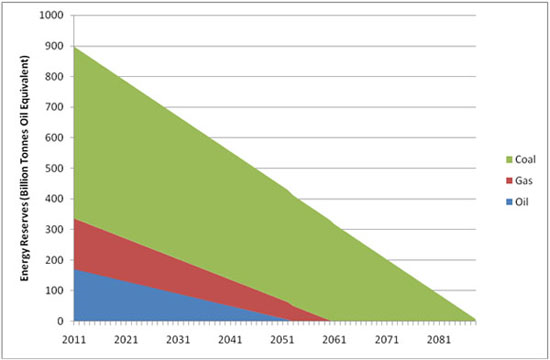
- plastic is the probably one of the least sustainable resources we produce. Made from Gas and Oil polymer chains: plastic is a non-renewable in short supply, it is estimated that we if we continue using oil at our current rate we will run out of oil by 2052 and gas by 2063 (Ecotricity). On top of that plastics are non-biodegradable meaning they will not decompose taking on average 450 years for one object to decompose however it can take as long as 1000 according postconsumers.com. However people are working on the plastic problem. New ways are being developed to recycle plastic so less has to be disposed and are oil reserves are saved. this is a problem which is begging to be solved
- oil
- oil is one of our most used resources used in everything from plastics to fuels to lubricants. However its non-renewable and its running out: we are estimated to run out of oil by 2052 according to Ecotricty a purely renewable energy supplier. if left unchanged we run the risk of loosing our most used resource and with it our current way of life
- wood
- CFC's
- plastic
Is there a clear understanding around sustainability across the world? Or more specifically, different age groups?
- current efforts to increase understanding of sustainability
- why are people neglecting the issue of sustainability?
- the main reason the issue gets neglected is the out of sight out of mind mentality. People cant yet see the effects of there actions on the planet and so are neglecting to take responsibility for the problem.
What are the key social issues that the world currently faces?
- currently there are a wealth of issues preventing us from achieving sustainable living for all. a large section of these issues are social issues. these are issues that physically effect people and how they live there lives, without solving these issues the social/human environment will be affected.
- emigration crisis
- brief description of problem
- water scarcity
- the issue with water scarcity is the same as that with food; however, with this we are already experiencing the begging's of this problem. in 2015 south Africa faced one of its worst droughts in 30 years. this demonstrates how bad this problem is getting as a even a developed country can now fall foul to the problem of water scarcity.
- food production
- food production will probably be the biggest social issue in the coming century. as our population increases In the coming century we will need more and more food to feed everyone. currently approximately 37% of the worlds land is needed for agriculture and that is only set to grow(world bank). without control it is well within reason that we wont be able to meet the worlds current food demand within 10 years.
Images and files in the map
Information
- Description
- Mind Map on working towards a sustainable future NEA, created by josh aubrey on 05/06/2019.
- Created by
- josh aubrey
- Views
- 26
- Rating