
Mind map
AFROTHERIA
Map content
AFROTHERIA
order: Afrosoricida
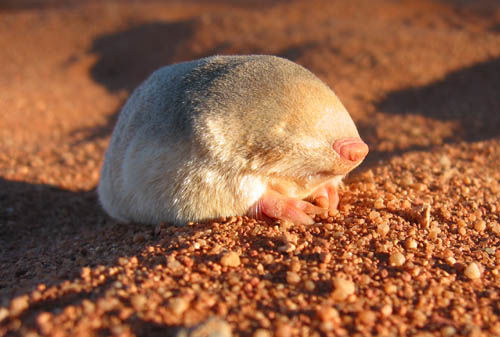
- Golden Moles
- FAMILY: Chrysochloridae
- habitat
- central and southern AFRICA
- features
- BODY STYLE: convergent with MARSUPIAL and TRUE moles
- SUBTERRANEAN, NO pinnae, has vestigial eyes
- pelage is SOFT and undirectional
- LEATHERLIKE PAD on nose
- forelimbs are UNDER the body and NOT rotated outward like in true moles
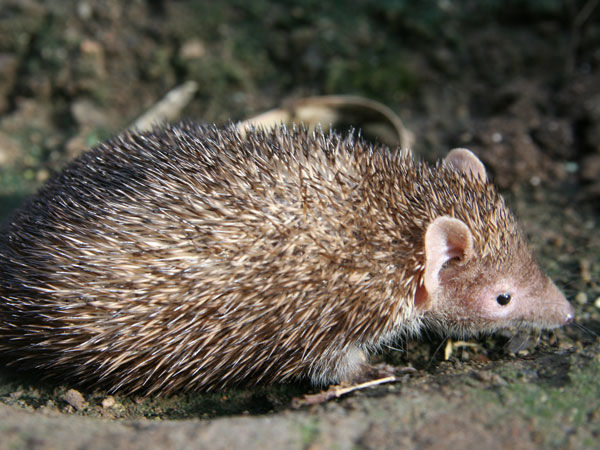
- Tenrecs
- FAMILY: Tenrecidae
- habitat
- ADAPTIVE radiation on Madagascar only (55 MYA)
- inhabit rainforests, dry deciduous forests, and deserts in Madagascar
- features
- Ancenstral morphology
- TAXONOMY: most closely related to AARDVARK and AFRICAN ELEPHANT
- several species ENDANGERED
- shrew to rabbit sized
- LONG snout, SMALL eyes
- urogenital canal and anus open into a common CLOACA
- has SPINES interspersed with soft hairs: HEMICENTENTES - specialized quills + STRIDULATING ORGAN
- some may use rudimentary echolocation
- some species are HETEROTHERMIC
- INSECTIVOROUS or OMNIVOROUS
- otter-shrews
- WEST and CENTRAL AFRICA ONLY
- Golden Moles
order: Macroscelidea
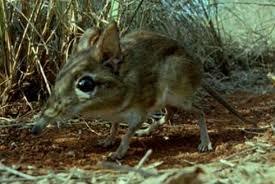
- Elephant Shrews (SENGIS)
- FAMILY: Macroscelididae
- habitat
- AFRICA ONLY
- desert, plains, brushland, forests, rocky areas
- features
- order name translates to "long/leg/form"
- terrestrial; mouse to large rat sized
- large eyes and ears
- long, moveable sensitive snouts
- long limbs; fast
- CARNIVOROUS but HAS CECUM
- DIURNAL except during hot weather Torpor: Tb to 5⁰C; O2 consumption 2% of BMR
- TERRITORIAL; may maintain intricate trail system
- scent marking and foot drumming
- economics and conservation
- several species hunted for meat
- contract MALARIA; used in medical research
- several species ENDANGERED
- new species discovered in 2006, description published in 2008
- Elephant Shrews (SENGIS)
order: Tubulidentata
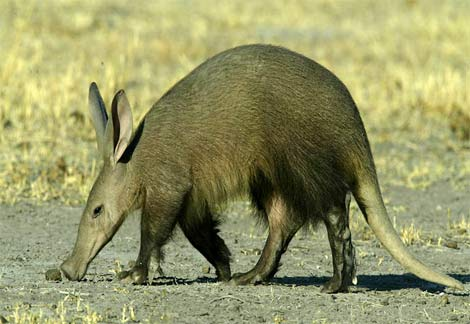
- Aardvark
- FAMILY: Orycteropodidae
- habitat
- dry savanna to rainforests
- Ethiopian biogeographic region
- tied to ant and termite distributions
- solitary, secretive, elusive
- features
- NOCTURNAL
- acute olfaction (fleshy tentacles on septum) and auditory abilities
- may travel 30 KM at night while foraging
- known as "earth pig" because it superficially resembles a pig
- up to 60kg and 1.5m long
- square, long snout, small eyes, large erect ears that fold back when digging
- tough, sparsely haired hide
- toes with robust clawlike nails
- elongate rostrum with sticky tongue
- no incisors or canines, but chew food with CHEEKTEETH (teeth = columnar or tubular with 1500 hexagonal prisms of dentine, no enamel, remain in gums)
- muscular pyloric section of stomach to grind food
- fossil history
- incomplete records
- early Miocene (24 MYA) the earliest, but several extinct species from Pleistocene (1.8MYA to 10,000 YA)
- economics and conservation
- eaten by native peoples
- teeth used as good-luck charms and jewelry
- populations LOWER than historic times
- Aardvark
eutherians
- eutherians dominated mammalian fauna on most continents during most of the CENOZOIC era >mammals in SOUTH AMERICA and AUSTRALIA were mostly marsupials >today, 5100/5400 mammal species are PLACENTAL
- earliest eutherian fossil is 125MYO (Eomaia scansoria in China)
- remaining record includes over 40 genera
- most fossils are fragments of jaws -difficult to distinguish between eutherians and metatherians on TOOTH and JAW features alone -distinguished mainly by reproductive features
- several characters of EUTHERIANS differentiate them from MONOTREMES and MARSUPIALS: -no marsupium -complex placenta to nourish young through long prenatal period -young maintained in nest, seldom moved while attached to nipples -relatively larger braincase -no EPIPUBIC bones
- cretaceous eutherians
- SMALL
- lacked auditory bulla
- lacked opposable first digits and probably not arboreal
- incisors varied in number
- probably played a variety of ecological roles: -insectivory, carnivory, and herbivory -climbers, jumpers, diggers, and generalized runners
Images and files in the map
Information
- Description
- Mammalogy (Mammal Survey) Mind Map on AFROTHERIA, created by nicolepridemore on 01/02/2015.
- Created by
- nicolepridemore
- Views
- 3
- Rating