
Mind map
Revision 1
Map content
Revision 1
Sound
- Waves
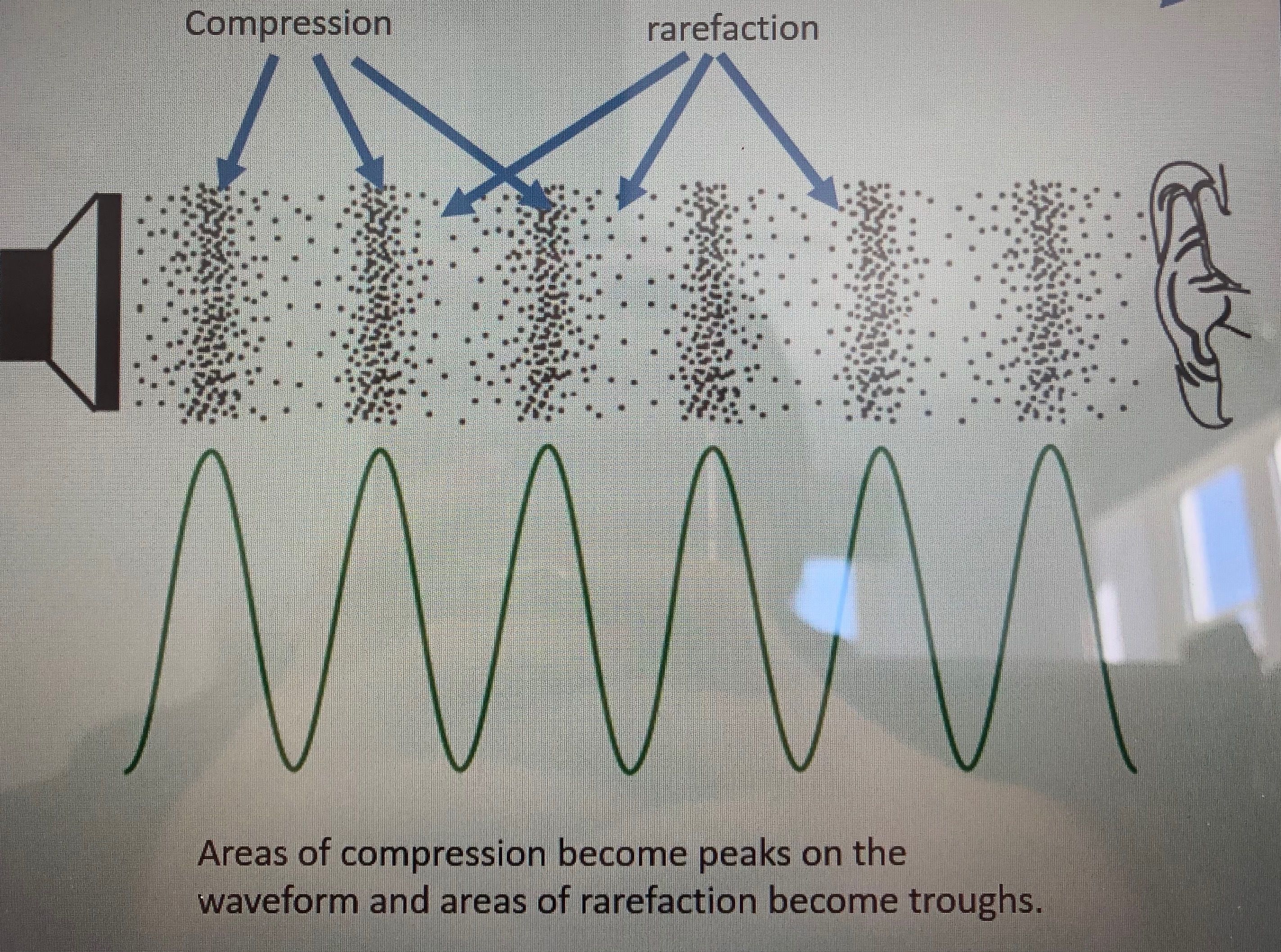
- A sound wave is produced by the vibrations of particles
- This vibration creates areas of compression (particles close together) and rarefaction (particles further apart)
- When a sound wave reaches a new medium then it will cause that substance to vibrate
- If someone is playing a musical instrument the sound waves will make the door , windows and anything else in the room vibrate slightly , you cant see it but your ears take advantage of this
- Ears
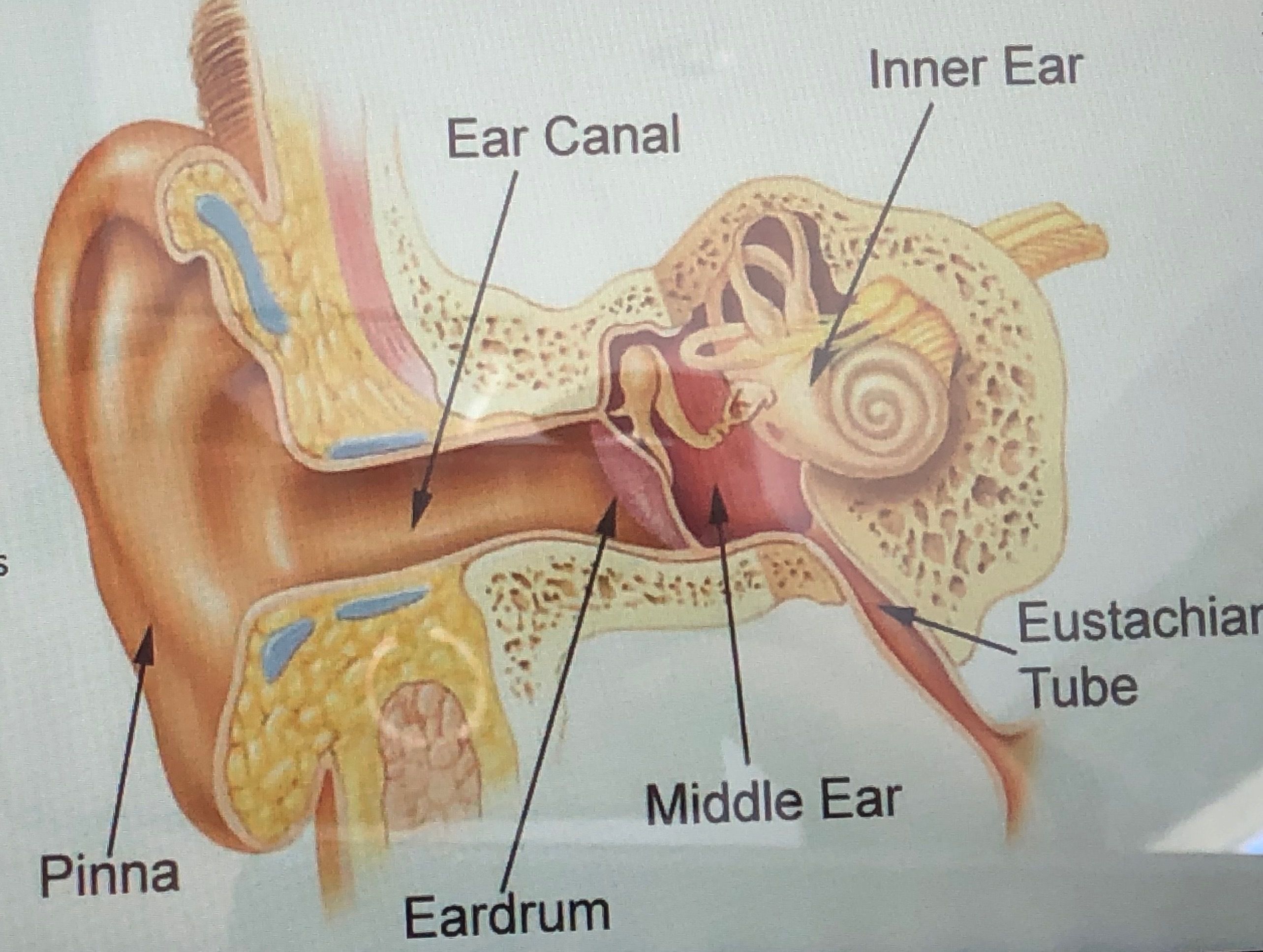
- The pinna helps to funnel sound towards the eardrum which vibrates
- The vibrations of the ear drum are amplified by the middle ear and carries the vibrations to the inner ear
- Part of the inner is it he cochlea - a spiral shaped structure with tiny hairs inside. These vibrate with the sound and send a signal through the auditory nerve to the brain
- Eardrum is a thin layer of skin/membrane at the end of the ear canal , sound waves travel travels down the ear canal to strike the ear drum causing it to vibrate
- The cochlea has hairs that when vibrated they send a message to the brain along the auditory nerve
- Waveforms
- A waveform has 2 main things we can measure
- Amplitude : this is a vertical distance between the central line and a peak or trough
- Wavelength: this is the horizontal distance between one part of the wave and the same part of the next wave this is mostly measured from peak to peak or trough to trough
- If the amplitude of a sound wave increases then the intensity of the sound will .you will mostly hear this as its volume
- If the wavelength increases of a sound wave then the pitch changes . The lager the wavelength the lower the pitch
- Waves
Light
- Light waves are electromagnetic waves
- Unlike sound waves they are not made up of particles and so can travel through vacuums as space
- Light waves travel in straight lines. When a wave reaches an object then the wave could :transmit through it - go through it like glass , reflect off it - Bounce off absorb into the object
- Sometimes more than one can occur. For example have you ever looked through a window but also seen a faint reflection of yourself in the window but also seen a faint reflection of yourself in the glass . The means that some light is transmitting through the glass whereas some is reflection
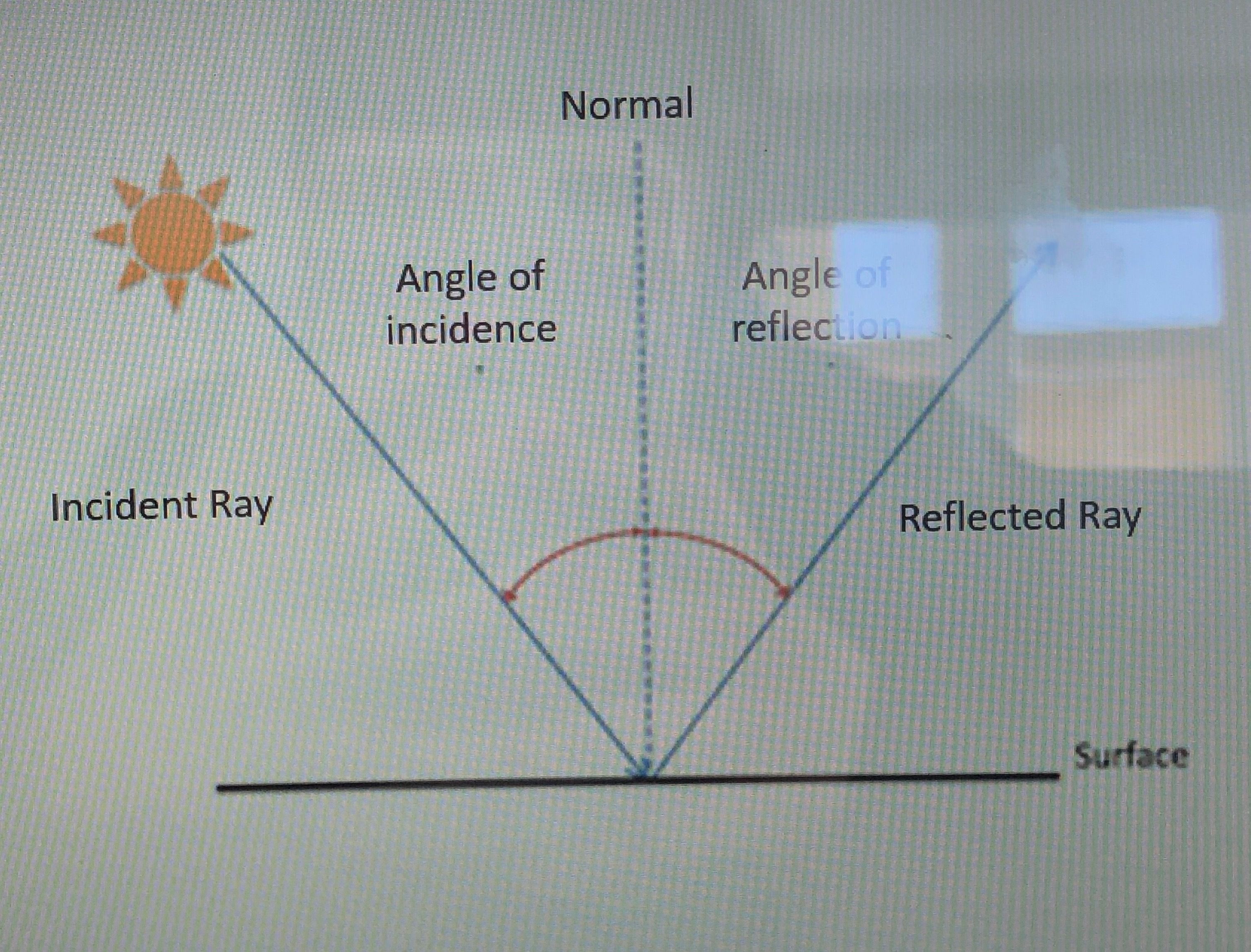
- If light reflects off an object then the angle of incidence will equal the angle of reflection
- Normal: a line at 90* to the reflection surface www here’s the incident ray meets the surface
- Angle of incidence : angle between the normal and incident ray
- Angle of reflection : angle between the normal and reflected ray
- Lights transmits through an object it refracts
- Angle of refraction : angle between the normal and refracted angle
- The amount of light refracted depends on the density of what it travels through
- Light waves are faster than sound waves
Elements, compounds , mixtures
- Element: a substance made of 1 atoms
- Compound : a substance made of more than 1 atom chemically bonded together
- Mixture: a substance made of more than 1 type of atom but not chemically bonded
Chemical formulae
- Oxygens chemical formula is 02 this means that the particle has 2 oxygen atoms in it
- Every capital letter shows us its a different atom
- If it has more than 1 capital letter its a compound
- The numbers after the atom show us how many atoms in the compound or element or mixture
- If there is no number after that means there is only 1 of that atom
Images and files in the map
Information
- Description
- Mind Map on Revision 1, created by Emilia Reed-smith on 21/04/2020.
- Created by
- Emilia Reed-smith
- Views
- 0
- Rating