
Mind map
Geography - Mass Tourism case study, Jamaica
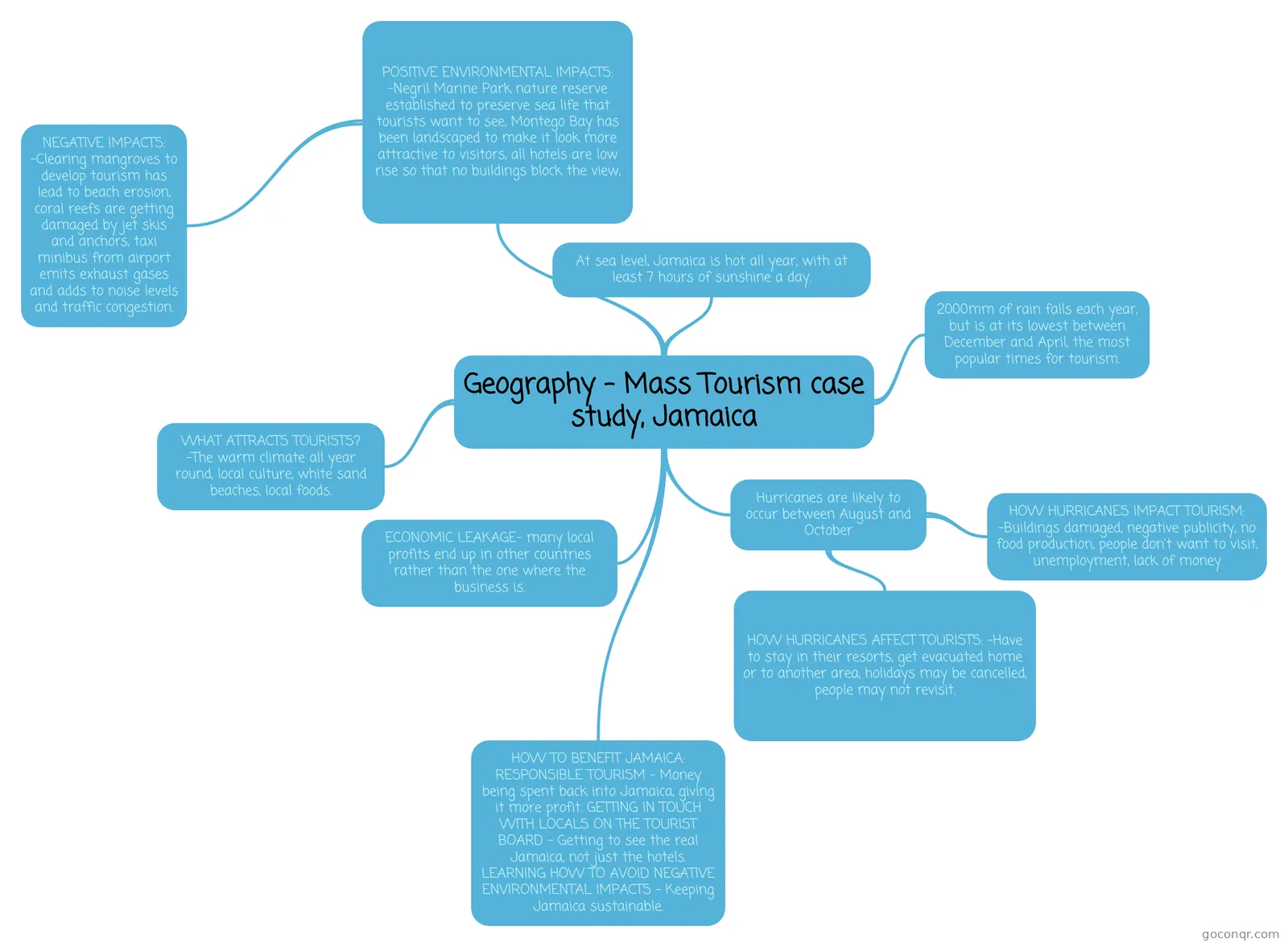
Mind map: Mass tourism case study Jamaica
Map content
Geography - Mass Tourism case study, Jamaica
At sea level, Jamaica is hot all year, with at least 7 hours of sunshine a day.
2000mm of rain falls each year, but is at its lowest between December and April, the most popular times for tourism.
Hurricanes are likely to occur between August and October
- HOW HURRICANES AFFECT TOURISTS: -Have to stay in their resorts, get evacuated home or to another area, holidays may be cancelled, people may not revisit.
- HOW HURRICANES IMPACT TOURISM: -Buildings damaged, negative publicity, no food production, people don't want to visit, unemployment, lack of money
WHAT ATTRACTS TOURISTS? -The warm climate all year round, local culture, white sand beaches, local foods.
ECONOMIC LEAKAGE- many local profits end up in other countries rather than the one where the business is.
POSITIVE ENVIRONMENTAL IMPACTS: -Negril Marine Park nature reserve established to preserve sea life that tourists want to see, Montego Bay has been landscaped to make it look more attractive to visitors, all hotels are low rise so that no buildings block the view,
- NEGATIVE IMPACTS: -Clearing mangroves to develop tourism has lead to beach erosion, coral reefs are getting damaged by jet skis and anchors, taxi minibus from airport emits exhaust gases and adds to noise levels and traffic congestion.
HOW TO BENEFIT JAMAICA: RESPONSIBLE TOURISM - Money being spent back into Jamaica, giving it more profit. GETTING IN TOUCH WITH LOCALS ON THE TOURIST BOARD - Getting to see the real Jamaica, not just the hotels. LEARNING HOW TO AVOID NEGATIVE ENVIRONMENTAL IMPACTS - Keeping Jamaica sustainable.
Information
- Description
- Mind Map on Geography - Mass Tourism case study, Jamaica, created by Mollie Swadling on 08/04/2015.
- Created by
- Mollie Swadling
- Views
- 72
- Rating