
Mind map
Random Access Protocols
Map content
Random Access Protocols
ALOHA
- The earliest random access method
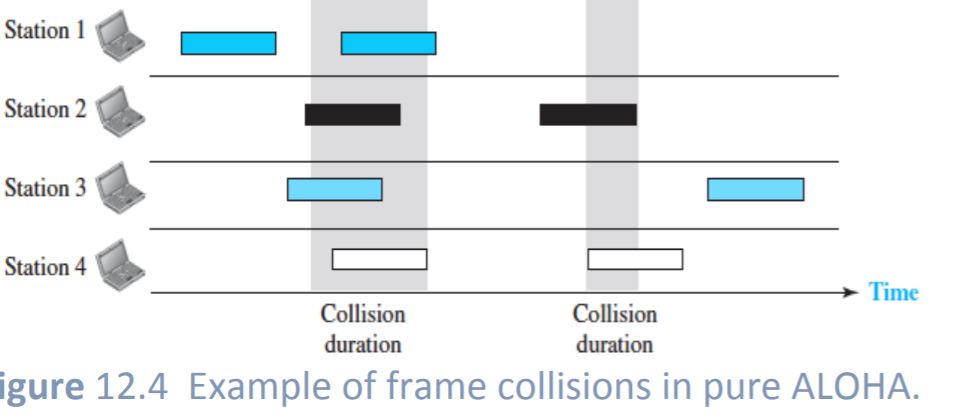
- Pure ALOHA
- The original ALOHA protocol is pure ALOHA
- Each station sends a frame whenever it has a frame to be sent.
- There are potential collisions in this arrangement and the data from the two station collide and become garbled
- After transmittinga frame,the sender waits foran ACK for an amount of time If no ACK was received, the sender will resends that frame after it waits for a random amount of time If station fails to receive an ACK afer repeated transmissions, it gives upe.
- The vulnerable Time: 2*Frame transmission time
- Throughput : G*e^(-2G)
- Student name:Nawal Alamri
- ID: 2190005382
- Student name:Nawal Alamri
- Maximum Throughput: 18.4%
- Collision Status : It does not reduce the total number of collisions to half
- Slotted ALOHA
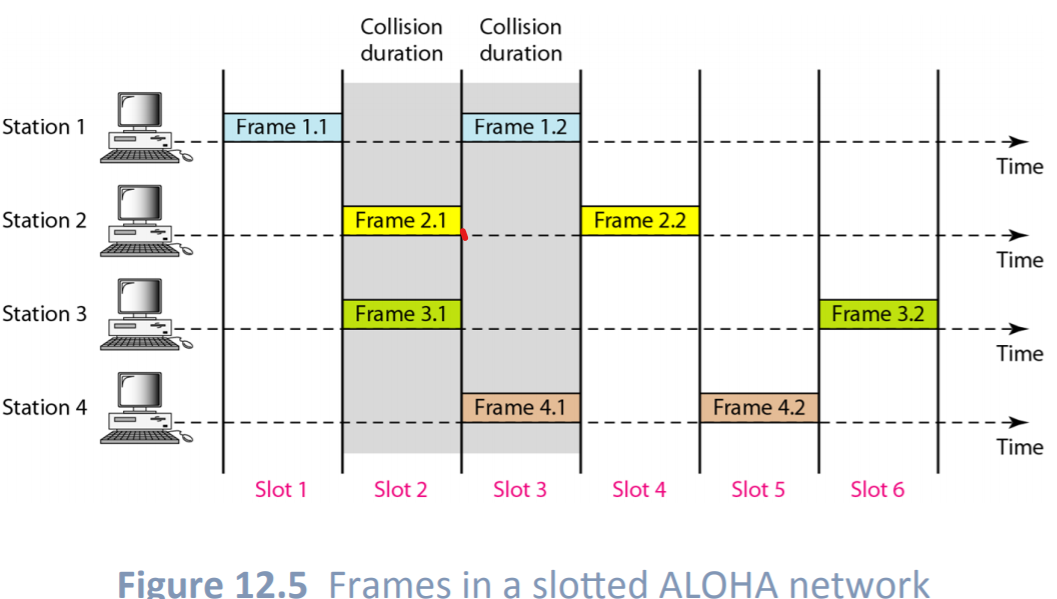
- Time is divided into slots equal to a frame transmission time (Tfr) seconds.
- The data at the beginning of any random time slot If a station misses the beginning of a slot, it has to wait until the beginning of the next time slot.
- A station informs all stations about the start of each slot.
- The vulnerable Time: Frame transmission time
- Throughput : G*e^-2
- Maximum Throughput : 36.8%
- Pure ALOHA
- The earliest random access method
CSMA
- carrier sense multiple access
- To minimize the chance of collision and increase the performance
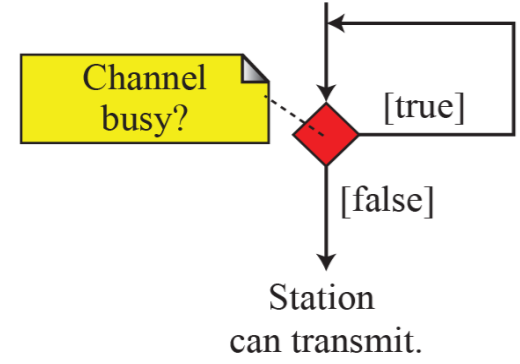
- each station first listen to the medium before sending.
- The vulnerable Time: propagation Time Tp
- 1-Persistent
- It is simple and straightforward
- station idle sends the frame immediately
- has the highest chance of collision
- Same
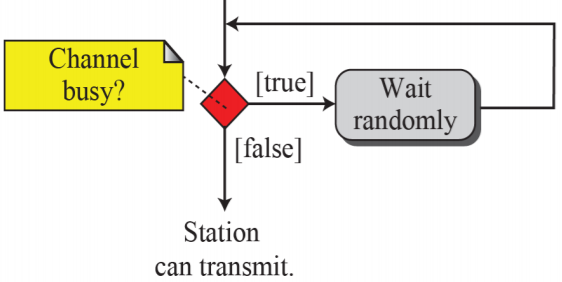
- if not idle, waits for a random amount of time then senses the line again
- it reduces the chance of collision and the efficiency
- if not idle, waits for a random amount of time then senses the line again
- station idle sends the frame immediately
- It is simple and straightforward
- Nonpersistent
- A station that has a frame to send senses the line.
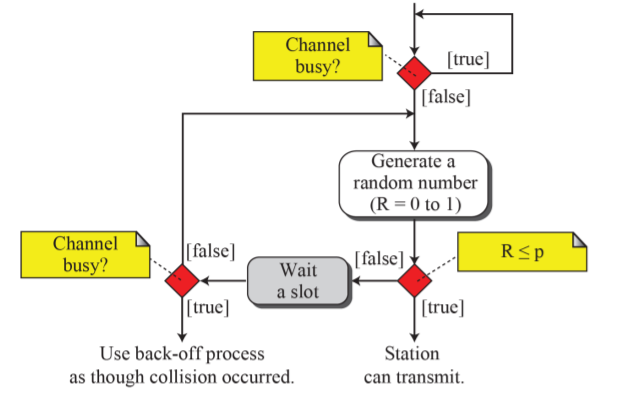
- p -Persistent
- It is used if the channel has time slots with a slot duration equal to or greater than the maximum propagation time.
- It reduces the chance of collision and improves efficiency
- After the station finds the line idle it follows these steps
- With probability p, the station sends its frame.
- This step
- With probability q=1−p,the station waits for the beginning of the next time slot and checks the line again.
- If the line is idle, it goes to step 1
- If the line is busy, it acts as though a collision has occurred and uses the backoff procedure.
- With probability p, the station sends its frame.
- It is used if the channel has time slots with a slot duration equal to or greater than the maximum propagation time.
- CSMA/CD
- carrier sense multiple access with collision detection
- augments the algorithm to handle the collision
- a station monitors the medium after it sends to see if the transmission was successful.
- carrier sense multiple access with collision detection
- CSMA/CA
- Carrier sense multiple access with collision avoidance
- Collisions are avoided through the use of CSMA/CA’s three strategies:
- The interframe space
- The contention window.
- Acknowledgments
- carrier sense multiple access
Images and files in the map
Information
- Description
- Mind Map on Random Access Protocols, created by nawal amri on 03/02/2021.
- Created by
- nawal amri
- Views
- 0
- Rating