
Mind map
Chapter 12: Communication Planning
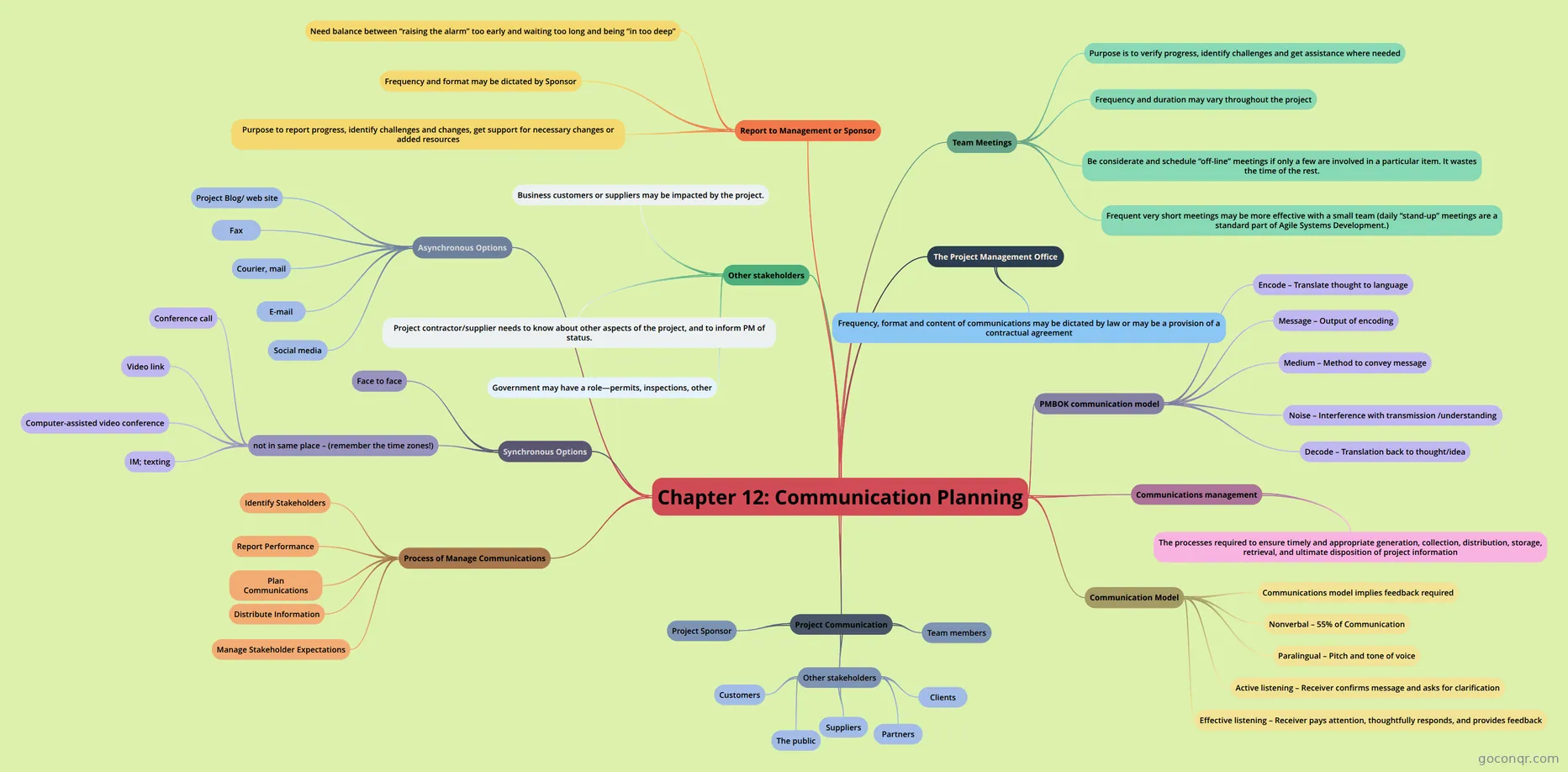
Mind map: Communication Planning for Project Management
Map content
Chapter 12: Communication Planning
Communications management
- The processes required to ensure timely and appropriate generation, collection, distribution, storage, retrieval, and ultimate disposition of project information
PMBOK communication model
- Encode – Translate thought to language
- Message – Output of encoding
- Medium – Method to convey message
- Noise – Interference with transmission /understanding
- Decode – Translation back to thought/idea
Communication Model
- Communications model implies feedback required
- Nonverbal – 55% of Communication
- Paralingual – Pitch and tone of voice
- Active listening – Receiver confirms message and asks for clarification
- Effective listening – Receiver pays attention, thoughtfully responds, and provides feedback
Project Communication
- Project Sponsor
- Team members
- Other stakeholders
- Customers
- Clients
- Suppliers
- Partners
- The public
Process of Manage Communications
- Identify Stakeholders
- Plan Communications
- Distribute Information
- Manage Stakeholder Expectations
- Report Performance
Synchronous Options
- Face to face
- not in same place – (remember the time zones!)
- Conference call
- Video link
- Computer-assisted video conference
- IM; texting
Asynchronous Options
- Courier, mail
- Fax
- Project Blog/ web site
- Social media
Team Meetings
- Purpose is to verify progress, identify challenges and get assistance where needed
- Frequency and duration may vary throughout the project
- Be considerate and schedule “off-line” meetings if only a few are involved in a particular item. It wastes the time of the rest.
- Frequent very short meetings may be more effective with a small team (daily “stand-up” meetings are a standard part of Agile Systems Development.)
Report to Management or Sponsor
- Frequency and format may be dictated by Sponsor
- Purpose to report progress, identify challenges and changes, get support for necessary changes or added resources
- Need balance between “raising the alarm” too early and waiting too long and being “in too deep”
The Project Management Office
- Frequency, format and content of communications may be dictated by law or may be a provision of a contractual agreement
Other stakeholders
- Business customers or suppliers may be impacted by the project.
- Project contractor/supplier needs to know about other aspects of the project, and to inform PM of status.
- Government may have a role—permits, inspections, other
Information
- Description
- Mind Map on Chapter 12: Communication Planning, created by Syuhada Asmaa on 24/06/2021.
- Created by
- Syuhada Asmaa
- Views
- 3
- Rating
More on Communications Planning