
Mind map
Second Language Acquisition

Map content
Second Language Acquisition
Noam Chomsky: Universal Grammar
- “All human language rests on innate building blocks of expression.” While all languages vary in utilization they are all dependent on the same building blocks: verbs, nouns, adjectives, etc.
- ". . . innate building blocks of expression."
- Application
- Classroom
- Co-instruction with ELLs
- Grading
- ELLs: Marks consider evaluated level as well as mediated progress.
- Native Speakers: Academic Literacy is ongoing for all speakers, native and non-native, and grading will follow equitable guidelines.
- Learner
- Inborn Confussion
- Differentiated Instruction
- Further Explanation of Instruction in Relatable Terms
- Further Explanation of Instruction in Relatable Terms
- Empathy for Error
- Differentiated Instruction
- Practice Through Inputs
- Exposure to Academic Media
- Inborn Confussion
- Classroom
Jerome Bruner: Scaffolding
- Application
- Classroom
- Scaffolding in the classroom is designed to help children and adolescents bridge gaps in cognitive ability in order to arrive at otherwise forgone conclusions related to subject matter. Identically, for language learners, scaffolding is a means to encourage use of increasingly difficult vocabulary and sentence structure to improve competency.
- Thesaurus
- Not related but funny.
- Learner
- Native Speakers
- Even for native speakers vocabulary can be an issue or even a downright struggle. Scaffolding provides a means by which to learn words (i.e. roots) of varying difficult. Exposure, instruction, and use breed competency.
- ELLs
- For ELLs, scaffolding provides a bridge to high vocabulary and competency skills much in the same way as Native Speakers. However, incremental instruction should be active as well as clarifying marks by instructors while forming competency.
- Native Speakers
- Classroom
- Bridging the Gap Incrementally and with Guided Assistance
- Application
Jim Cummins: BICS vs. CALP
- BICS
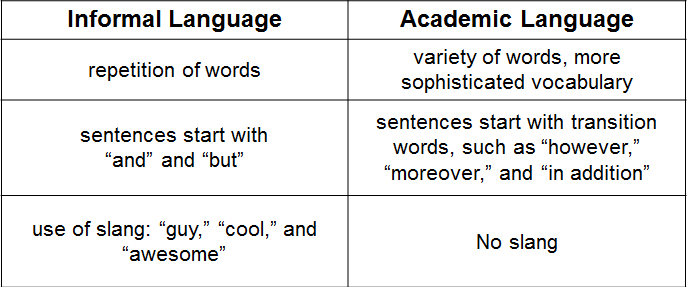
- Basic Interpersonal Communicative Skills (BICS): “Conversational Fluency” — Includes “high frequency vocabulary and basic grammatical expressions” and does not represent a totality of the language.
- Application
- Classroom
- Instruction on Types of Writing and Speech
- Instruction on Types of Writing and Speech
- Learner
- Exposure
- Media Resources
- Guided Independent Study
- Group Assignments to Learn New Language Alongside Native Speakers
- This method requires a degree of sensitivity training in order to encourage growth and stem embarrassment or anxiety in ELLs.
- Media Resources
- Exposure
- Classroom
- CALP
- Cognitive Academic Language Proficiency (CALP): “Represents our ability to interpret and to produce increasingly complex aspects of the language.”
- BICS
Stephen Krashen: Input Hypothesis
- "When we understand messages."
- Dr. Krashen's Input Hypothesis operates under the basic principle that language is acquired only “when we understand what people tell us—not how people say it, but [instead] what they say. Or when we understand what we read.”
- Ensure Clear and Concise Instruction
- Application
- Classroom
- Labeling
- Pidgin as a Bridge
- Basic Sign Language
- Teaching Cognates
- Learner
- Differentiated Instruction
- "Talking is not practicing."
- Classroom
- "When we understand messages."
Dialogue Journals
- Written communication comprised of academic writing..
- Using Dialogue Journals--so long as the educator is mindful of the manner in which they mark and suggest improvement--is an excellent method to encourage language proficiency in both native and non-native speakers.
- Application
- Classroom
- I feel adamantly about dialogue journals and intend to use them in my classroom via integration into "bell ringers." Given the opportunity and mindful encouragement all level so English competency stand to improve in academic language.
- Shared Information
- Fresh Ideas and Instruction Without Intimidation of Speaking
- The educator has the opportunity to praise students on multiple fronts. Ranging from creative thinking to factual presentation, all while being able to encourage more specific and intricate word usage as well as complex sentence structure and writing techniques.
- Fresh Ideas and Instruction Without Intimidation of Speaking
- Learner
- ELLs and Native Speakers
- Increased Competency
- Vocabulary Usage
- Sentence Structuring
- Writing Techniques
- Content Knowledge
- Especially viable in subjects such as English, Literature, Social Science, and the Arts.
- Increased Competency
- ELLs and Native Speakers
- Classroom
- Written communication comprised of academic writing..
Catchy Title
Images and files in the map











Information
- Description
- Second Language Acquisition Mind Map as part of Auburn University's CTRD5003 course.
- Created by
- Wes Justice
- Views
- 112
- Tags
- Rating