
Mind map
Qualitative Research Approaches
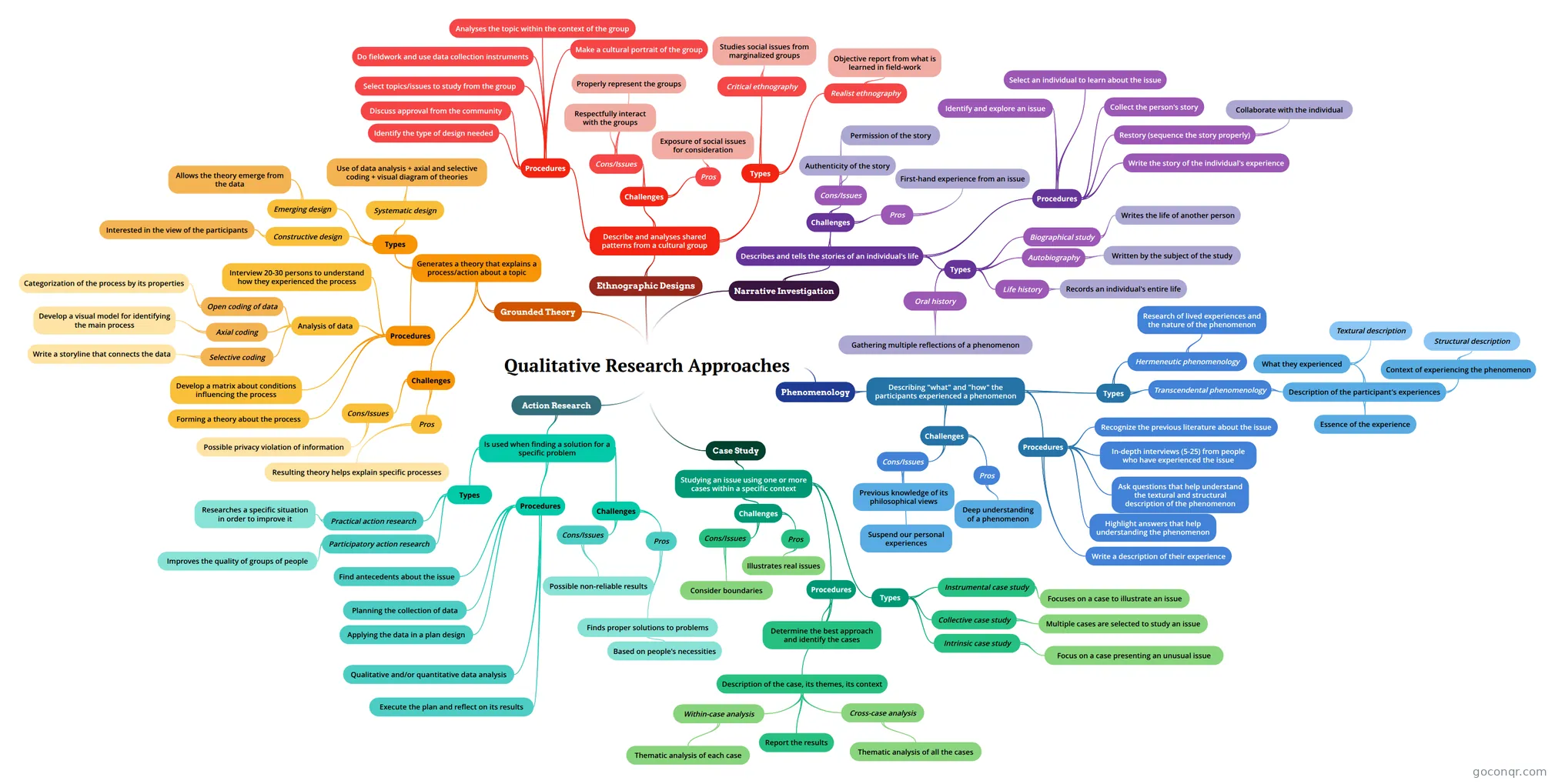
Mind map: Qualitative research approaches
Map content
Qualitative Research Approaches
Grounded Theory
- Generates a theory that explains a process/action about a topic
- Types
- Systematic design
- Use of data analysis + axial and selective coding + visual diagram of theories
- Emerging design
- Allows the theory emerge from the data
- Constructive design
- Interested in the view of the participants
- Systematic design
- Procedures
- Interview 20-30 persons to understand how they experienced the process
- Analysis of data
- Open coding of data
- Categorization of the process by its properties
- Axial coding
- Develop a visual model for identifying the main process
- Selective coding
- Write a storyline that connects the data
- Open coding of data
- Develop a matrix about conditions influencing the process
- Forming a theory about the process
- Challenges
- Cons/Issues
- Possible privacy violation of information
- Pros
- Resulting theory helps explain specific processes
- Cons/Issues
- Types
- Generates a theory that explains a process/action about a topic
Ethnographic Designs
- Describe and analyses shared patterns from a cultural group
- Types
- Realist ethnography
- Objective report from what is learned in field-work
- Critical ethnography
- Studies social issues from marginalized groups
- Realist ethnography
- Procedures
- Identify the type of design needed
- Discuss approval from the community
- Select topics/issues to study from the group
- Do fieldwork and use data collection instruments
- Analyses the topic within the context of the group
- Make a cultural portrait of the group
- Challenges
- Cons/Issues
- Respectfully interact with the groups
- Properly represent the groups
- Pros
- Exposure of social issues for consideration
- Cons/Issues
- Types
- Describe and analyses shared patterns from a cultural group
Narrative Investigation
- Describes and tells the stories of an individual's life
- Types
- Biographical study
- Writes the life of another person
- Autobiography
- Written by the subject of the study
- Life history
- Records an individual's entire life
- Oral history
- Gathering multiple reflections of a phenomenon
- Biographical study
- Procedures
- Identify and explore an issue
- Select an individual to learn about the issue
- Collect the person's story
- Restory (sequence the story properly)
- Collaborate with the individual
- Write the story of the individual's experience
- Challenges
- Cons/Issues
- Authenticity of the story
- Permission of the story
- Pros
- First-hand experience from an issue
- Cons/Issues
- Types
- Describes and tells the stories of an individual's life
Phenomenology
- Describing "what" and "how" the participants experienced a phenomenon
- Types
- Hermeneutic phenomenology
- Research of lived experiences and the nature of the phenomenon
- Transcendental phenomenology
- Description of the participant's experiences
- What they experienced
- Textural description
- Context of experiencing the phenomenon
- Structural description
- Essence of the experience
- What they experienced
- Description of the participant's experiences
- Hermeneutic phenomenology
- Procedures
- Recognize the previous literature about the issue
- In-depth interviews (5-25) from people who have experienced the issue
- Ask questions that help understand the textural and structural description of the phenomenon
- Highlight answers that help understanding the phenomenon
- Write a description of their experience
- Challenges
- Pros
- Deep understanding of a phenomenon
- Cons/Issues
- Previous knowledge of its philosophical views
- Suspend our personal experiences
- Pros
- Types
- Describing "what" and "how" the participants experienced a phenomenon
Case Study
- Studying an issue using one or more cases within a specific context
- Types
- Instrumental case study
- Focuses on a case to illustrate an issue
- Collective case study
- Multiple cases are selected to study an issue
- Intrinsic case study
- Focus on a case presenting an unusual issue
- Instrumental case study
- Procedures
- Determine the best approach and identify the cases
- Description of the case, its themes, its context
- Within-case analysis
- Thematic analysis of each case
- Cross-case analysis
- Thematic analysis of all the cases
- Report the results
- Within-case analysis
- Challenges
- Cons/Issues
- Consider boundaries
- Pros
- Illustrates real issues
- Cons/Issues
- Types
- Studying an issue using one or more cases within a specific context
Action Research
- Is used when finding a solution for a specific problem
- Types
- Practical action research
- Researches a specific situation in order to improve it
- Participatory action research
- Improves the quality of groups of people
- Practical action research
- Procedures
- Find antecedents about the issue
- Planning the collection of data
- Applying the data in a plan design
- Qualitative and/or quantitative data analysis
- Execute the plan and reflect on its results
- Challenges
- Cons/Issues
- Possible non-reliable results
- Pros
- Finds proper solutions to problems
- Based on people's necessities
- Finds proper solutions to problems
- Cons/Issues
- Types
- Is used when finding a solution for a specific problem
Information
- Description
- Mind Map on Qualitative Research Approaches, created by Jocelyn Azeret Lozano Cardenas on 07/02/2022.
- Created by
- Jocelyn Azeret Lozano Cardenas
- Views
- 0
- Rating