
Mind map
Introduction
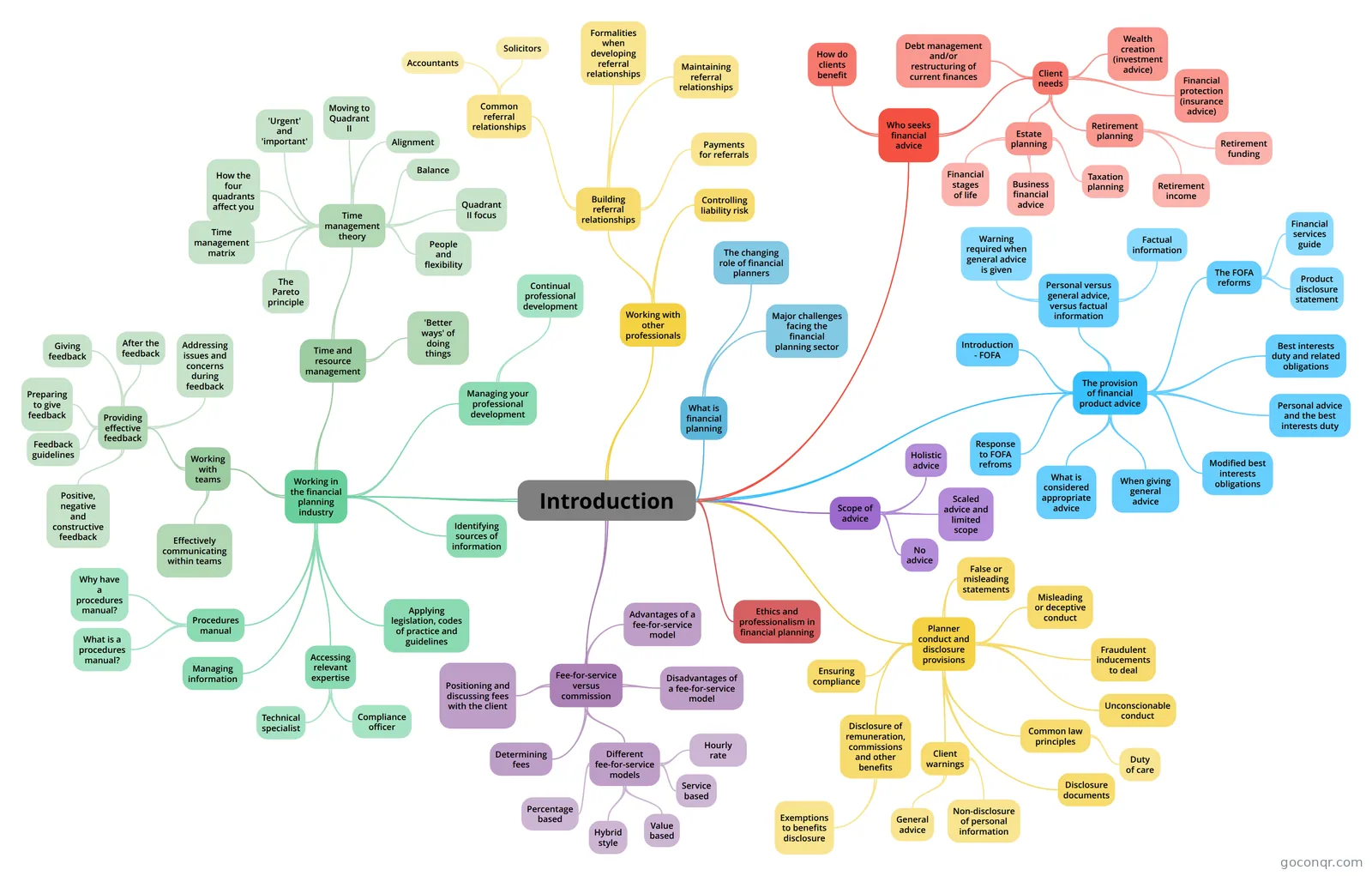
Mind map: Introduction to financial planning
Map content
Introduction
What is financial planning
- The changing role of financial planners
- Major challenges facing the financial planning sector
Who seeks financial advice
- How do clients benefit
- Client needs
- Debt management and/or restructuring of current finances
- Wealth creation (investment advice)
- Financial protection (insurance advice)
- Retirement planning
- Retirement funding
- Retirement income
- Estate planning
- Taxation planning
- Business financial advice
- Financial stages of life
The provision of financial product advice
- Introduction - FOFA
- Personal versus general advice, versus factual information
- Warning required when general advice is given
- Factual information
- The FOFA reforms
- Financial services guide
- Product disclosure statement
- Best interests duty and related obligations
- Personal advice and the best interests duty
- Modified best interests obligations
- When giving general advice
- What is considered appropriate advice
- Response to FOFA refroms
Scope of advice
- Holistic advice
- Scaled advice and limited scope
- No advice
Planner conduct and disclosure provisions
- False or misleading statements
- Misleading or deceptive conduct
- Fraudulent inducements to deal
- Unconscionable conduct
- Common law principles
- Duty of care
- Disclosure documents
- Client warnings
- Non-disclosure of personal information
- General advice
- Disclosure of remuneration, commissions and other benefits
- Exemptions to benefits disclosure
- Ensuring compliance
Ethics and professionalism in financial planning
Fee-for-service versus commission
- Different fee-for-service models
- Hourly rate
- Service based
- Value based
- Percentage based
- Hybrid style
- Determining fees
- Positioning and discussing fees with the client
- Advantages of a fee-for-service model
- Disadvantages of a fee-for-service model
- Different fee-for-service models
Working in the financial planning industry
- Identifying sources of information
- Applying legislation, codes of practice and guidelines
- Accessing relevant expertise
- Compliance officer
- Technical specialist
- Managing information
- Procedures manual
- What is a procedures manual?
- Why have a procedures manual?
- Working with teams
- Effectively communicating within teams
- Providing effective feedback
- Positive, negative and constructive feedback
- Feedback guidelines
- Preparing to give feedback
- Giving feedback
- After the feedback
- Addressing issues and concerns during feedback
- Time and resource management
- Time management theory
- The Pareto principle
- Time management matrix
- How the four quadrants affect you
- 'Urgent' and 'important'
- Moving to Quadrant II
- Alignment
- Balance
- Quadrant II focus
- People and flexibility
- 'Better ways' of doing things
- Time management theory
- Managing your professional development
- Continual professional development
Working with other professionals
- Building referral relationships
- Common referral relationships
- Accountants
- Solicitors
- Formalities when developing referral relationships
- Maintaining referral relationships
- Payments for referrals
- Common referral relationships
- Controlling liability risk
- Building referral relationships
Information
- Description
- Mind Map on Introduction, created by b_serong on 25/09/2015.
- Created by
- b_serong
- Views
- 0
- Rating
More on Financial Advisers and Regulation