
Mind map
Activity 1. Consumer behaviour
Map content
Activity 1. Consumer behaviour
Alejandra Valdés Jiménez A01368181
- REFERENCES: Selling Building Partnerships. Stephen B. Castleberry. John F. Tanner, Jr. Eleventh Edition.
BUYING BEHAVIOR AND THE BUYING PROCESS
- WHY PEOPLE BUY:
- People buy to: satisfy a want or desire, to solve a problem, or to satisfy an impulse
- Buyers have personal goals and aspirations, be aware of the needs we are solving
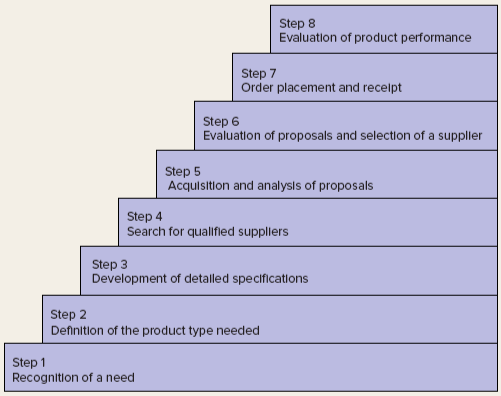
- STEPS IN THE BUYING PROCESS:
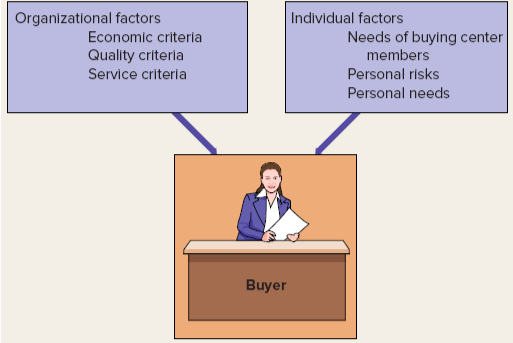
- ORGANIZATIONAL NEEDS AND CRITERIA:
- Economic, quality and service criteria (they look for a profit, buying products and services at the lowest cost, provide quality products and solve their problems)
- SUPPLY CHAIN MANAGEMENT: increase the efficiency of the distribution channel that moves products from the producer’s facilities to the end user, such as just-in-time (JIT) inventory control, quick-response (QR) systems, efficient consumer response (ECR) systems, automatic replenishment (AR) and electronic data interchange (EDI)
- Economic, quality and service criteria (they look for a profit, buying products and services at the lowest cost, provide quality products and solve their problems)
- MULTIATTRIBUTE MODEL OF PRODUCT EVALUATION AND CHOICE:
- Multiattribute model is a useful approach for understanding the factors individual members of a buying center consider in evaluating products and making choices; the model is based on the idea that people view a product as a collection of characteristics or attributes
- EVALUATION: -Performance Evaluation Of Characteristics -Importance Weights -Overall Evaluation -Value Offered -Supplier Selection
- Multiattribute model is a useful approach for understanding the factors individual members of a buying center consider in evaluating products and making choices; the model is based on the idea that people view a product as a collection of characteristics or attributes
- People buy to: satisfy a want or desire, to solve a problem, or to satisfy an impulse
- TYPES OF CUSTOMERS (producers, resellers, government agencies, institutions, and consumers):
- - MANUFACTURERS: buy products and services to manufacture and sell their products and services to customers
- -RESELLERS: buy finished products or services with the intention to resell them to businesses and consumers. Three elements when making decisions about which products to sell: profit margin, turnover, and effort
- -GOVERNMENT AGENCIES: develop detailed specifications for a product and then invite qualified suppliers to submit bids; the largest customers: federal, state, and local governments
- -INSTITUTIONS: have different needs and buying processes (public and private institutions such as churches, hospitals, and colleges)
- -CONSUMERS: for use by themselves or by their families
- -INSTITUTIONS: have different needs and buying processes (public and private institutions such as churches, hospitals, and colleges)
- -GOVERNMENT AGENCIES: develop detailed specifications for a product and then invite qualified suppliers to submit bids; the largest customers: federal, state, and local governments
- -RESELLERS: buy finished products or services with the intention to resell them to businesses and consumers. Three elements when making decisions about which products to sell: profit margin, turnover, and effort
- TYPES OF ORGANIZATIONAL BUYING DECISIONS:
- New tasks: when a customer purchases a product or service for the first time
- Straight rebuys: the customer buys the same product from the same source it used when they need it previously
- Modified rebuys: the customer buys the same product from the same source it used when the need arose previously
- Straight rebuys: the customer buys the same product from the same source it used when they need it previously
- New tasks: when a customer purchases a product or service for the first time
- - MANUFACTURERS: buy products and services to manufacture and sell their products and services to customers
- ORGANIZATIONAL BUYING AND SELLING:
- Requires more skills and is more challenging than selling to consumers
- Organizations use highly trained, knowledgeable purchasing agents to make these decisions (including engineers, production managers, business analysts, and senior executives)
- Organizational buying decisions involve extensive evaluations and negotiations (5 months in average)
- Organizations use highly trained, knowledgeable purchasing agents to make these decisions (including engineers, production managers, business analysts, and senior executives)
- DERIVED VERSUS DIRECT DEMAND:
- Derived demand: purchases made by customers depend on the demand for their products
- Direct demand: the demand for a final good. Food, clothing and cell phones are an example of this
- WHO MAKES THE BUYING DECISION:
- -Users -Initiators -Influencers -Gatekeepers -Deciders
- -Users -Initiators -Influencers -Gatekeepers -Deciders
- Derived demand: purchases made by customers depend on the demand for their products
- Requires more skills and is more challenging than selling to consumers
- WHY PEOPLE BUY:
USING COMMUNICATION PRINCIPLES TO BUILD RELATIONSHIPS
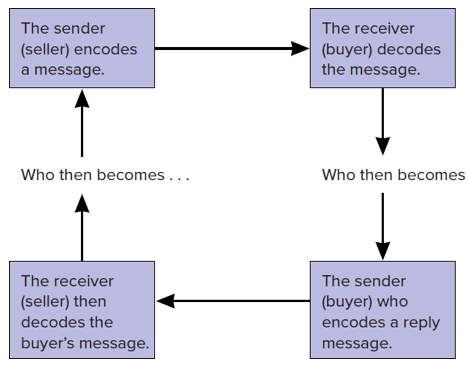
- COMMUNICATION PROCESS:
- Communication and knowledge may be applied at the same time in the conversations
- SENDING VERBAL MESSAGES EFFECTIVELY:
- CHOICE OF WORDS: use short words and phrases to demonstrate strength and force or to provide charm and grace. Avoid trite words and phrases that make you sound like an overeager salesperson, also using off-color language, slang, and foul language, also distracting verbal pauses and similar unnecessary words
- Words have different meanings in different cultures and even in different subculture
- VOICE CHARACTERISTICS: include rate of speech, loudness, inflection, and articulation. Poor voice and speech habits make it difficult for customers to understand a salesperson’s message
- STORIES: can also make points most effectively. Great stories often include conflicts, trials, and crises and help the listener think through choices and outcomes of those decisions
- VOICE CHARACTERISTICS: include rate of speech, loudness, inflection, and articulation. Poor voice and speech habits make it difficult for customers to understand a salesperson’s message
- KEEP OPEN LINES OF COMMUNICATION: must contact buyers often, keep them fully informed, and make sure you are accessible for their contact and welcome their thoughts, even if negative.
- ACTIVE LISTENING:
- 80–20 listening rule: try to listen 80 percent of the time and talk no more than 20 percent of the time
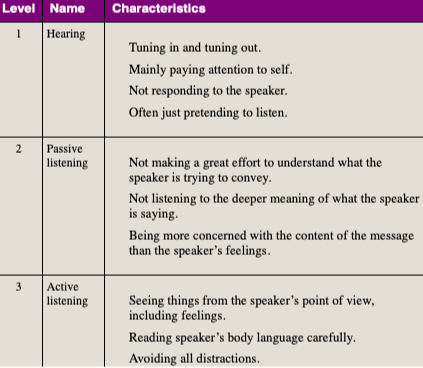
- Levels of listening:
- Repeating Information: verify the information being collected from the customer, repeat, word for word, what has been said
- Restating Or Rephrasing Information: restate the customer’s comment in his or her own words
- Clarifying Information: ask questions designed to obtain additional information
- Summarizing The Conversation: mentally summarize points that have been made
- Tolerating Silences: it´s important to understand the importance of the time that people need to think in a question or the answer, for both parts
- Concentrating On The Ideas Being Communicated: listen to the words from the customer’s viewpoint instead of reacting from their own viewpoint
- Tolerating Silences: it´s important to understand the importance of the time that people need to think in a question or the answer, for both parts
- Summarizing The Conversation: mentally summarize points that have been made
- Clarifying Information: ask questions designed to obtain additional information
- Restating Or Rephrasing Information: restate the customer’s comment in his or her own words
- Levels of listening:
- READING NONVERBAL MESSAGES FROM CUSTOMERS:
- Words are responsible for 40 percent of the information, voice for 10 percent of the message received, and the remaining 50 percent comes from nonverbal communications.
- BODY LANGUAGE:
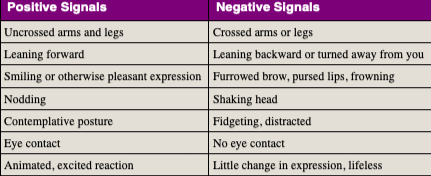
- Body Angle: back-and-forth body motions indicate a positive outlook, side-to-side movements suggest insecurity and doubt. Body movements directed toward a person indicate positive regard, leaning back suggests boredom, apprehension, or possibly anger. Changes in position may indicate that a customer wants to end the interview, strongly agrees or disagrees with what has been said, or wants to place an order
- Face: to indicate interest, expectation, concern, disapproval, or approval; eyes are the most important area of the face
- Arms: arm movement when they are conveying an opinion
- Hands: open and relaxed hands are a positive signal, self-touching gestures indicate tension, involuntary gestures are good indicators of true feelings
- Legs: uncrossed legs send a message of cooperation, confidence, and friendly interest; legs crossed away from a salesperson suggest that the sales call is not going well
- BODY LANGUAGE:
- BODY LANGUAGE PATTERNS:
- COMMUNICATING VIA TECHNOLOGY:
- Using phone, voice mail, e-mail, texts, and social media
- ADJUSTING FOR CULTURAL DIFFERENCES: all around the world are different scenarios and traditions from the way to talk to the way to act, sit and express, we have to be aware of all that changes depending on the culture
- Using phone, voice mail, e-mail, texts, and social media
- COMMUNICATING VIA TECHNOLOGY:
- SENDING MESSAGES WITH NONVERBAL COMMUNICATION:
- The most effective gestures are natural ones, not those you are forcing yourself to perform. Facial muscles, eye contact, gestures and handshaking, posture and body movements
- THE ROLE OF SPACE AND PHYSICAL CONTACT:
- The intimate zone, the personal zone, the public zone and the social zone
- APPEARANCE: dress style (getting customers to notice you in a positive way and getting customers to trust you)
- Five timeless principles for a salesperson wanting to dress for success: 1: Consider the Geography 2: Consider Your Customers 3: Consider Your Corporate Culture 4: Consider Your Aspirations 5: Consider Your Own Personal Style
- Words are responsible for 40 percent of the information, voice for 10 percent of the message received, and the remaining 50 percent comes from nonverbal communications.
- 80–20 listening rule: try to listen 80 percent of the time and talk no more than 20 percent of the time
- COMMUNICATION PROCESS:
Images and files in the map
Information
- Description
- Mind Map on Activity 1. Consumer behaviour, created by Alejandra Valdés Jiménez on 11/08/2022.
- Created by
- Alejandra Valdés Jiménez
- Views
- 0
- Rating