
Mind map
Chemistry Terms
Map content
Chemistry Terms
Properties
- Chemical
- Definition: a characteristic of a substance that is determined when the composition of the substance is change and one or more new substances is created
- Examples~ flammable, heat combustion, toxicity
- Definition: a characteristic of a substance that is determined when the composition of the substance is change and one or more new substances is created
- Physical
- Definition: a characteristic that can be determined without changing the composition of the substance
- Examples~ it's state, colour, size, density
- Characteristic Physical
- Definition: a physical property that is unique to a substance and can be used to identify the substance
- Examples~ density, melting point, freezing point, boiling point
- Definition: a physical property that is unique to a substance and can be used to identify the substance
- Definition: a characteristic that can be determined without changing the composition of the substance
- Chemical
Changes
- Physical
- Definition: a change in which the composition of the substance remains unaltered and no new substances are produced
- Examples~ ice cube> water, light switch> on> off, freezing> boiling> melting
- Definition: a change in which the composition of the substance remains unaltered and no new substances are produced
- Chemical
- Definition: a change in the starting substance and the production of one or more new substances
- Examples~ fire works: change of colour, change of odour, bubbles are visible, a new solid is seen, precipitate, change in temperature or lighting
- Definition: a change in the starting substance and the production of one or more new substances
- Physical
Collecting Data
- Quantitative
- Definition: Numerical Data
- Examples~ lusture (shine), optical clarity (transparent), viscosity (thickness), hardness, dull, brittleness (how easily something breaks), Malleability (easily you can shape it), Electrical Conductivity (how fast energy flows), Ductility (how easy it stretches)
- Definition: Numerical Data
- Qualatative
- Definition: 5 senses when collecting data (not numerical)
- Examples~ colour, taste, texture, odour, shape
- Definition: 5 senses when collecting data (not numerical)
- Quantitative
Matter
- Mixtures
- Definition: combination of 2 or more pure substances (particles)
- Examples~ orange juice, M&M's, coffee, party mix
- Definition: combination of 2 or more pure substances (particles)
- Pure Substance
- Definition: a substance that is made up of only one particle
- Examples~ water, 24 kt gold, carbon dioxide
- Definition: a substance that is made up of only one particle
- Mechanical Mixture
- Definition: a mixture in which you can distinguish between different types of matter
- Examples~ lucky charms, a classroom, cigarette, fruit salad
- Definition: a mixture in which you can distinguish between different types of matter
- Solution
- Definition: a uniform mixture of 2 or more substances
- Examples~ koolaid, apple juice, tea, gatorade
- Definition: a uniform mixture of 2 or more substances
- Alloy
- Definition: a solid solution of 2 or more metals
- Examples~ 12 or 18 kt gold, rims of a car tire
- Definition: a solid solution of 2 or more metals
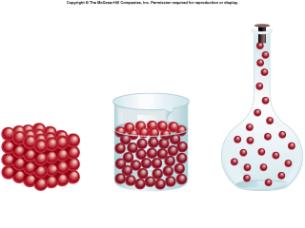
- Particle Theory
- Definition: a theory that describes the composition and behaviour of matter
- SOLID, LIQUID, GAS
- Definition: a theory that describes the composition and behaviour of matter
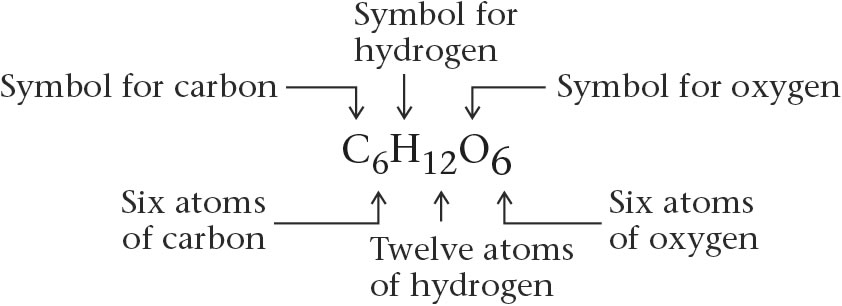
- Chemical Formula
- Definition: a notation that indicates the type and number of atoms in a pure substance
- Example~
- Definition: a notation that indicates the type and number of atoms in a pure substance
- Mixtures
Molecules
- Definition: 2 or more atoms of the same or different elements that are chemically joined together in a unit
- Examples~ water, oxygen, gas, carbon
- Molecular Element
- Definition: a molecule consisting of atoms of the same element
- Molecular Compound
- Definition: a molecule that consists of 2 or more different elements
- Examples~ AlCl3, NaCl
- Definition: a molecule that consists of 2 or more different elements
- Definition: 2 or more atoms of the same or different elements that are chemically joined together in a unit
Periodic Table of Elements
- Atomic Number
- Definition: number of protons in an atom
- Examples~ Nitrogen> 7, Oxygen> 8, Sodium>11
- Definition: number of protons in an atom
- Atomic Units
- Definition: the way to measure protons within an element
- Example~ 1u = 1 proton
- Definition: the way to measure protons within an element
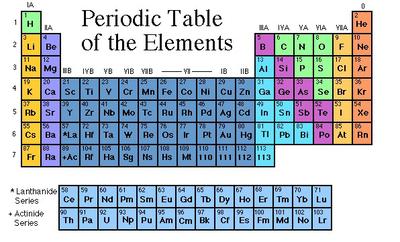
- Definition: a table of chemical elements arranged in a specific order of atomic number and reactivity levels
- Example~ The Periodic Table of Elements
- Mass Number
- Definition: number of protons and the number of neutrons
- Examples~ oxygen> 16, sodium> 23
- Definition: number of protons and the number of neutrons
- Atomic Mass
- Definition: average of all the different mass numbers possible for an atom
- Example~ Rubidium> 85u/86u = 85.5
- Definition: average of all the different mass numbers possible for an atom
- Atomic Number
Ions
- Definition: a particle that has either a positive or negative charge
- Examples~ Na+ and H+
- Cation
- Definition: a positively charged ion
- Examples~ Cu2+ and Fe3+
- Definition: a positively charged ion
- Anion
- Definition~ a negatively charged ion
- Examples~ NO3- and Cl-
- Definition~ a negatively charged ion
- Ionic Compound
- Definition: a compound that consists of positively and negatively charged ions
- Examples~ NaCl, Mg(NO3)2, KF, FrBR
- Definition: a compound that consists of positively and negatively charged ions
- Isotope
- Definition: an atom with the same number of protons but a different number of neutrons
- Example~ Carbon-12 > 6 protons and 6 neutrons
- Definition: an atom with the same number of protons but a different number of neutrons
- Definition: a particle that has either a positive or negative charge
Density
- Definition: how much mass is contained in a given volume of substance
- Examples~ less dense = larger spaces and lighter particles, more dense = closely packed and heavy particles,
- Examples~ Pure Water= 1g/ml, Lead= 11.36g/ml, Gold= 19.32g/ml
- Examples~ less dense = larger spaces and lighter particles, more dense = closely packed and heavy particles,
- Definition: how much mass is contained in a given volume of substance
Images and files in the map
Information
- Description
- Mind Map on Chemistry Terms, created by footballboctor102014 on 08/12/2013.
- Created by
- footballboctor102014
- Views
- 22
- Rating