
701864


Lymphocyte Development
- pathogens target various different parts of the body, this requires
many different host defence mechanisms to get rid of them
- extracellular
- cytoplasmic
- cytotoxic T cells
- NK cells
- cytotoxic T cells
- vesicular
- T-cell dependent
macrophage
activation
- T-cell dependent
macrophage
activation
- cytoplasmic
- intracellular
- epithelial surfaces
- antibodies (IgA)
- antimicrobial
peptides
- antibodies (IgA)
- Blood, lymph,
interstitial spaces
- antibodies
- complement
- phagocytosis
- antibodies
- epithelial surfaces
- extracellular
- an immunogen is anything which illicts
an immune response
- an antigen is anything recognised by a B
cell or T cell receptor
- all immunogens are antigens but bot all
antigens are immunogens
- hapten is an antigen but not an
immunogen
- hapten is an antigen but not an
immunogen
- epitopes are the immunologically
active parts of an antigen
- antibodies can bind to the
epitopes of an antigen
- antibodies can bind to the
epitopes of an antigen
- all immunogens are antigens but bot all
antigens are immunogens
- Lymphoid tissue
- primary lymphoid tissue
- where lymphocytes are made
- T cells in the Thymus
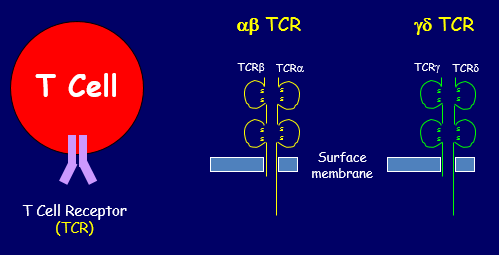
- t cells recognise
antigens using their T call
receptor (TCR)
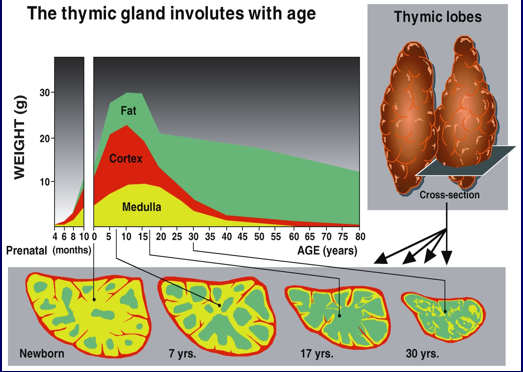
- the thymus involute with age
- t cells recognise
antigens using their T call
receptor (TCR)
- B cells and NK cells in the
bone marrow
- B is NOT for bone marrow, they
were first discovered in the Bursa of
Fabricius the primary lymphoid
tissue for B cells in birds
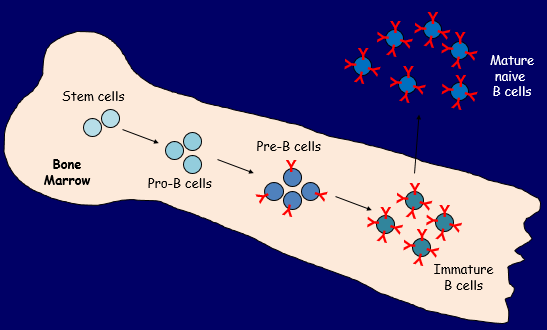
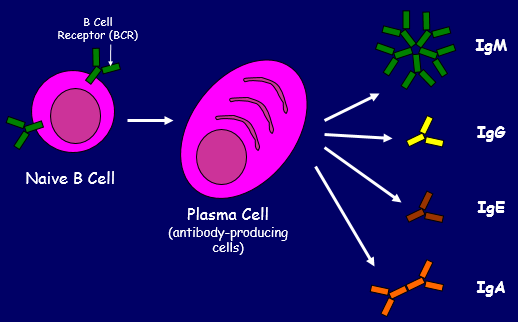
- in mammals, B cells develop from stem cells
in the bone marrow
- B cells become plasma cells these produce a
large amount of different types of atnibodies
- B is NOT for bone marrow, they
were first discovered in the Bursa of
Fabricius the primary lymphoid
tissue for B cells in birds
- size is antigen
independent
- B and T cells develop from common
lymphoid progenitors in the bone marrow
- where lymphocytes are made
- secondary lymphoid tissue
- where immune responses occur
- Lymph nodes
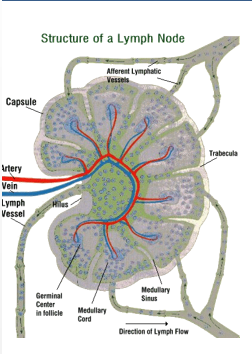
- lymphatic vessels allow fluid to drain form the
tissues into lymph nodes
- the lymphatic system is designed to get antigens into lymph nodes
where the antigens can stimulate T and B cells
- the lymphatic system is designed to get antigens into lymph nodes
where the antigens can stimulate T and B cells
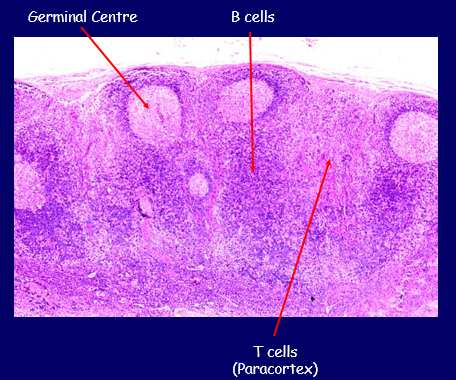
- T and B cells reside in different parts of
the lymph nodes
- Highly Endothelial Venule (HEV) are specialised post-capillary venous
swellings that allow circulating lymphocytes to leave the blood and
enter the lymphnodes
- lymphatic vessels allow fluid to drain form the
tissues into lymph nodes
- spleen
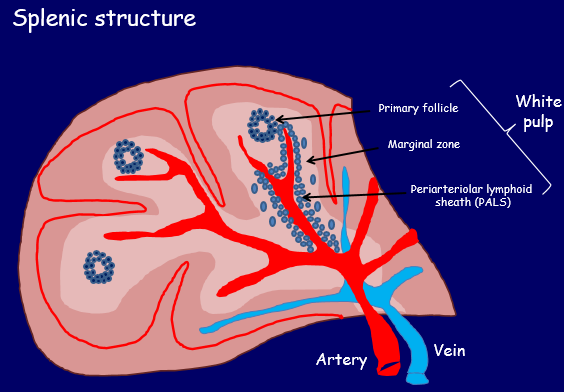
- is the lymphoid tissue which samples antigens in the blood
- splenectomised individuals are more susceptible to
blood infections
- primary
follicle
marginal
zone
Periarteriolar
lymphoid
sheath
(PALS)
- is the lymphoid tissue which samples antigens in the blood
- tonsils
- Peyer's patches
- appendix
- size is antigen
dependent
- where immune responses occur
- primary lymphoid tissue
Media attachments
Want to create your own Mind Maps for free with GoConqr? Learn more.