
Mind map
Fungal pathology
Map content
Fungal pathology
Dermatophytes
- group of keratinophilic fungi seen as the cause of disease in skin, hair and nails
- 3 general types
- trichopyton
- microsporum
- epidermophyton
- originate in:
- soil = geophilic
- animals = zoophilic
- confined to humans = anthropophilic
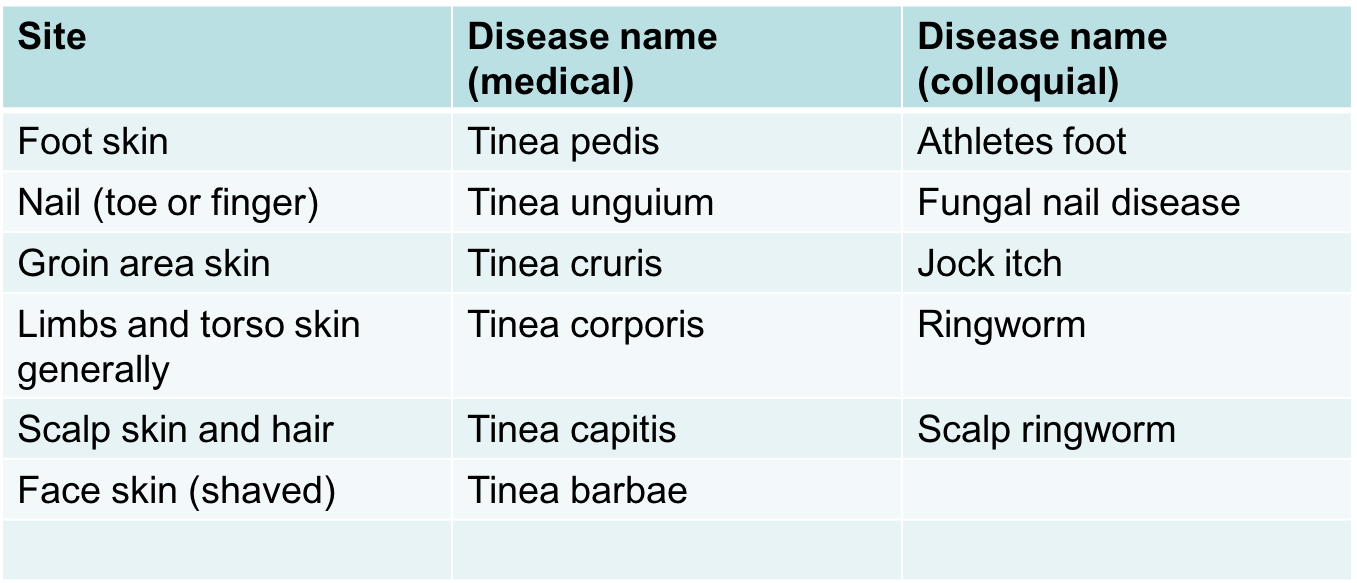
Tina pedis
- uni- or bilateral
- itching, flaking, fissuring of skin
- interdigital: tower skin wet and macerated
- plantar: soles of feet dry and scaly
- hyperhidrosis, secondary infection, may increase severity
- may spread to infect toenails
- typical cause = Trichophyton rubrum
Tina unguium (onychomycosis)
- thickening, discolouring, dystrophy
- 4 main types
- lateral/distal subungual
- superficially white (usually immunocompromised)
- proximal
- total nail dystrophy
- typical causes = Trichophyton rubrum and T. interdigitale
Tina cruris
- more prevalent in men
- itching, scaling, erythematous, plaques w/ distant edges
- satellite lesions sometimes present
- may extend to buttocks, back and lower abdomen
- typical cause = T. rubrum
Tina capitis
- range from slight inflammation, scaly patches to sever inflammation
- Kerion celsi
- boggy, inflamed lesions
- usually from zoophilic dermatophytes
- Favus
- presence of cup-shaped crusts or scutula
- hair invasion
- endothrix = spores in the hair shaft (leads to black dots)
- favic = hyphae only in the hair shaft
- extothrix = spores outside the hair shaft
Tinea corporis
- circular, single or multiple erythematous plaques
- may extend e.g scalp to groin
- invasion of follicle
- "Majoccis's follicle"
- typical cause = wide range of dermatophytes; anthropophilic or zoophilic
CANDIDA
- large genus of yeast
- colonises the mucosal surfaces and GI tract in healthy people
- causes superficial mucosal ideas (oral and vaginal) "thrush"
- cause of systemic disease once in circulatory system, can infect almost any organ
- candida sp. can infect almost any organ in the body
- defined by site of infection
- usually acquired from colonised skin or mucosal sites or from GI tract
- usually seen in compromised host
- candida albicans is the most common
- caused by a range of Candida species
- Candida albicans
- Candida parapsilosis
- Candida glabiata
- Candida kruse
- Superficial candida infection of oral mucosa
- acute pseudo-membranous --> low CD4 count, younger patients with asthma
- chronic atrophic --> older patients, erythema
- angular cheilitis
- chronic hypoplastic --> oral leukoplakia, lesions may undergo malignant transformation
- Epidemiology of oral candidosis
- HIV/AIDS --> sometimes even with anti-retroviral therapy; T-cell immunity important to prevent mucosal candidosis
- Antibiotic use --> suppresss normal bacterial flora, less competition for yeasts
- Head and neck cancer --> radiotherapy and chemotherapy affect immune responses and salivary secretions
- General debilitation in hospital patients --> increases colonisation and risk of oral disease
Candida vulvovaginitis
- affects 70-80% of all women during child bearing years
- parities, burning sensation, possibility of discharge
- inflammation of vaginal epithelium, may extend to labia majora
- often more florid infections during pregnancy
- approx 10% of women get recurrent infections
Candida oesophagitis
- mainly in HIV
- in 10-20% of patients who have oropharyngeal disease
- painful/difficult to eat/swallow
- diagnosed by endoscopy and biopsy
Candida endocarditis
- rare consequence of candidaemia
- IV drug abusers, valve surgery
- vegetations on heart valves
- fever, weight loss, fatigue, heart murmur
- difficult to treat w/o valve replacement
Renal candidosis
- candida from blood lodges in the kidney during filtration
- immunocompromised, premature neonates
- fever, abdominal pain, oliguria, anuria
Urinary tract candida infection
- ascending from genital tract, infection/colonisation or from catheterisation
- more common in:
- women
- damaged/abnormal urinary tracts
- diabetics
- hard to manage as few anti-fungals are secreted in urine
Candida peritonitis
- complication of peritoneal dialysis
- perforation of bowel during surgery
- fever, abode pain, nausea, vomiting
- treatment = source control/drainage, antifungals
Hepatosplenic candidosis
- disseminated form of candidosis
- leukaemia, other herpetological malignancies
- candidaemia during period of neutopenia
- during neutrophil recovery, yeasts lodge in the liver and spleen
- access formation, fever, liver function disturbance
- anti-fungal therapy may be ineffective as dead fungus continue to trigger inappropriate inflammatory response
Candidaemia
- candida in the blood
- appropriate responses:
- remove lines where possible
- start anti-fungal therapy
- check heart and eyes
ASPERGILLUS
- genus of moulds- filamentous fungi
- airborne spores
- exposure is universal by inhalation
- airway may be colonised by aspergillus s.p
- examples of important species:
- A. niger
- A. flavus
- A. terreus
- A. fumigatus
- Aspergillosis
- reaction to inhaling aspergillus
- space occupying/non-invasive in the lung cavity = aspergilloma (fungal ball)
- allergic reaction - asthma, CF
- chronic infection - chronic lung infection --> chronic pulmonary aspergillosis
- invasive infection - immunocompromised (leukaemia) --> invasive pulmonary aspergillosis
- Allergic forms of aspergillosis:
- 1) Asthma
- severe asthma w/ fungal sensitisation
- wheezing, breathlessness
- IgE reaction to fungi
- responds to anti-fungal therapy and steroids
- 2) CF
- allergic broncho-pulmonary aspergillosis
- wheezing, breathlessness, loss of lung function, bronchiectasis
- airway inflammation
- IgE and IgG reaction
- responds to anti-fungal therapy and steroids
- 1) Asthma
- Aspergilloma
- patients with cavities from previous TB, sarcoid, surgery
- form solid balls of fungus
- often indolent, may break up
Images and files in the map
Information
- Description
- Medicine Mind Map on Fungal pathology, created by Jack Coen on 11/01/2017.
- Created by
- Jack Coen
- Views
- 0
- Rating