
Mind map
Extreme Tourism: Antarctica
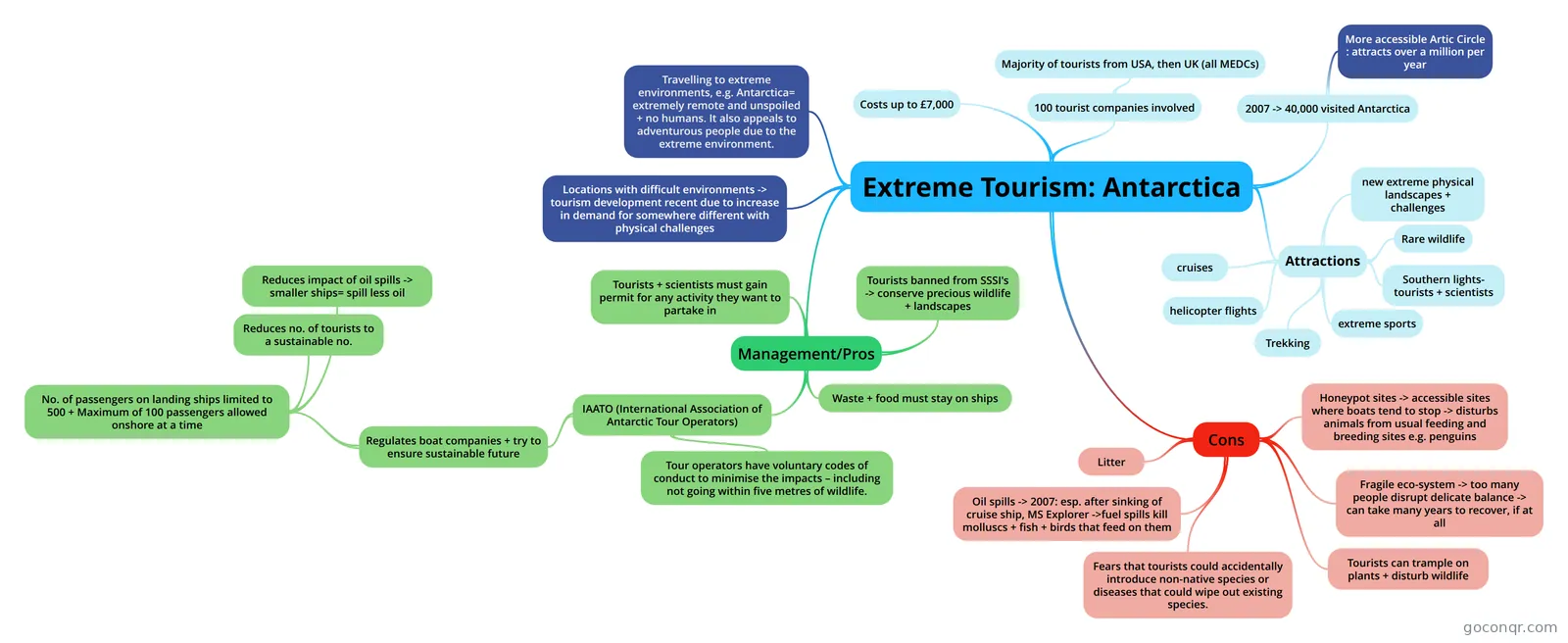
Mind map: Extreme Tourism in Antarctica
Map content
Extreme Tourism: Antarctica
Travelling to extreme environments, e.g. Antarctica= extremely remote and unspoiled + no humans. It also appeals to adventurous people due to the extreme environment.
Locations with difficult environments -> tourism development recent due to increase in demand for somewhere different with physical challenges
100 tourist companies involved
- Majority of tourists from USA, then UK (all MEDCs)
2007 -> 40,000 visited Antarctica
- More accessible Artic Circle : attracts over a million per year
Costs up to £7,000
Attractions
- new extreme physical landscapes + challenges
- extreme sports
- helicopter flights
- Trekking
- cruises
- Rare wildlife
- Southern lights- tourists + scientists
Cons
- Honeypot sites -> accessible sites where boats tend to stop -> disturbs animals from usual feeding and breeding sites e.g. penguins
- Tourists can trample on plants + disturb wildlife
- Litter
- Fragile eco-system -> too many people disrupt delicate balance -> can take many years to recover, if at all
- Oil spills -> 2007: esp. after sinking of cruise ship, MS Explorer ->fuel spills kill molluscs + fish + birds that feed on them
- Fears that tourists could accidentally introduce non-native species or diseases that could wipe out existing species.
Management/Pros
- IAATO (International Association of Antarctic Tour Operators)
- Tour operators have voluntary codes of conduct to minimise the impacts – including not going within five metres of wildlife.
- Regulates boat companies + try to ensure sustainable future
- No. of passengers on landing ships limited to 500 + Maximum of 100 passengers allowed onshore at a time
- Reduces no. of tourists to a sustainable no.
- Reduces impact of oil spills -> smaller ships= spill less oil
- No. of passengers on landing ships limited to 500 + Maximum of 100 passengers allowed onshore at a time
- Tourists banned from SSSI's -> conserve precious wildlife + landscapes
- Waste + food must stay on ships
- Tourists + scientists must gain permit for any activity they want to partake in
- IAATO (International Association of Antarctic Tour Operators)