
Mind map
Helping students with learning disabilities improve their organizational skills
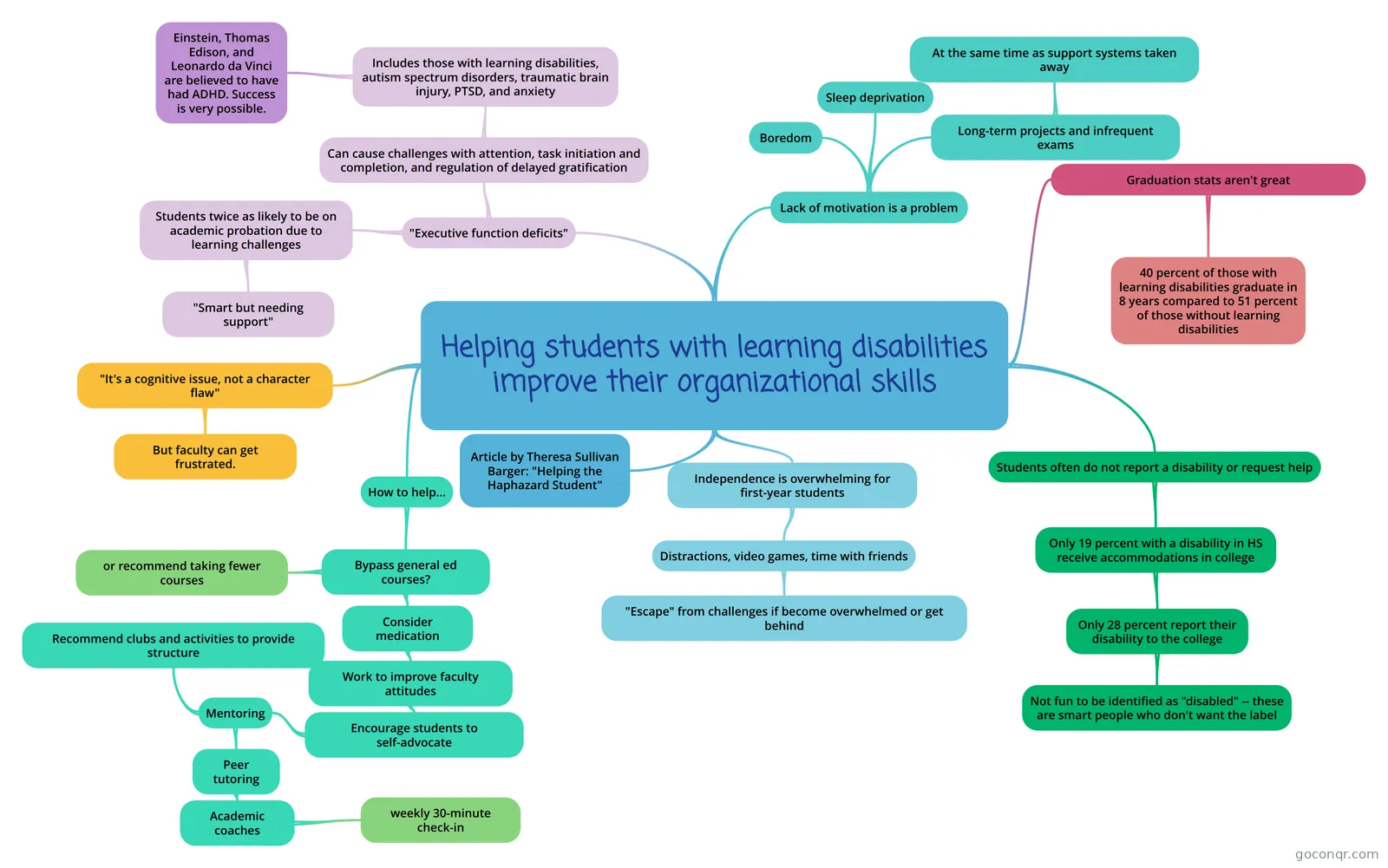
Mind map: helping students with learning disabilities improve organizational skills
Map content
Helping students with learning disabilities improve their organizational skills
Independence is overwhelming for first-year students
- Distractions, video games, time with friends
- "Escape" from challenges if become overwhelmed or get behind
- Distractions, video games, time with friends
Lack of motivation is a problem
- Boredom
- Sleep deprivation
- Long-term projects and infrequent exams
- At the same time as support systems taken away
Graduation stats aren't great
- 40 percent of those with learning disabilities graduate in 8 years compared to 51 percent of those without learning disabilities
Students often do not report a disability or request help
- Only 19 percent with a disability in HS receive accommodations in college
- Only 28 percent report their disability to the college
- Not fun to be identified as "disabled" -- these are smart people who don't want the label
- Only 28 percent report their disability to the college
- Only 19 percent with a disability in HS receive accommodations in college
"Executive function deficits"
- Can cause challenges with attention, task initiation and completion, and regulation of delayed gratification
- Includes those with learning disabilities, autism spectrum disorders, traumatic brain injury, PTSD, and anxiety
- Einstein, Thomas Edison, and Leonardo da Vinci are believed to have had ADHD. Success is very possible.
- Includes those with learning disabilities, autism spectrum disorders, traumatic brain injury, PTSD, and anxiety
- Students twice as likely to be on academic probation due to learning challenges
- "Smart but needing support"
- Can cause challenges with attention, task initiation and completion, and regulation of delayed gratification
"It's a cognitive issue, not a character flaw"
- But faculty can get frustrated.
How to help...
- Bypass general ed courses?
- Consider medication
- Work to improve faculty attitudes
- Encourage students to self-advocate
- Mentoring
- Peer tutoring
- Academic coaches
- weekly 30-minute check-in
- Academic coaches
- Recommend clubs and activities to provide structure
- Peer tutoring
- Mentoring
- Encourage students to self-advocate
- Work to improve faculty attitudes
- or recommend taking fewer courses
- Consider medication
- Bypass general ed courses?
Article by Theresa Sullivan Barger: "Helping the Haphazard Student"