
Notes
Human Capital Theory
Content of the notes (1)
Page 1
HUMAN CAPITAL: the value of the productive potential of an individual/group of workers. It is made up of the skills, talents, education and training of an individual or group and represents the value of future earnings and production
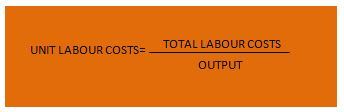
UNIT LABOUR COST: the average labour cost incurred in producing a unit of output. It is calculated by dividing total labour cost by output. Total labour costs include wages and other costs incurred in employing labour eg NI contributions
TYPES OF CAPITAL:
Physical output eg machines and roads
Human capital which includes skills and knowledge
Natural capital eg environmental assets such as seas, forests ect (land)
Social and cultural capital, the social relationships which hold society together
The stock of human capital can be increased through education and training which should lead to an improvement in the quality of labour available to the firm/economy. Any increases in quality of labour leads to an outward shift in the PPF or a shift to the right of the AS curve.
Increase in the quality of labour as there is an increase in labour productivity therefore a supply side policy. Individuals personally benefit from education and training as their productivity increases thus their MRP will manifest itself as a higher wage than usual increasing earnings benefit the government through increased tax returns.
Increased labour productivity decreases unit costs, which may result in a corresponding decrease in the selling price which may boost international competitiveness as exports would increase and the economies BoP position would improve.
Increasing exports would increase AD leading to an increase in income, output and employment within the domestic economy but may prove to be inflationary.
Increasing education and training could decrease skills shortages if the education and training is directed towards increases in the amount of skills in the economy.
Structural unemployment may also decrease if labour is retained in these skills which are currently in demand.
Before increases stock of human capital the following must be taken into consideration:
Opportunity cost. If more resources are put towards increasing the provision of education and training there will be an opportunity cost of how the resources may have otherwise have been used
Government failure if the government fail to identify skills in short supply and instead directs training into areas where skills are relatively abundant or where demand is low
These supply side policies often take time to work eg improved education for kids entering full time education, the benefits will only be shown when they enter the labour force years later
Increasing the time in education comes at the opportunity cost of the output the individuals would be able to make if they were economically active over that period of time instead of extra education
Governments/companies who invest in human capital run the risk of this education and training making individuals more attractive to other economies which may hire them with a promise of increased wages to reflect their higher MRP
UNIT LABOUR COSTS
To improve international price competitiveness firms may try and reduce unit labour costs. Assuming ceteris paribus there are 2 ways to do this:-
ULC= TLC/Output = £100/10 = £10 - ULC
Reduce TLC - £50/10 = £5 - ULC
Increase Output - £100/20 = £5 - TLC
You could also drop ceteris paribus (Reduce TLC and increase output) - £50/20 = £2.50 - ULC
Information
- Description
- A Level A2 Economics Note on Human Capital Theory, created by samyajahangir on 19/03/2015.
- Created by
- samyajahangir
- Views
- 1
- Rating