
Labour Markets
360 resources created by 284 users
This Labour Markets page on GoConqr gathers community-made quizzes, mind maps, flashcards and notes, from derived demand and marginal revenue product to trade unions, unemployment and the minimum wage. It's built for school students revising a topic, university students and professional candidates filling gaps, and teachers after ready-made material. There are over 350 resources here, including more than 20 quizzes and over 200 mind maps, pitched at secondary and university level. Pick a topic, try a quiz to find your gaps, then make your own set.
Select topic
- Division of Labour and Productivity7
- Employment and the Labour Force28
- Demand for Labour18
- Supply of Labour16
- Wage Determination26
- Wage Differentials11
- Minimum and Living Wages13
- Trade Unions9
- Labour Market Failure11
- Unemployment35
- Technology and Employment21
- Migration and Employment7
- Labour Market Policies and Reforms26
- Income Inequality and Redistribution8
Top Labour Markets resources
-
131 cardsThe Labour Market The labour market and distribution of income and wealth
-
43 questionsLabor Econ The cost of producing a given level of output is minimized:
-
 Mind map Chapter 7 - The labour market: Supply & demand econ3
-
 Mind map Labour market
-
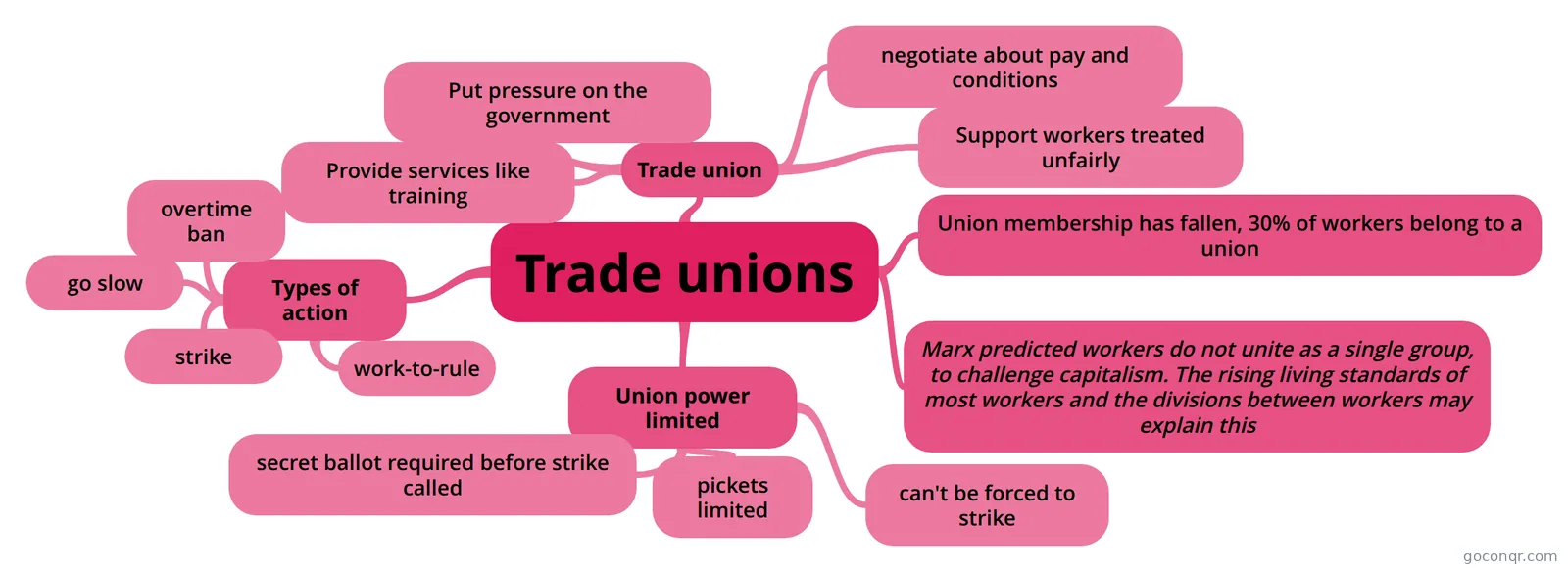 Mind map Trade unions
-
83 cardsExam 3 Micro What are the factors of production
-
179 cardsChildcare and Women Labor Supply If mothers stay at home for long time periods after giving birth, employers bear higher potential costs hir...
-
41 questionsEconomics Final Exam [Chap. 18,24] The most important factors of production are
Quizzes
See all 28 quizzes-
43 questionsLabor Econ The cost of producing a given level of output is minimized:
-
41 questionsEconomics Final Exam [Chap. 18,24] The most important factors of production are
-
12 questionsECO.9 1. Which of the following best describes the economy’s stock of equipment and structures?
-
4 questionsLabour Market Quiz The unemployment rate for people with second-level qualifications as high as the rate for people with third...
Mind maps
See all 211 mind maps-
Chapter 7 - The labour market: Supply & demand econ3
-
Labour market
-
Trade unions
-
Ch.4 Labour and Division of Labour
-
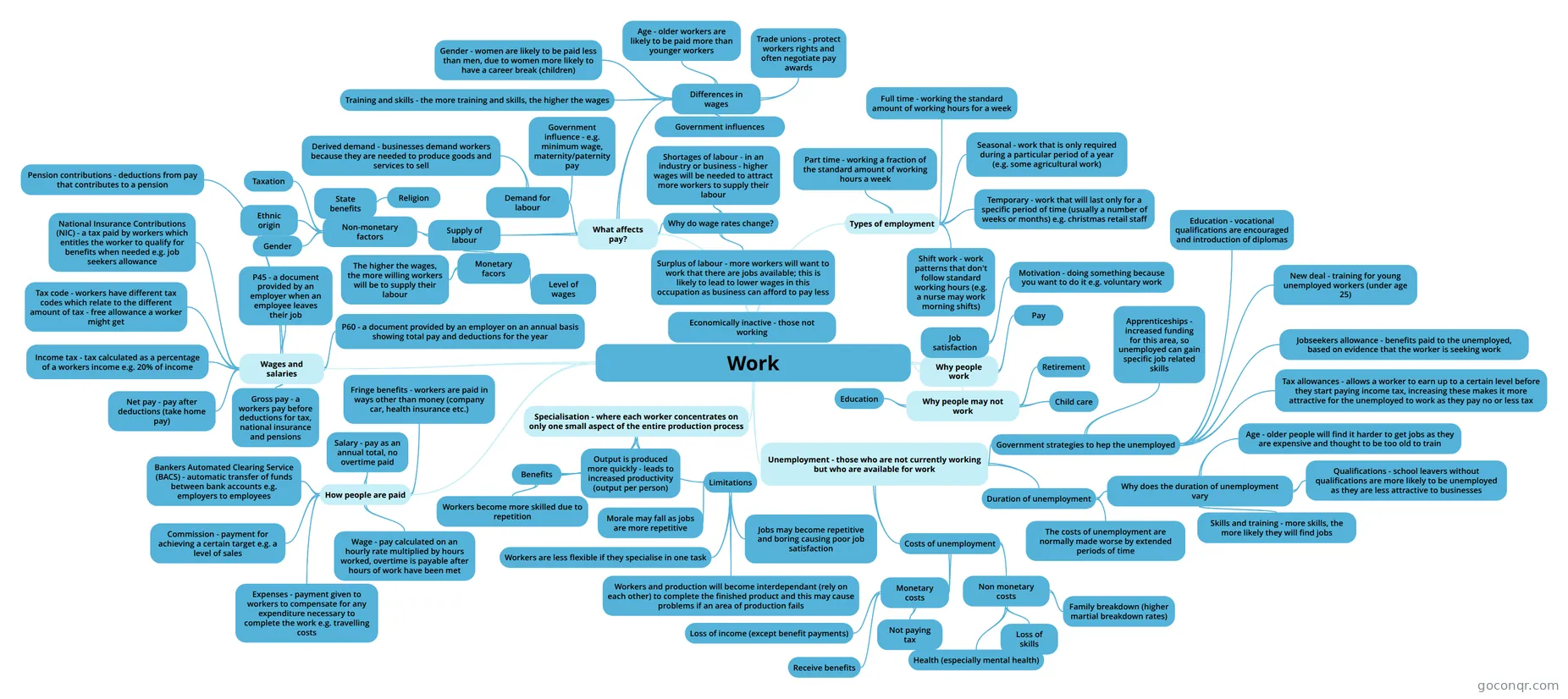 Work
-
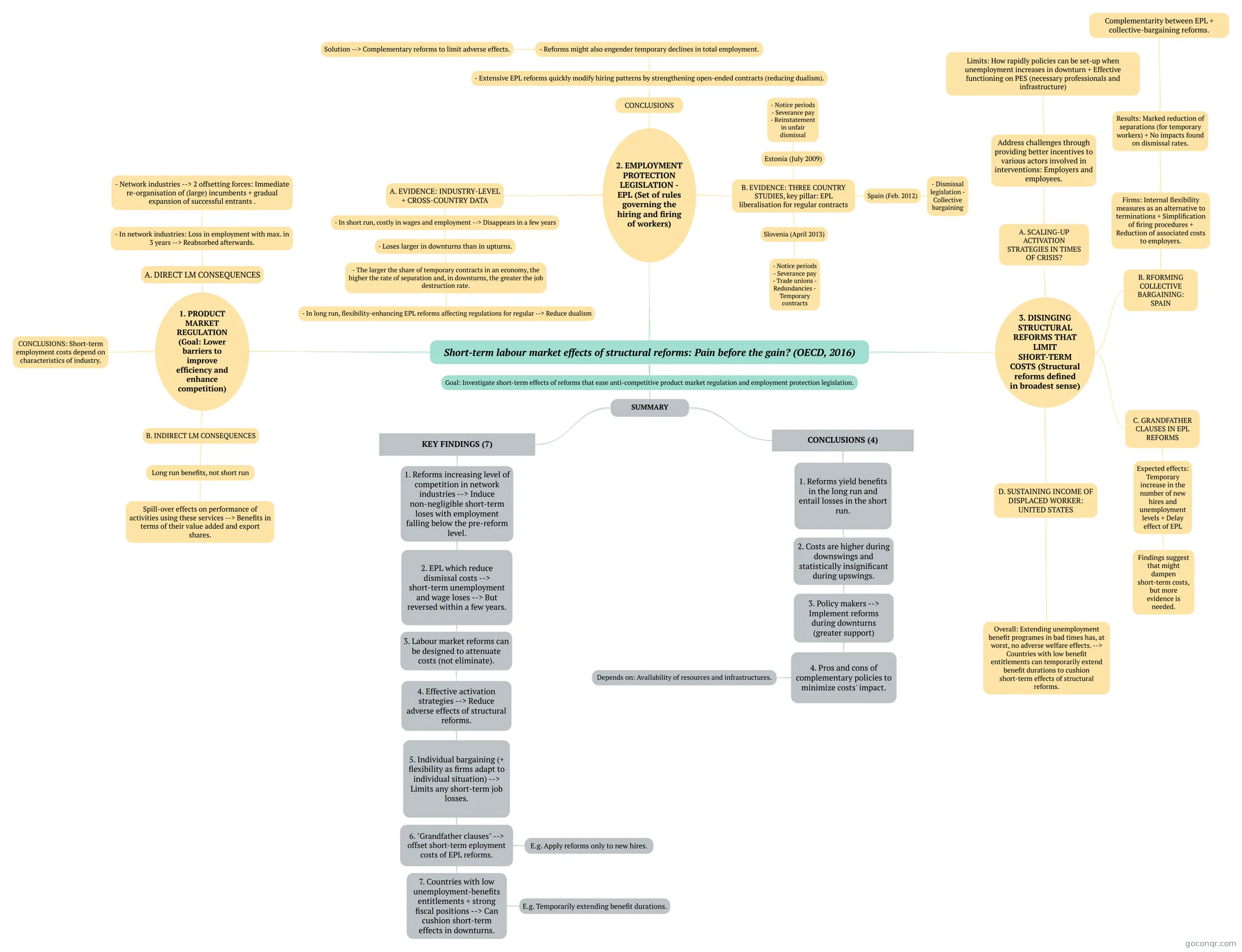 Short-term labour market effects of structural reforms: Pain before the gain? (OECD, 2016) International Economic Policy (IEP)
-
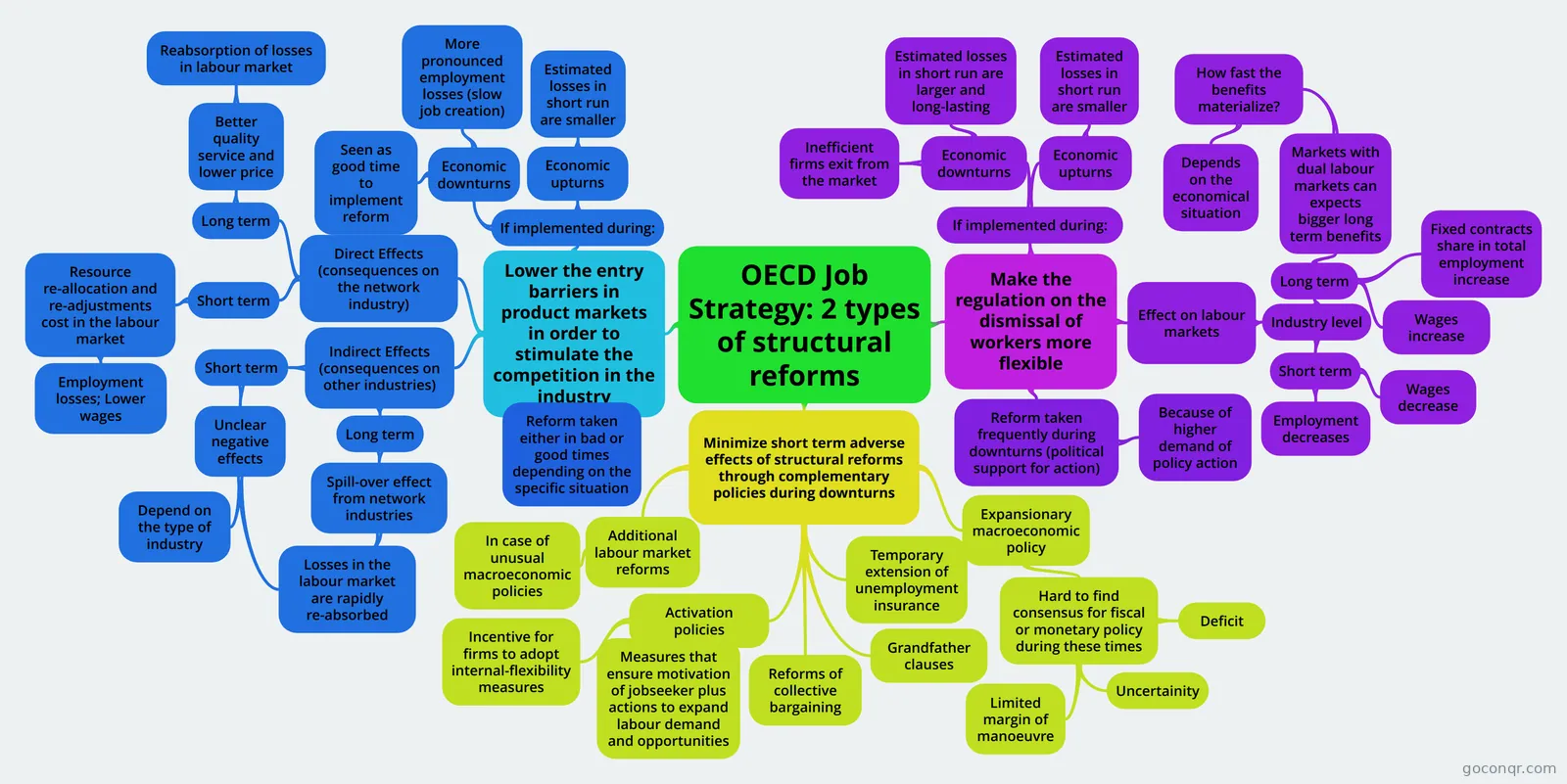 OECD Job Strategy: 2 types of structural reforms Structural reforms
-
 Influences on labour supply and demand
Flashcards
See all 96 flashcards-
131 cardsThe Labour Market The labour market and distribution of income and wealth
-
83 cardsExam 3 Micro What are the factors of production
-
179 cardsChildcare and Women Labor Supply If mothers stay at home for long time periods after giving birth, employers bear higher potential costs hir...
-
21 cardsUnemployment Unemployment occurs when a person is willing to work at the prevailing market rate but are unable to find w...
-
28 cardsLabour Market What is the concept of derived demand?
-
33 cardsEconomics Unit 11 Work
-
19 cardsPart 1.4: The labour market
-
16 cardsOrganization A - Labor Market What is the Labor Market?
Notes
See all 24 notes-
Supply Curve for Labour and the Economy (Movements Along and Shifts) INDIVIDUAL BACKWARD BENDING SUPPLY CURVE FOR LABOUR If W* is £10 per hour x 40 hours per week, monthly earnings are £400 If wage is doubled to £20 hours per hour one would work 20 hours to achieve their target level o...
-
CHAPTER 9 NOTES
Topics in Labour Markets
More Economics topics
About Labour Markets
GoConqr OriginalWhat this page covers
The resources follow the usual path through Labour Markets. The demand side is covered by the flashcard deck The Labour Market, which runs through derived demand, productivity, the price of other factors of production and supplementary labour costs. The supply side includes a note on the backward-bending supply curve for labour, with a worked example of hours falling as the wage doubles.
Where to start
Begin with the mind maps. Labour market and Chapter 7 - The labour market: Supply & demand are both good first looks at how workers supply labour and firms demand it. Then move to the notes MRP and Derived Demand for Labour and Elasticity of Demand for Labour, which explain why a firm's demand slopes downward.
- Read a mind map on demand and supply.
- Work through a flashcard deck to fix the key terms.
- Read the notes on marginal revenue product and wage determination.
- Test yourself with a quiz.
Going further
Once the basics are clear, look at where markets go wrong. There are notes on causes of labour market failure and trade unions, bilateral monopoly, imperfect information and discrimination, and labour immobility. Mind maps on types of unemployment, immobility of labour and the minimum wage sit alongside them. Other maps look at technology and jobs, and at income inequality and poverty.
Using quizzes and maps together
Use a quiz first to see what you get wrong, such as the Marginal Revenue Product quiz or Economics A2: Labour market MCQ. Then go back to the matching mind map and read the branch that caught you out. Try the same quiz again a few days later. Some resources mention A-level Economics, Leaving Certificate Economics, GCSE Economics and AP Microeconomics, so check which fit your course.
Where it sits
This unit belongs to the strand Firms, Industries and Factor Markets in Economics. Choose a resource that matches what you are studying this week, and add your own notes or flashcards where the page leaves a gap.
Frequently asked questions
Which resource should I open first?
Start with the mind map called Labour market, or the flashcard deck The Labour Market. Both set out how workers supply labour and firms demand it, and they introduce derived demand and productivity. After that, move on to the notes on marginal revenue product and wage determination.
What do the mind maps cover?
There are over 200 mind maps. They cover demand for labour, supply of labour, wage determination, trade unions, immobility of labour and types of unemployment. Others look at the minimum wage, technology and jobs, and inequality and poverty. Some are short summaries, while others follow a textbook chapter.
Are the resources free to use?
Yes. Every resource listed here is free to open, study and take, with no account needed. They were made by GoConqr users, not by GoConqr itself, so styles and depth vary. It is worth comparing two or three on the same topic.
Which levels and exams do they suit?
The resources are pitched at secondary and university level. Some mention A-level Economics, Leaving Certificate Economics, GCSE Economics and AP Microeconomics. Others read like university lecture or seminar material, so school students and university students can each find something suitable.
Are there quizzes on this page?
Yes, more than 20. Examples include Marginal Revenue Product, Economics A2: Labour market MCQ, Labour Market Quiz and National Minimum Wage. There are also quizzes on unemployment and income inequality. Take one before revising to see which topics need work.
What if my topic is missing?
Check the neighbouring resources first, as many topics sit inside broader notes or maps. If you still cannot find it, a free account lets you save quiz scores and make your own quizzes, mind maps, flashcards and notes.