
Notes
Thermodynamics - Lecture 1
Content of the notes (1)
Page 1
Temperature - Measure of how hot/cold something is (molecular state)
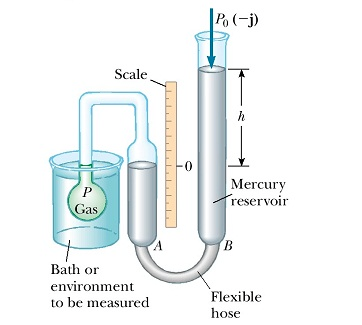
-you MEASURE it with a thermometer - Constant volume gas thermometer
-units K Kelvin
-nothing colder than 0 kelvin
Thermal Equilibrium
When systems in thermal contact, they exchange energy until an equilibrium state is reached and NO MORE net energy transfer occurs
BUT it is DYNAMIC as equal amounts of energy transferred, just no change in temp.
Zeroth Law of Thermodynamics
If two systems A & B are in thermal equilibrium and THIRD system C is in equilibrium with A, then it is also with B.
They share the PROPERTY TEMPERATURE.
Therefore a THERMOMETER when in contact with a object allows it to reach thermal equilibrium and thus the same temperature as the object.
Thermal Energy
The amount of kinetic energy associated with the random motion of atoms/molecules in the state of the molecule AND the vibrational and rotational movement of the atoms in the molecule.
-depends on NUMBER of molecules , molecular COMPOSITION and TEMP
(at high temp, increase in random movement = higher thermal energy)
Heat
Energy in motion
Heat Transfer
Movement of thermal energy due to temp difference (usually from hot object to cold)
- If two objects at different thermal energies are in contact, the energy transferred until BOTH objects have equal amounts of thermal energy - (THERMAL EQUILIBRIUM)
Measuring Temperature - using thermometer
Constant-volume gas thermometer
-Gas filled build encased in material which temp is to be measured, WHICH brings the gas inside to thermal equilibrium with material.
-Volume adjusted
-Pressure inside chamber indicates temp of gas
T/Ttp= P/Ptp
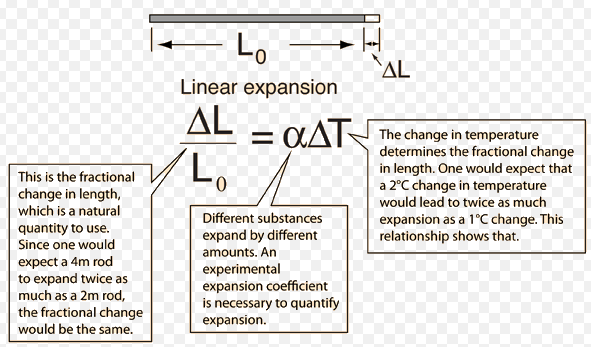
Thermal Expansion
Atoms move FASTER as TEMP INCREASE, therefore they move further apart.
Hence objects normally EXPAND at T increases
a= co=efficient
Information
- Description
- Note on Thermodynamics - Lecture 1, created by Inika Gadgil on 11/04/2015.
- Created by
- Inika Gadgil
- Views
- 7
- Rating