
Notes
Natural hazards
Content of the notes (1)
Page 1
What are natural hazards
What is a natural hazard
Natural hazards are sudden, severe events which make the natural environment difficult to manage
They disrupt human life and have huge economic and social impacts
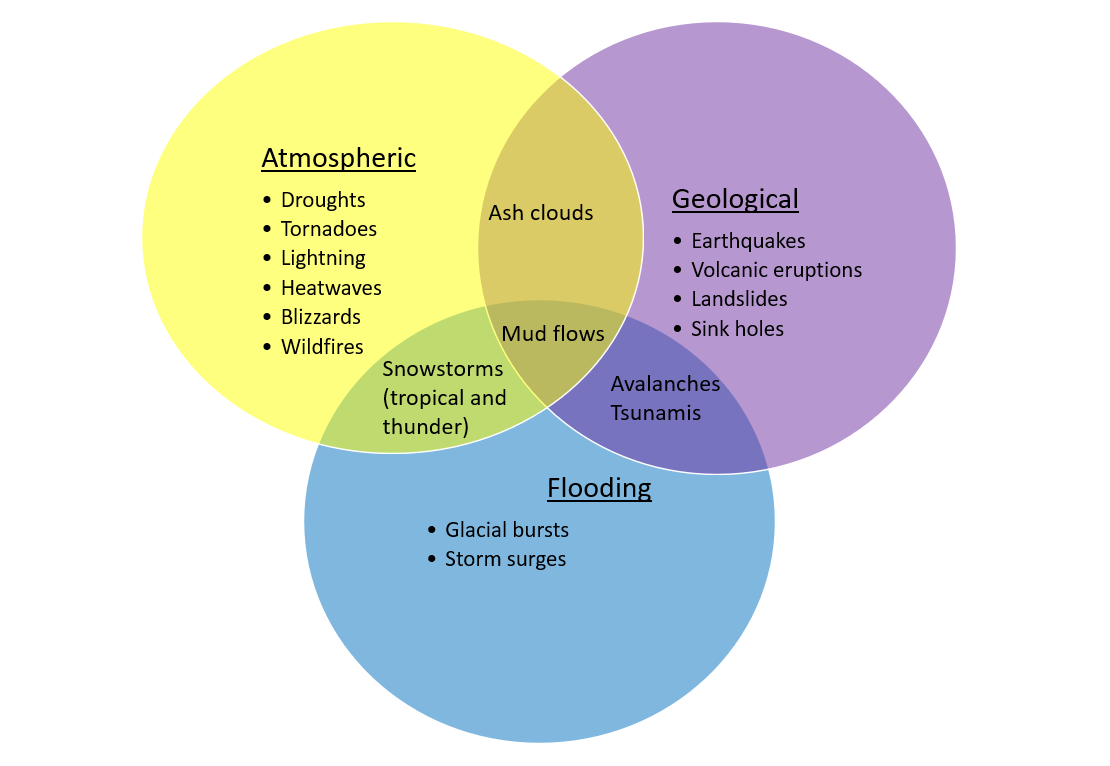
They fall into three main groups
These events are not hazards if they occur in unpopulated regions
But where they cause high levels of death, injury, damage or disruption then they become disasters
Most natural disasters are linked to four hazard
Floods- the most frequent and deadly, damaging to most property
Tropical storms- the next most frequent, almost as dangerous
Earthquakes
Droughts
What is hazard risk
Hazard risk means the chance of being affected by a natural hazard
For example those living near the sea at risk of flooding by tropical storms or tsunami
People live in risky areas because they:
Accept the risk, weather weighing up advantages and disadvantages
Have little choice of where to live
What factors affect risk
As populations grow more people are exposed to natural hazards. Four factors increase the risk
Urbanisation- densly-populated urban areas concentrate those at risk
Poverty- expense of housing leads to building on risky ground
Farming- the attraction of nutrient-rich floodplains puts people at risk
Climate change- global warming raises sea levels and generates more extreme weather
Information
- Description
- GCSE Geography Note on Natural hazards, created by Gabriella Weisser on 15/05/2021.
- Created by
- Gabriella Weisser
- Views
- 0
- Rating