
Notes
Topic 2a: tissues
Content of the notes (9)
Page 1
Tissues: group of similar cells that perform a specialized function, building blocks of organs
epithelial
connective
muscle
nervous
Page 2
Epithelial tissue:
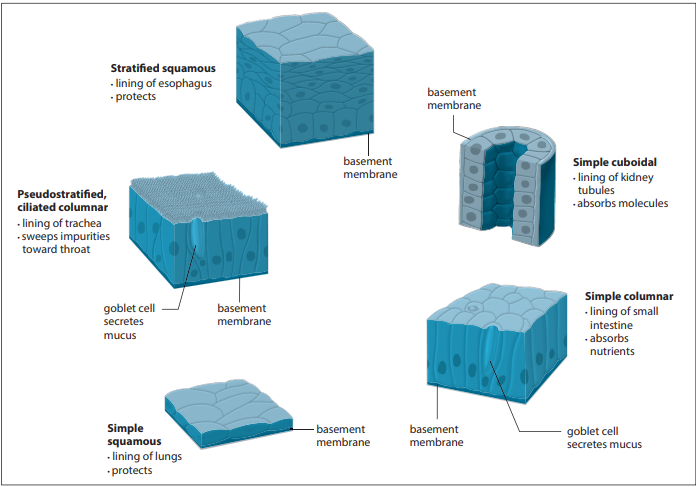
found on the surface of any part of the body in contact with the environment; cover the outside of organs and line their lumens as well
generally, epithelial cells replicate and regenerate faster than other cell types
cells connected directly one to another in sheets or layers
basement membrane of sticky polysaccharides and proteins made by the cells attaches the tissue to other underlying tissues.
epithelial tissue always has 2 names: one for the shape of the cell and one for the layers
cell shape
squamous: flat, centrally located nucleus; suited to diffusion and lining organs and protection, formation of skin
cuboidal: cube-shaped, centrally located nucleus; typically function in secretion (ex: mucus or digestive enzymes), and also in absorption in digestive tract
columnar: oblong-shaped, typically function in secretion (ex: mucus or digestive enzymes), and also in absorption in digestive tract
pseudostratified columnar epithelia: appear stratified because there appears to be more than 1 row of nuclei, giving the impression of multiple cell layers, however it actually is one layer with the nuclei at different levels
goblet cells: simple columnar cells that secrete mucus
# of layers
simple: single layer of cells; typically columnar and cuboidal cells in this arrangement; squamous cells in this arrangement are known as endothelium
stratified: multiple layers of cells; typically squamous cells in this arrangement
transitional epithelia: in the urinary system, arranged in stratified layer, has the ability to stretch and transitions from thick to thin as the bladder fills with urine
Page 3
Connective tissue:
provides support and shock absorption
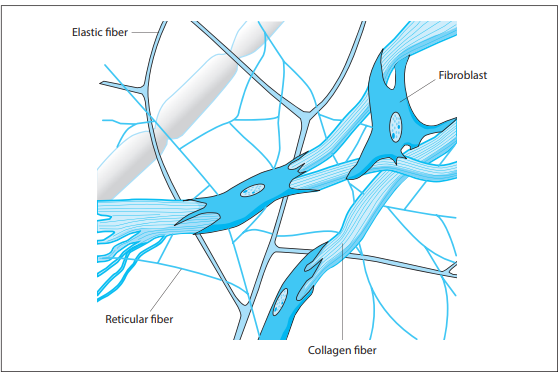
many varieties with diverse functions, but have the commonality of cells scattered in a nonliving matrix separated from surrounding tissues.
matrix is made up of ground substance, which is made up of organic (protein fibers) and inorganic material (mineral or water)
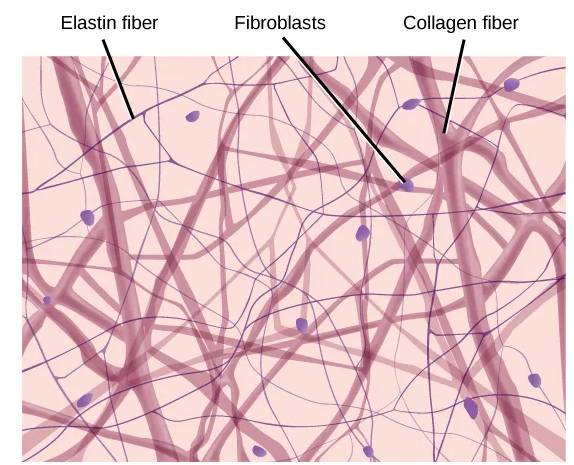
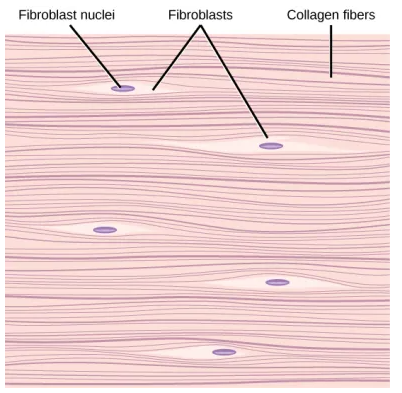
fibroblasts: main cell type that produces matrix protein fibers
collagen: type of matrix fiber that provides strength to the tissue to prevent it from being torn or separated from surrounding tissue
elastic: type of matrix fiber with lot of stretchability, made of elastin
reticular: type of matrix fiber that form a network to support the tissue and other organs that it is connected to
types of connective tissue:
loose
fibrous/dense
cartilage
blood
bone
lymph
Page 4
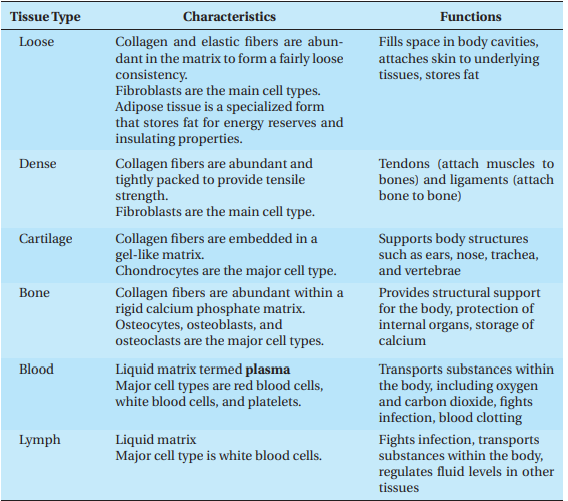
loose connective tissue: aka areolar, loosely packed collagen and elastic fibers surrounding fibroblasts. found around blood vessels as well as around and between most organs, filling body cavities
adipose tissue is a specialized form that stores fat and provides insulation
Page 5
fibrous (aka dense) connective tissue: contain large amounts of collagen fibers and little cells or matrix materials, can be arranged in regular (found in tendons and ligaments) or irregular (found in areas that face a lot of stress, like the dermis of the skin) arrangements
Page 6
Cartilage: a type of connective tissue made of chondrocytes, cells that make the matrix and fibers of the tissue found in the lacunae (spaces within the tissue)
hyaline cartilage: some collagen and elastic fibers, lacunae randomly scattered throughout the tissue; found in ribs, tracheal rings, and in outer parts of the nose. Glassy appearance, weakest type of cartilage.
elastic cartilage: large amount of elastic fibers, lot of flexibility, found in ears and parts of the larynx
fibrocartilage: large amounts of collagen fibers allowing those tissues to withstand a lot of stress and have shock absorption, found in intervertebral discs
cartilage type can change over time
hyaline cartilage found in movable joints like the knee, when damaged with age or trauma, is replaced by fibrocartilage, making joints feel "stiff"
Page 7
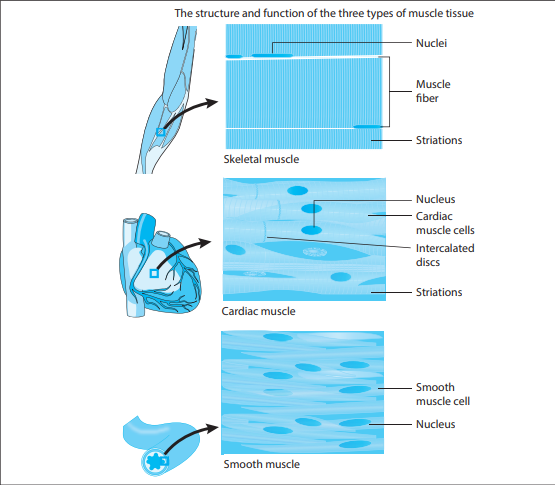
Muscular tissue:
types
cardiac: striated, involuntary control
skeletal: striated voluntary control
smooth: involuntary control
all made of bundles of muscle cells and have the ability to contract and contain many mitochondria
Page 8
Nervous tissue:
types:
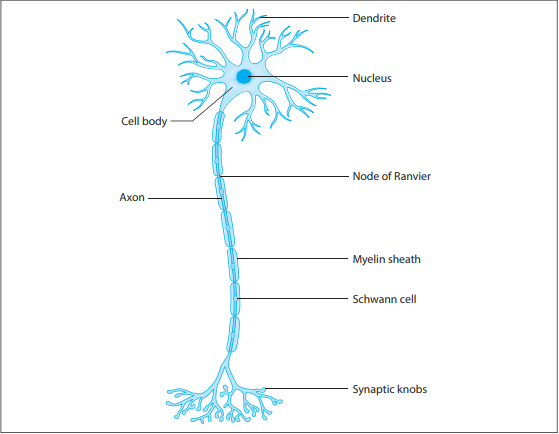
neurons: communicate with each other and other cells in the body
mature neurons are unable to perform mitosis themselves
have a cell body with axons and dendrites projecting off it
cell body: contains nucleus and most of the organelles
dendrites: pick up messages and send them to the cell body
axons: send out messages processed by the cell body
many axons have schwann cells wrapped around them. Schwann cells secrete myelin and form myelin sheaths
myelin sheaths: insulate the axon and help propagate impulses faster
nodes of ranvier: gaps in the sheath where impulses jump from node to node
synapse: the space between a dendrite and the end of an axon
glial cells: support functions to neurons
Page 9
Membranes in the body: an association between tissue types
serous membranes: made of epithelial and connective tissues, line internal body cavities and cover organs
mucous membranes: made of epithelial and connective tissues, secrete mucus onto surfaces of the body in contact with the outside environment (mouth, nose, trachea, and digestive tract)
cutaneous membranes: aka skin, outer layers are made of connective and epithelial tissue
Information
- Description
- Note on Topic 2a: tissues, created by 000 000 on 04/12/2021.
- Created by
- 000 000
- Views
- 0
- Rating