
Notes
Lead Users and user communities L10 - created from Mind Map
Content of the notes (1)
Page 1
1. Innovation along the Value Chain
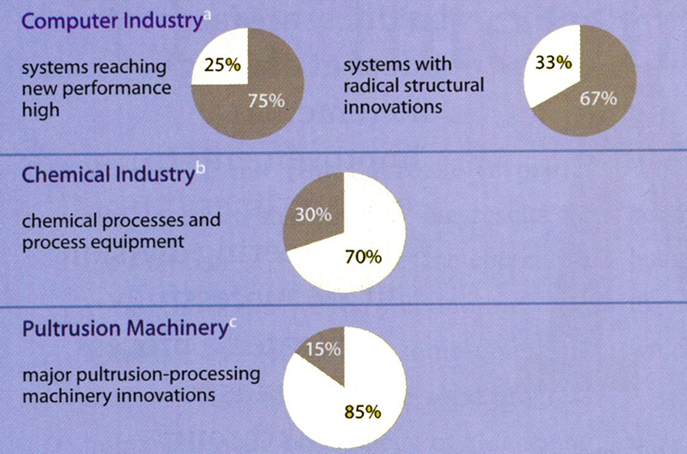
Innovation along the Value Chain Classical view: product innovations come from the product manufacturer the manufacturer generates ideas and develops prototypes New perspective: many innovations do not come from manufacturers but from users of the product users often supply not only the idea, but also prototypes Note: the distribution of innovative activity along the value chain varies strongly between industries results are based on research by Eric von Hippel, MIT (since mid 70s) and many others since then
High-Performance Windsurfing: Innovation in User Communities experiments by professional windsurfers in Hawaii in1978: foot straps for jumps further developed by user community; today: standard High-Performance Kite-Surfing: Innovation in User Communities Innovation in the field of Kite-Surfing requires a lot of skills Problem: Manufacturer R&D Departments are small Surfers use CAD applications to design kites and publish the results in user communities Many manufacturers of sails are located close to beaches and are able to work with CAD files
benefits by manufacturing and selling the product Supplier: benefits by creating or increasing demand for input that it supplies User: benefits by using the innovation:new functionality and higher productivity Complementor: benefits by creating or increasing demand for its own good, which complements the innovation
2. Lead Users
Classical market research is based on a static concept of a representative customer In contrast, the lead user method focuses on users that are ahead of the trend Lead users have needs that foreshadow general demand They expect to obtain high benefit from a solution to their needs They are more likely to innovate – “Necessity is the mother of invention!”
Classical market research: aims at representative findings (“average customer”) large-number studies quantitative methods preferred for comparability Problems: Average user... is mentally focused on existing reality has typically difficulties in articulating new needs mostly has no pressing need for new products The lead users method avoids these problems
1.) Determine lead user indicators: a) trends; b) benefits from innovation 2.) Identify lead user group 4.) Check general acceptance of concept 3.) Develop product concept with lead users
Step 1: Indicators Example: CAD for printed circuit boards Urban and von Hippel (1988, Management Science) Survey type: phone survey of experts Choice of experts: contact firms using CAD: “Who in your firm is the best expert on CAD?” Survey questions: important future technical trends and developments? Result: increased density of components is dominant technical trend Investment in own developments “Have you developed your own CAD systems instead of buying systems available on the market?“ Dissatisfaction with existing market offers “How satisfied are you with existing CAD systems?“ Speed of adoption of new technology “When in the diffusion process do you adopt new CAD systems?“
Step 2: Identification Structured phone survey Random choice of 178 customer firms Survey questions: see step 1 Participants were grouped using cluster analysis Results: two clusters 28% can be identified as lead users own developments strongest indicator for lead user
Step 3: Development Product concept developed in creativity workshop Participants: 5 firms from lead user cluster that had developed their own CAD systems Topic: development of CAD system with improved presentation of high-density circuit boards; solution had to fit existing production technology Result: improved solution with broader simulation functionality, flexible interfaces, presentation of thin interconnects
Step 4: Testing Important step to avoid niche solutions Method: written survey Participants: 173 of the firms already contacted before Subject of survey: comparison of 4 different PC-CAD systems evaluation of systems w.r.t. product attributes determination of purchase probabilities Lead User solution clearly preferred!
Critique Risks / downsides: development of niche solutions problems with intellectual property secrecy might be compromised costly and time-consuming internal acceptance: “not invented here” Operational difficulties: identifying the right trends identifying the true lead users problems in lead user workshop problems in test of acceptance
Beyond Customers Lead Users are often not customers of your and they may not have an incentive to “lead” you to their innovations Sir Tim Berners-Lee did not set out to invent a contemporary cultural phenomenon; rather, he says, “it was something I needed in my work” He wanted to solve a problem that was hindering his efforts as a consulting software engineer at CERN Berners-Lee’s innovation was to apply hypertext to the growing reality of networked computers He expanded the idea he had developed at CERN and made it available on the internet in the summer of 1991
3. Toolkits for User Innovation
Users often have information on needs and solution approaches, but lack technical means to design a solution Manufacturers offer a “toolkit“ for innovation that extends choices and allow development at the user‘s site (learning by using) Custom ICs: integrated circuits specifically developed for customers Early 80s: LSI Logic (small firm) supplies customers with software to design ICs themselves. Development process is accelerated considerably and SI became a major player
Nestlé Foodservices Customized food for restaurant chains (e.g., Mexico dressing for Taco Bell) The standard approach was for the customer to develop a recipe as a specification for Nestlé However, the ingredients and process are different in industrial production, requiring many iterations Nestlé now offers toolkit with ingredients used in industrial production, allowing error-free translation of the customer’s recipe Development time reduced from 26 to 3 weeks!
statistics package with ready-to-use routines for multivariate analysis of data early 90s – late entrant in the market for statistics software, limited set of routines interface with simple programming language for development of user’s own routines publication of selected new routines incorporation of user extensions in the kernel late 90s: vastly extended functionality, leading market position despite of huge price increases STATA Helpline: users support users, moderated by STATA personnel
Only need-related aspects of design should be done by the user Toolkits should be designed to enable user to go through trial and error cycles Toolkits should enable to design alternative solutions Toolkits should be user-friendly User design elements should be included in the product Toolkit-based products should be manufactured without much change
4.Conclusions and Outlook
Conclusions and Outlook Users and lead users are an important source of innovation The lead user method – includes identification of lead user indicators, identification of lead users, development of a product concepts with the lead users and testing if this product is accepted by general users The lead user method is not always suitable, and bears risks and practical difficulties Toolkits for user innovation enable users to innovate themselves.
Lead Users and user communities L10
Information
- Description
- Note on Lead Users and user communities L10 - created from Mind Map, created by martingkw on 01/05/2014.
- Created by
- martingkw · May 2014
- Updated
- Feb 19, 2016
- Views
- 26
- History
-
- Created by martingkw · May 1, 2014
- Copied to Note by martingkw · May 1, 2014
- Rating