
Notas
React js
Conteúdo das notas (5)
Página 1
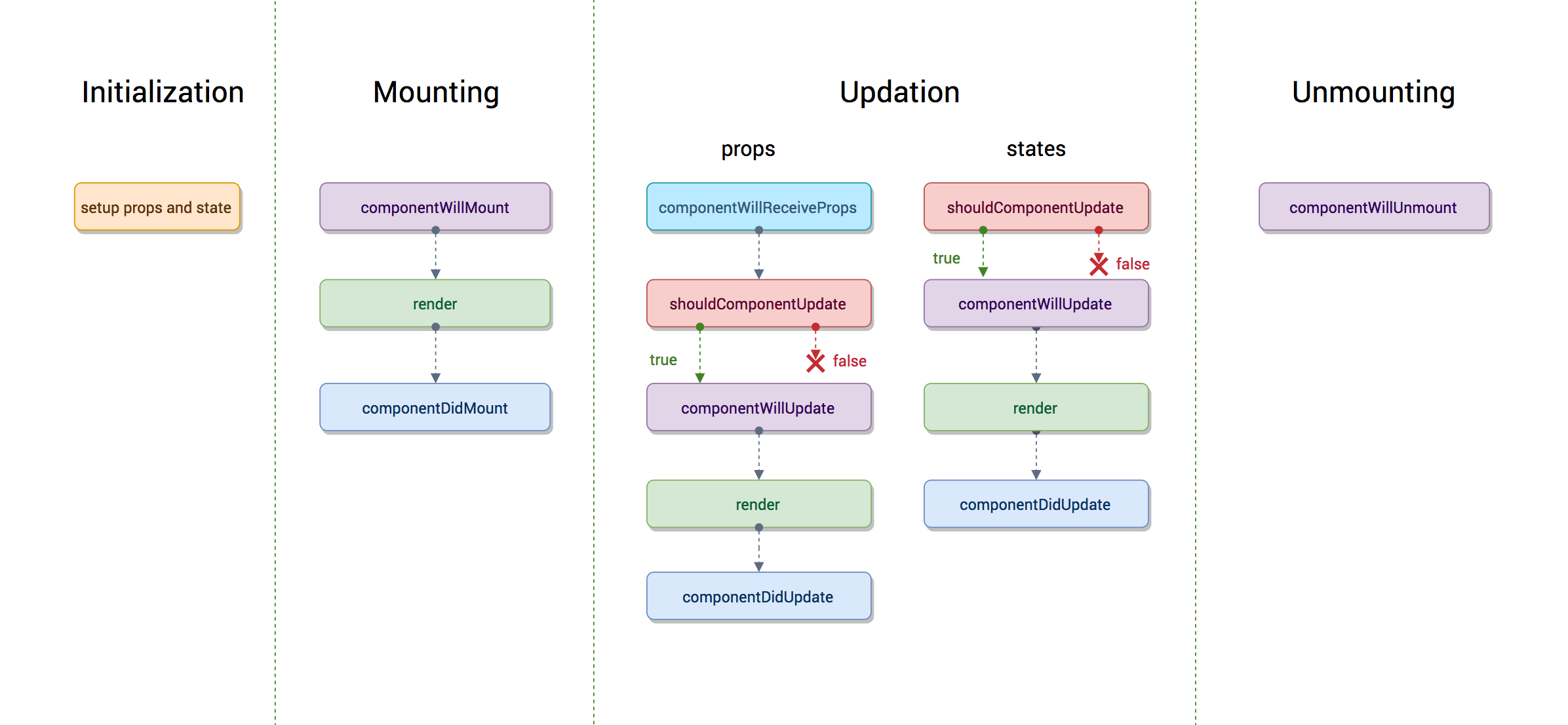
React Js Life Cycle Methods :
The React component, like anything else in the world, goes through the following phases
Initialization
Mounting
Update
Unmounting
Página 2
The component is setting up the initial state in the constructor, which can be changed later by using the setState method.
The defaultProps is defined as a property of Component to define all the default value of props, which can be overridden with new prop values.
By rendering like Contra Music player will start with volume 70% in paused state with dark theme.
Página 3
2) Mounting
After preparing with basic needs, state and props, our React Component is ready to mount in the browser DOM. This phase gives hook methods for before and after mounting of components. The methods which gets called in this phase are
componentWillMount is executed just before the React Component is about to mount on the DOM. Hence, after this method the component will mount. All the things that you want to do before a component mounts has to be defined here.
This method is executed once in a lifecycle of a component and before first render.
Usage: componentWillMount is used for initializing the states or props, there is a huge debate going on to merge it with the constructor.
render mounts the component onto the browser. This is a pure method, which means it gives the same output every time the same input is provided.
The render method for our music player may look like this
componentDidMount this is the hook method which is executed after the component did mount on the dom.
This method is executed once in a lifecycle of a component and after the first render.
As, in this method, we can access the DOM, we should initialize JS libraries like D3 or Jquery which needs to access the DOM.
Usage: In our Contra music player app, we want to draw the sound wave graphs of the full song, this is the right method to integrate with the D3 or other third party Javascript libraries.
The following example shows the setup of highcharts when the DOM is ready
Página 4
3) Update
This phase starts when the react component has taken birth on the browser and grows by receiving new updates. The component can be updated by two ways, sending new props or updating the state.
Let’s see the list of hook methods when the current state is updated by calling setState
shouldComponentUpdate tells the React that when the component receives new props or state is being updated, should React re-render or it can skip rendering?
This method is a question, should the Component be Updated?
Hence this method should return true or false, and accordingly the component would be re-rendered or skipped. By default, this method return true.
Usage: The example is one of the cases where I would like to re-render the component only when the props status changes.
This method is generally used when rendering is a very heavy method, then you should avoid render every now and then. For example, suppose for every render, the component generates thousand prime numbers, let’s consider some app has this kind of logic, then we can control when it is required then only the component is rendered.
componentWillUpdate is executed only after the shouldComponentUpdate returns true. This method is only used to do the preparation for the upcoming render, similar to componentWillMount or constructor.
There can be some use case when there needs some calculation or preparation before rendering some item, this is the place to do so.
render And then the component gets rendered.
componentDidUpdate is executed when the new updated component has been updated in the DOM. This method is used to re trigger the third party libraries used to make sure these libraries also update and reload themselves.
The list of methods that will get called when the parent sends new props are as follows:
componentWillReceiveProps gets executed when the props have changed and is not first render. Sometimes state depends on the props, hence whenever props changes the state should also be synced. This is the method where it should be done.
The similar method for the state doesn’t exist before state change because the props are read only within a component and can never be dependent on the state.
Usage: This is how the state can be kept synced with the new props.
The rest of the methods behave exactly same defined above, in terms of state as well.
shouldComponentUpdate
componentWillUpdate
render
componentDidUpdate
Página 5
4) Unmounting
In this phase, the component is not needed and the component will get unmounted from the DOM. The method which is called in this phase
componentWillUnmount This method is the last method in the lifecycle. This is executed just before the component gets removed from the DOM.
Usage: In this method, we do all the cleanups related to the component.
For example, on logout, the user details and all the auth tokens can be cleared before unmounting the main component.
Informações
- Descrição
- Information Technology Notas sobre React js, criado por karthik narayana em 07-12-2019.
- Criado por
- karthik narayana
- Visualizações
- 4
- Tags
- Avaliação