
Web Development
202 resources created by 173 users
This Web Development page on GoConqr gathers community-made quizzes, mind maps, flashcards and notes, from HTML and CSS basics to JavaScript, Node.js, Angular and web services. It's built for university students and professional candidates, school students, and teachers after ready-made material. There are over 1,500 resources here, including more than 200 quizzes, over 800 mind maps and more than 290 flashcards, made by over 1,100 contributors. Pick a topic, try a quiz to spot your gaps, then make your own revision set.
Top Web Development resources
-
50 questionsExam 2 Review The default style of browsers to format the print versions of the web pages they encounter always result in...
-
23 questionsSOAP + WSDL WSDL stands for
-
51 questionsOpenSource Programming How can you create an e-mail link?
-
50 cardsHTML + CSS Basic get to know these two awesome languages.
-
10 questions1) HTML & CSS: Checkpoint 1-10 We indent nested HTML code because... (select all that apply)
-
20 cardsNode.Js What is the primary feature of Node's build model?
-
6 questionsPrototypes in Javascript Measure your understanding of Javascript Prototypes
-
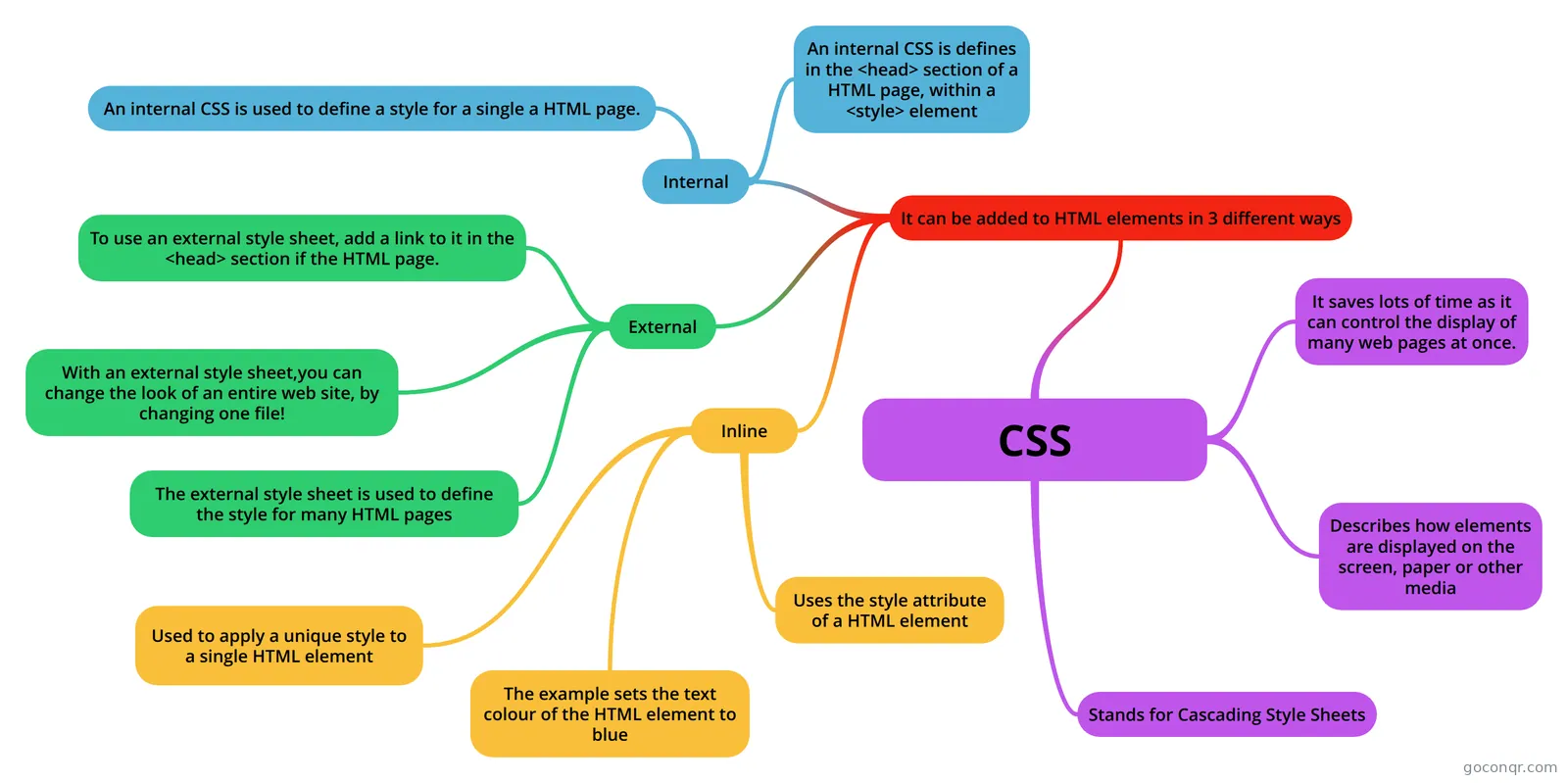
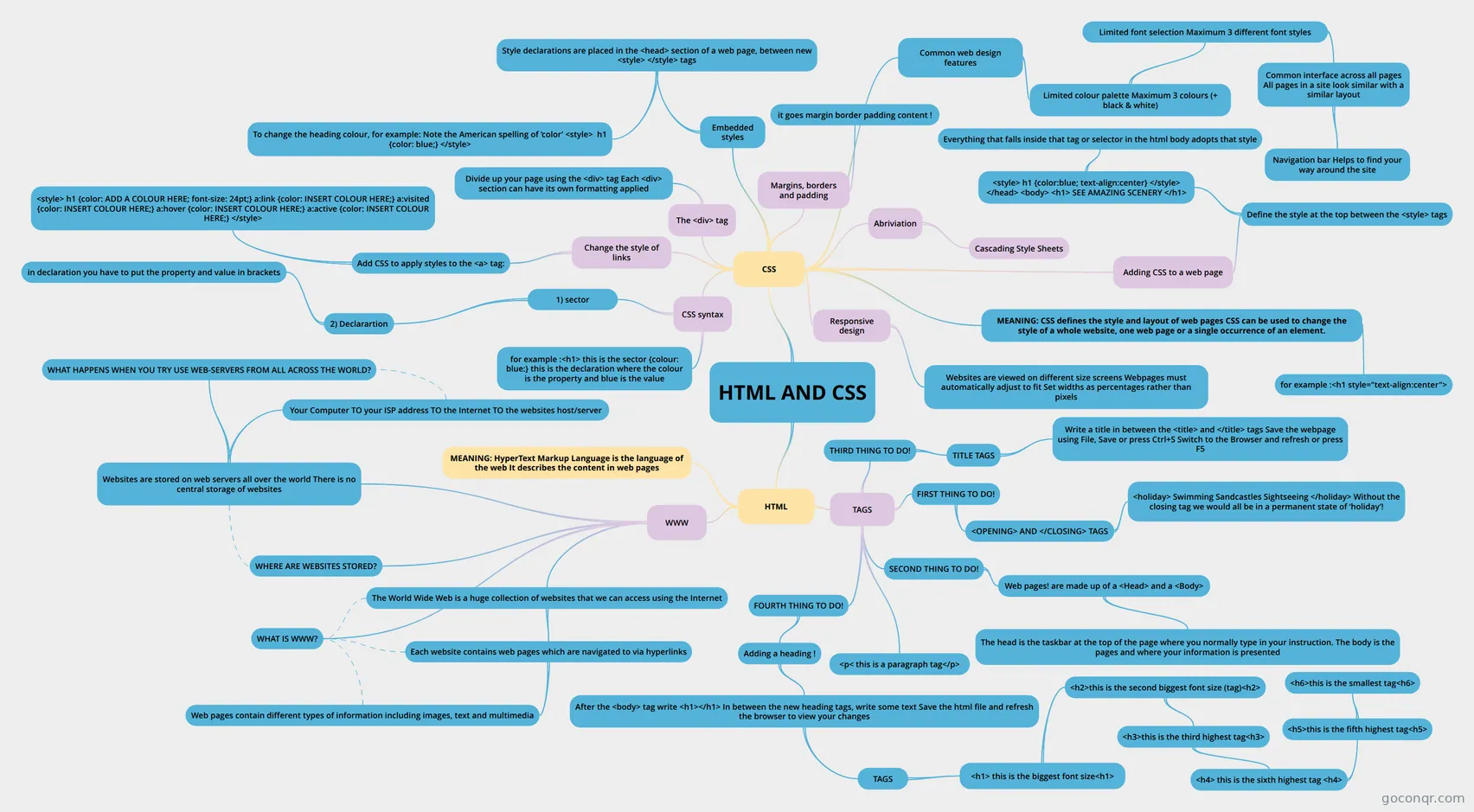 Mind map HTML AND CSS
Quizzes
See all 59 quizzes-
50 questionsExam 2 Review The default style of browsers to format the print versions of the web pages they encounter always result in...
-
23 questionsSOAP + WSDL WSDL stands for
-
51 questionsOpenSource Programming How can you create an e-mail link?
-
10 questions1) HTML & CSS: Checkpoint 1-10 We indent nested HTML code because... (select all that apply)
-
6 questionsPrototypes in Javascript Measure your understanding of Javascript Prototypes
-
17 questionsHTML & CSS: Introduction & Chapter 1 In order to find the location of the web server, your browser will first connect to this type of server.
-
4 questionsN5 Computing Science (WDD) - HTML + CSS Place the HTML tags in the correct location so that the webpage will look like the one shown in the image. ...
-
20 questionsWEBMANIA This Quiz contains questions from HTML, CSS, JavaScript.
Mind maps
See all 64 mind maps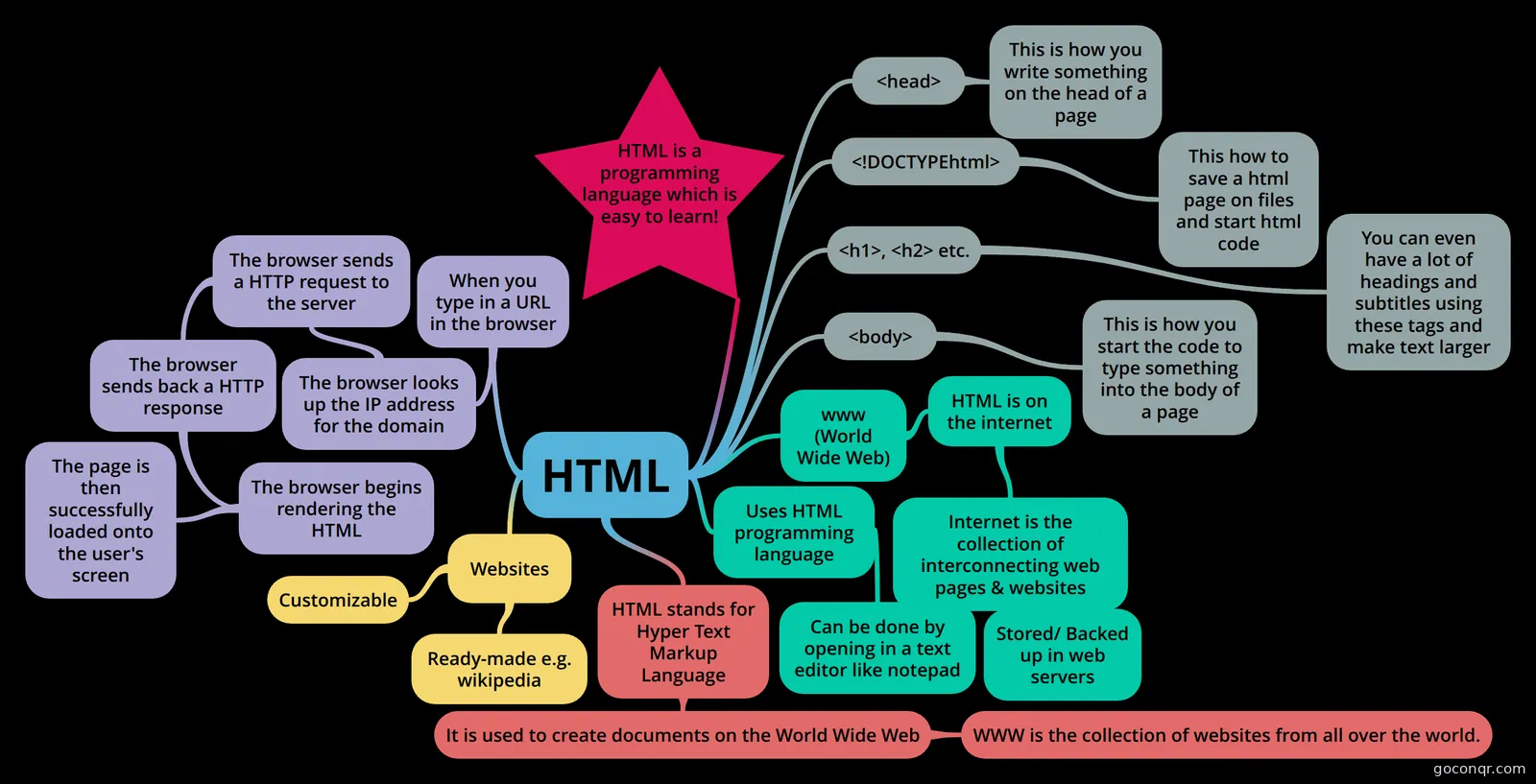
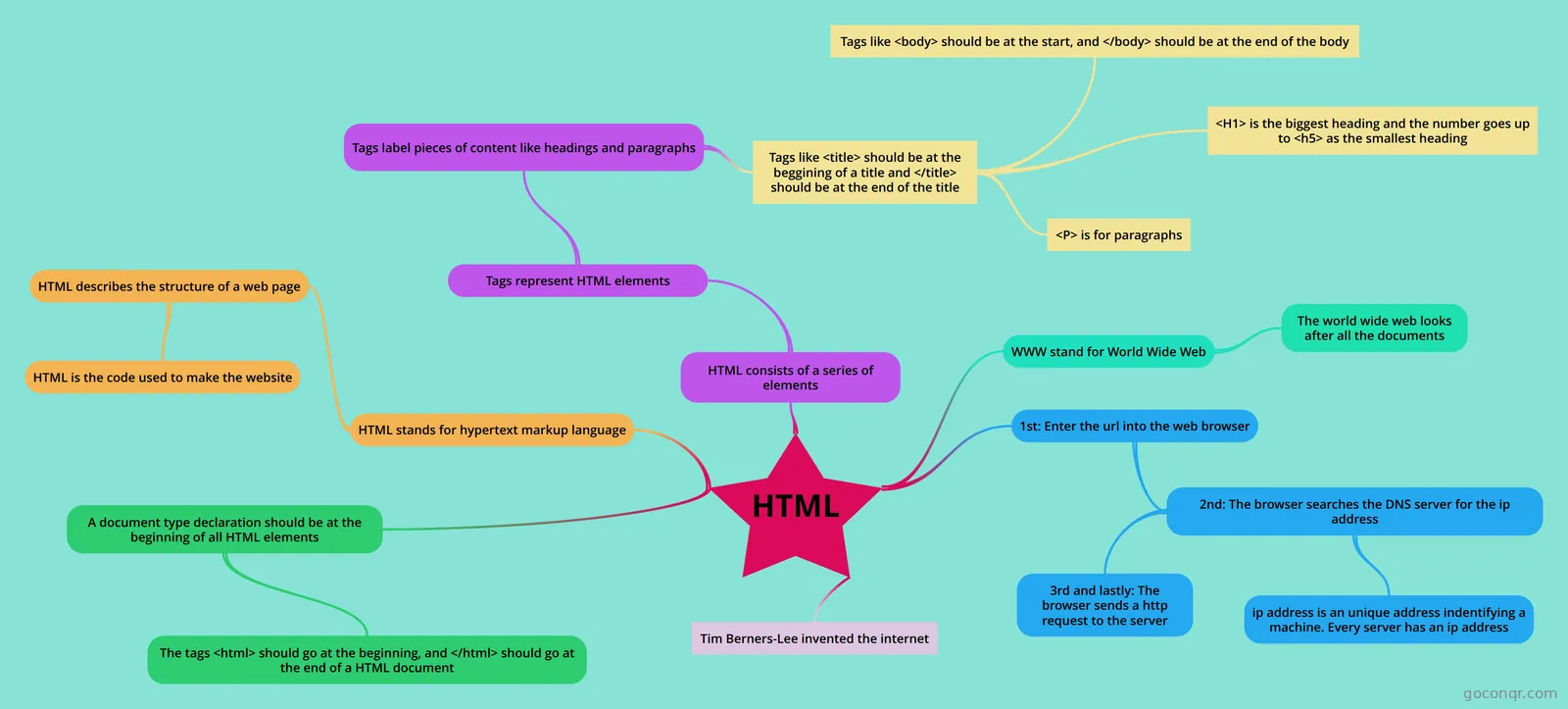
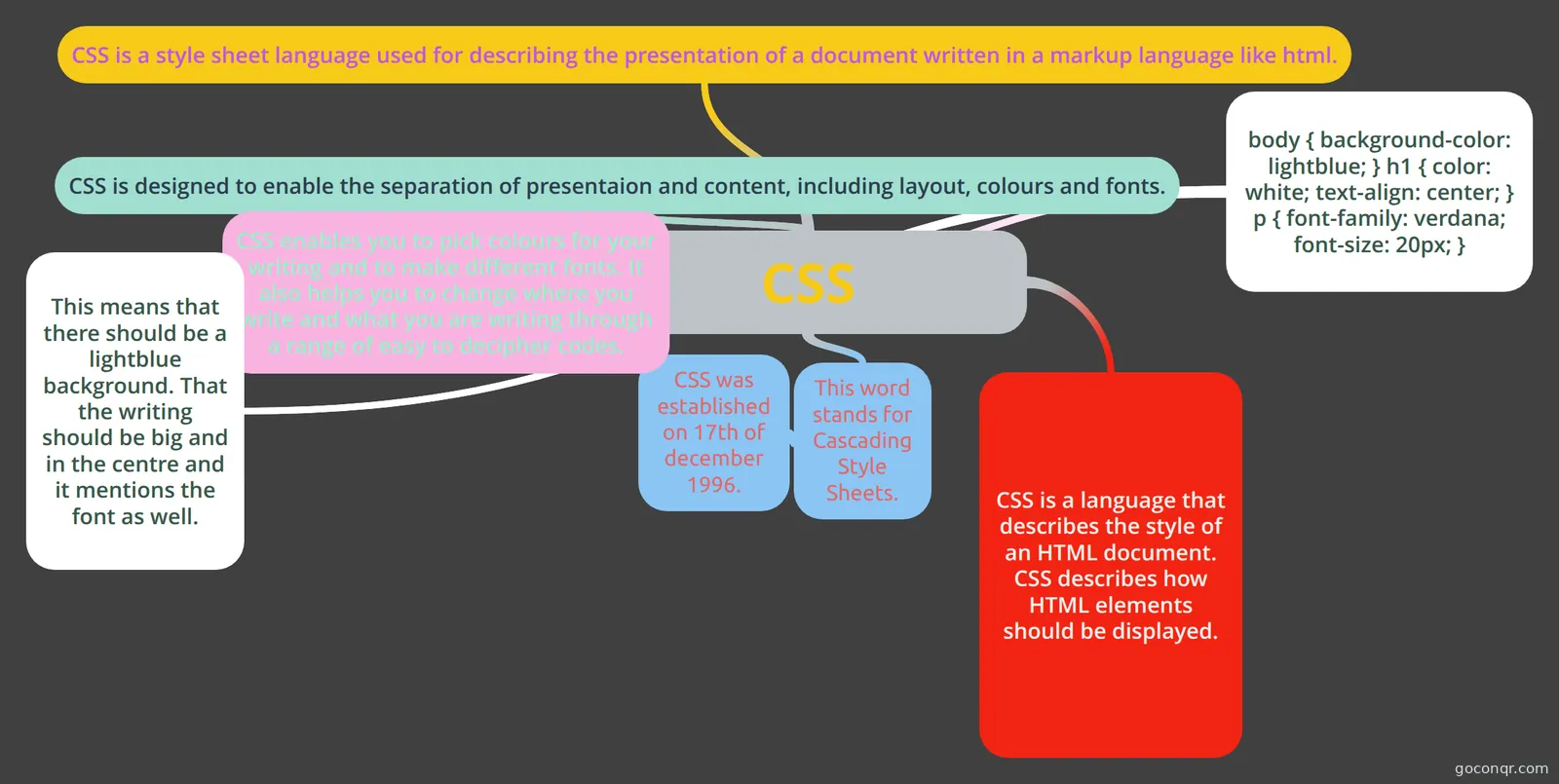
Flashcards
See all 49 flashcards-
50 cardsHTML + CSS Basic get to know these two awesome languages.
-
20 cardsNode.Js What is the primary feature of Node's build model?
-
7 cardsIntro to D3.js Select a single body element
-
44 cardsHTTP + Web etc. What is a user agent?
-
53 cardsJavaScript Topic: Data Structures What is destructuring?
-
33 cardsJavaScript Erklärung alle Synthax Befehle
-
22 cardsJavascript Related Terms First class citizen
-
49 cardsHTML HTML Stand for
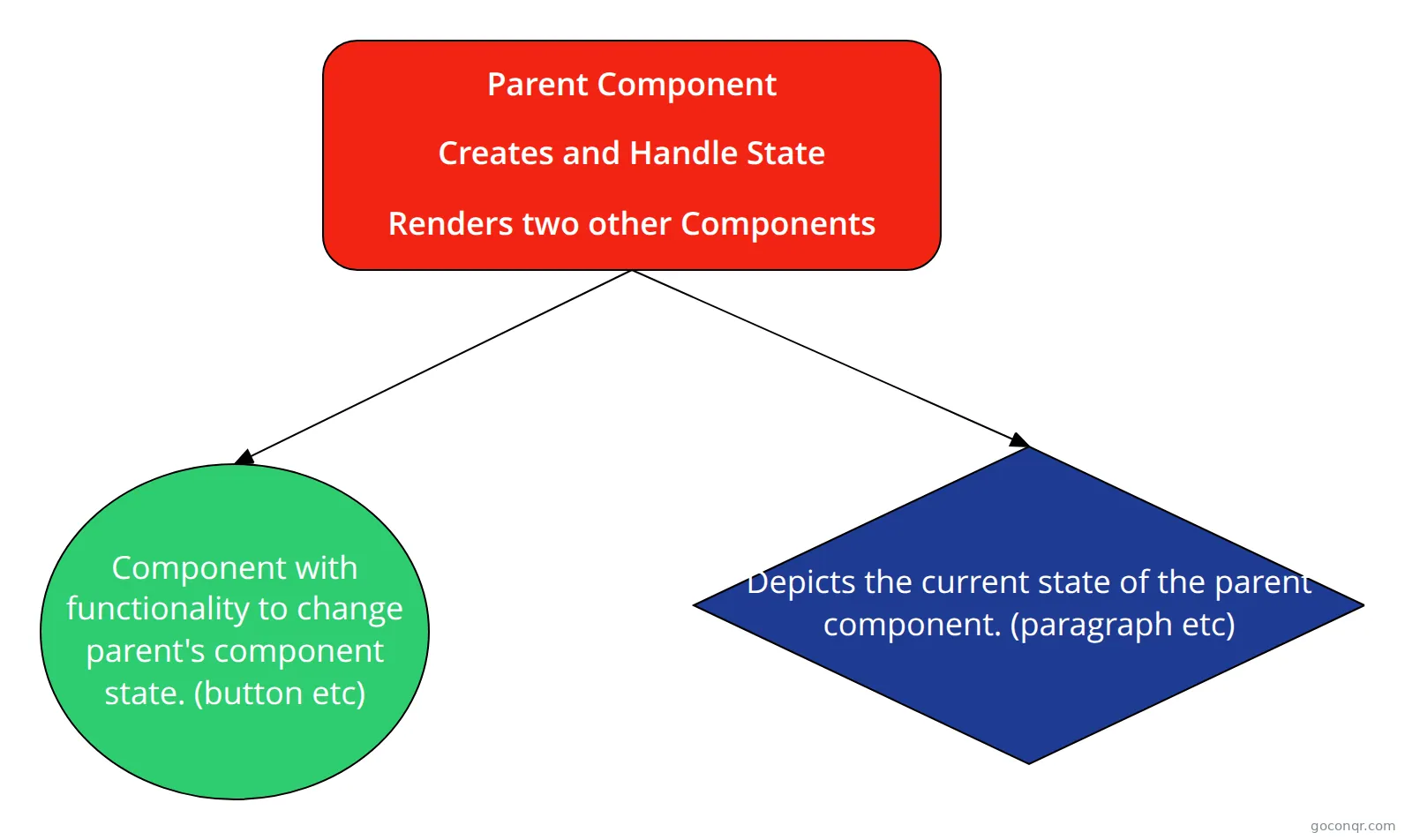
Flowcharts
Notes
See all 24 notes-
Mongoose and express
-
Web Designing & Development Full Tutorial Hypertext Markup Language (HTML) is the standard markup language for creating web pages and web applications. WithCascading Style Sheets (CSS) and JavaScript it forms a tri...
-
Node.js Node.js is an open-source, cross-platform JavaScript run-time environment for executing JavaScript code server-side. Historically, JavaScript was used primarily for client-side ...
-
Introduction to Java Script Introduction JavaScript is a widely used web-based programming language that powers the dynamic behavior on most websites, including this one. In this lesson, you will learn about data typesand built-in meth...
-
Pears of Wisdom - All About JavaScript General JavaScript Info Popup Windows created with: alert(), confirm(), prompt() confirm returns true or false based on what the user selects, either OK or Cancel Use console.log(), ...
-
Angular Concept questions and answers Angularjs vs Angula4r2 vs Angular &n...
-
Nodejs INTRODUCTION What is Nodejs? javascript runtime environment running chrome's V8 javascript engine in background runs single-threaded, non-blocking, asynchronously programming, which is very memory efficient Node.js el...
-
Express basics Basic SetupYou'll need to declare and instantiate objects from various libraries in server.js to get started:var express = require('express'); // call express var app = express(); // define our app using expressvar mo...
Slides
More Computing and ICT (programming, computer science, digital skills, educational technology) topics
About Web Development
GoConqr OriginalWhat you will find
The unit follows the path of a web page, from the browser to the server. The front-end material covers HTML tags, fonts, images, tables and CSS layout. The JavaScript material covers variables, arrays, data types, closures and inheritance. Further along are Node.js, Express, Mongoose, Angular, PHP and web services.
Where to start
Begin with the basics. The quiz HTML Basics asks what HTML and HTTP stand for and which server handles resource requests. The quiz HTML & CSS: Introduction & Chapter 1 goes on to ask how a browser finds a web server, and what an ISP is. The flashcard deck HTML + CSS then drills font-family, font-style, font-weight and font-size, along with web safe and fallback fonts.
- Read a mind map such as HTML or CSS to see the shape of the topic.
- Take a basic quiz to check what stuck.
- Use flashcards to fix the terms you missed.
- Move on to JavaScript and server-side topics.
Going further
Once the markup is comfortable, try Prototypes in Javascript. It gives you a Cat constructor and asks what a prototype property returns for each object. The quiz SOAP + WSDL covers web service operations and request-response patterns. The deck Intro to D3.js practises selecting elements and binding data arrays. The Angular mind map links TypeScript, components, modules and bootstrapping in one place.
The mind maps on client-side and server-side processing are useful for seeing where code actually runs.
Exams and levels
Some resources mention GCSE ICT, GCSE Computer Science and National 5 Computing Science, for example the quiz N5 Computing Science (WDD) - HTML + CSS. Others mention CIW and TYPO3 certification. University students and professional candidates will find the most here, with plenty for school students too. Teachers can pick out quizzes and maps to set as ready-made tasks.
Where it sits
This unit belongs to the strand Web, Mobile, Games and Digital Media in Computing and ICT. Choose one topic that suits you, open its quiz, and see how far you get before building your own flashcards.
Frequently asked questions
Which quiz should I try first?
HTML Basics is a gentle start. It asks what HTML and HTTP stand for and which part handles resource requests from many computers. If you want a bit more, HTML & CSS: Introduction & Chapter 1 adds questions about IP addresses, ISPs and how a browser locates a web server.
What do the mind maps cover?
There are over 800 mind maps. Many are on HTML and CSS, while others cover JavaScript, jQuery, MVC, Node.js, Angular and ASP.NET. A set on client-side and server-side processing shows where code runs, and one on website structure helps with planning pages.
Are these resources free to use?
Yes. Every resource listed here is free to open, study and take, with no account needed. They were made by GoConqr users, not by GoConqr itself. A free account also saves your quiz scores and lets you make your own quizzes, mind maps, flashcards and notes.
Which exams do the resources relate to?
The listed resources mention GCSE ICT, GCSE Computer Science and National 5 Computing Science for school students. They also mention CIW, TYPO3 CMS certification and the TYPO3 CMS Certified Integrator exam, which suit professional candidates. Check each resource to see how closely it matches your course.
Is there anything on JavaScript beyond the basics?
Yes. Prototypes in Javascript tests constructors and inherited properties. Other items cover closures, arrow functions, sets in ES6, arrays and data types, and the Advanced Web Scripting flashcards. There are also notes on AJAX basics and regular expressions for when you are ready to go deeper.
What if I cannot find my topic?
Look at related topics first, as the same idea often appears under another name, such as Client-side Processing and Client and Server Side Processing. You can also make your own mind map, flashcards or notes on the missing topic with a free account.