
Flashcards
4.1 Basic concepts and hydrocarbons
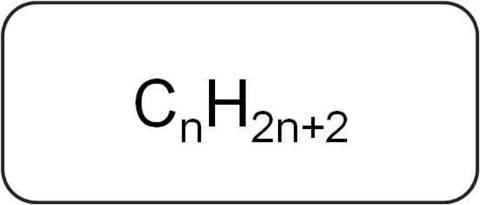
Flashcards do conjunto (98)
- 11 carbon alkanemethane
- 22 carbon alkaneethane
- 33 carbon alkanepropane
- 44 carbon alkanebutane
- 55 carbon alkanepentane
- 66 carbon alkanehexane
- 77 carbon alkaneheptane
- 88 carbon alkaneoctane
- 99 carbon alkanenonane
- 1010 carbon alkanedecane
- 11general formulathe simplest algebraic formula of a member of a homologous series
- 12general formula for alkanes
- 13structural formulathe minimal detail that shows the arrangement of atoms in a molecules by listing the elements letters
- 14structural formula for butane

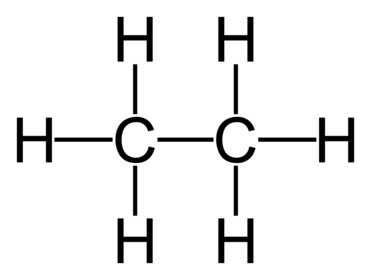
- 15displayed formulathe relative positioning of atoms and the bonds between them
- 16displayed formula for ethane
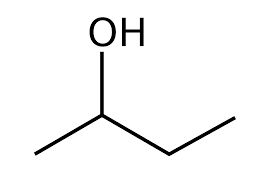
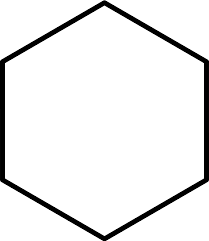
- 17skeletal formulathe simplified organic formula, showed by removing the hydrogen atoms from the alkyl chain, leaving just a carbon skeleton and associated functional groups
- 18skeletal formula for butan-2-ol
- 19skeletal formula for cyclohexane
- 20skeletal formula for benzene
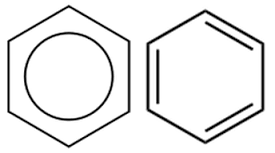
- 21homologous seriesa series of organic compounds having the same functional group but with each successive member differing by CH2
- 22functional groupa group of atoms responsible for the characteristic reactions of a compound
- 23alkyl group
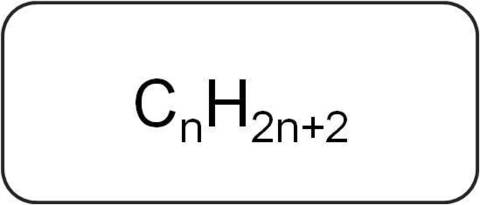
- 24aliphatica compound containing carbon and hydrogen joined together in straight chains, branched chains and non-aromatic rings
- 25alicyclican aliphatic compound arranged in non-aromatic rings with or without side chains
- 26aromatica compound containing a benzene ring
- 27saturated compoundcompound with single carbon-carbon bonds only
- 28unsaturated compoundcompound with multiple carbon-carbon bonds present
- 29three examples of unsaturated compoundsC=C
C triple bond C
aromatic rings - 30Structural isomerscompounds with the same molecular formula but with different structural formulas
- 313 types of structural isomerchain
positional
functional group - 32Explain what chain isomerism istype of structural isomerism - where 2 isomers have differences in chain length due to different side chains
- 33Explain what positional isomerism istype of structural isomerism - where 2 isomers have differences in position of the functional group(s)
- 34Explain what functional group isomerism is and give an exampletype of structural isomerism - where 2 isomers have differences in functional groups
i.e. aldehyde and ketone - 352 types of covalent bond fissionhomolytic fission
heterolytic fission - 36homolytic fissiontype of covalent bond fission in which each of the bonding atoms receives one electron from the bonded pair, forming two radicals
- 37heterolytic fissiontype of covalent bond fission in which one of the bonded atoms receives both electrons from the bonded pair
- 38radicala species with an unpaired electron
- 39How are radicals represented in mechanisms?with a dot
- 40Dots are requires to represent radicals in which there is a single unpaired electrons. Dots are not required for species that are ______diradicals
- 41example of a diradicalO
- 42curly arrowthe movement of an electron pair
- 43a curly arrow represents the movement of a electron pair showing either....heterolytic fission
formation of a covalent bond - 44curly arrows should start from ....a bond
a lone pair
a negative charge - 45hydrocarbona compound that contains hydrogen and carbon only
- 46alkanessaturated hydrocarbons containing single C-C and C-H bonds as sigma bonds
- 47explain why alkanes don't have stereoisomersalkanes only contain sigma-bonds which are free to rotate
- 48what is the shape and bond angle around each carbon atom in alkanes? why?tetrahedral
109.5
4 bonded pairs of electron repel each other so they are as far away from each other as possible - 49what are the two factors which vary an alkanes boiling point? due to?branching
molecular mass
induced dipole-dipole interactions - 50Explain the boiling point of alkanes in terms of relative molecular mass.As relative molecular mass increases, so does boiling point. Increasing number of electrons present. More induced dipole-dipole interactions.
- 51Explain the boiling point of alkanes in terms of chain length.For alkane isomers, the boiling point decreases as degree of branching increases. With more branching there is less amount of surface contact. The molecules can't pack together as tightly so less induced dipole-dipole interactions. Less energy needed to overcome the forces.
- 52why are alkanes relatively unreactive?the C-H bonds have very low polarity and are relatively strong
- 53Two reactions which alkanes undergocombustion
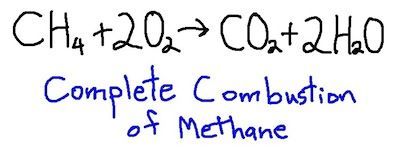
radical substitution with halogens - 54complete combustion requires ____excess oxygen
- 55complete combustion of methane
- 56combustion of alkanes in a limited supply of oxygen produces ____ or ____ and ____ by _____ _____carbon monoxide or carbon
oxygen
incomplete combustion - 57Why is incomplete combustion of alkanes bad?may produce carbon monoxide which is poisonous because it restricts the body's effectiveness of the blood to transport oxygen
- 58Alkanes react with chlorine or bromine by ____ _____. Conditions?radical substitution
UV light - 59Three steps for a radical substitution reactioninitiation
propagation
termination - 60What is the first step of a radical substitution reaction? explain.initiation
starts the reaction by forming a radical - 61What is the second step of a radical substitution reaction? explain.propagation
maintains the reaction by forming one of the products and a new radical - 62What is the last step of a radical substitution reaction? explain.termination
ends the reaction by removing the radicals and forming molecules - 63What type of bond fission occurs in radical substitution?homolytic fission
- 64In the reaction between alkanes and halogenalkanes, the first propagation step always produces ____ and the second propagation step always produces ____hydrogen halide and alkyl radical
organic product and regenerates halogen radical - 65Why are radical substitution reactions hard to predict?Radicals are extremely reactive and will react with almost any molecule, atom or radical they collide with. Produces a mixture of products which are difficult to separate.
- 66Write the equations for the initiation, 2 propagation and 3 termination steps for the reaction between methane and hydrogen chloride.
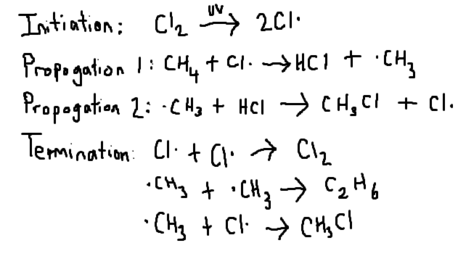
- 67What is the limitation of radical substitution in synthesis reactions?a mixture of organic products is formed, because there are radicals regenerated which may carry out further substitutions and reactions may occur at different positions in the chains.
- 68alkeneunsaturated hydrocarbon contain a C=C bond
- 69Explain the bonding in an alkenerestricted rotation of C=C comprises of a pi bond (sideways overlap of adjacent p-orbitals above and below C atoms) and a sigma-bond (overlap of orbitals directly between bonding atoms)
- 70Explain why alkenes can form stereoisomersC=C double bond has restricted rotation of the pi-bond
- 71What shape and bond angle is around each carbon in a C=C bond in alkenes? Why?trigonal planar
120 degrees
electron pair repulsion - 72stereoisomerscompounds with the same structural formula but with a different arrangement in space
- 73E/Z isomerismsan example of stereoisomerism, in terms of restricted rotation about a double bond and the requirement for two different groups to be attached to each carbon atom of the C=C group
- 74Explain what makes a molecule E stereoisomerism.priority groups on opposite sides of the C=C bond
- 75Explain what makes a molecule Z stereoisomerism.priority groups on the same sides of the C=C bond
- 76cis-trans isomerisma special case of E/Z isomerism in which two of the substituent groups attached to each carbon atom of the C=C are the same
- 77How do you decide priority rules for E/Z isomers?Highest atomic number of atoms attached to same carbon= highest priority
If 2 attached atoms have the same atomic number, then the adjacent atoms with the highest atomic numbers have priority. - 78Do alkenes or alkanes have lower boiling points? Why?Alkenes = lower boiling points. They cannot pack together as efficiently as alkanes so there are fewer induced dipole-dipole interactions.
- 79Why are alkenes more reactive than alkanes?Alkenes have a pi-bond, as well as sigma-bonds. Alkanes only have sigma-bond. Pi-bonds are much weaker than sigma-bonds, hence why less energy is required for an alkene to react.
- 80Alkenes undergo _____ reactions.addition
- 81Alkenes react with hydrogen, in what conditions and with what resultnickel catalyst
form alkanes - 82Alkenes react with halogens, in what conditions, to form what.mix at room temperature
dihaloalkanes - 83What reaction is used to test for a C=C double bond?Mix with bromine. If C=C double bond bromine decolorises
- 84Alkenes react with hydrogen halides to form, under what conditions?haloalkanes
mix at room temperature - 85Alkenes react with steam by what reaction under what conditions and to form what?Hydration reaction
acid catalyst (i.e. H3PO4)
form alcohols - 86Electrophilean electron pair acceptor
- 87markownikoff's ruleIn addition reaction between unsymetrical alkenes and H-X, the H atom from the H-X always bonds to the carbon atom which has the larger number of H atoms.
- 88Explain why markownikoff's rule is true.When the double bond of the alkene break it forms a carbonium ion. This is the slow step. The reaction which forms a more stable carbonium ion is favoured. A more stable carbonium ion is created with more alkyl groups. Therefore, bromine more likely to react with a carbon with more carbons attached.
- 89Bromine + ethene mechanism and name of reaction
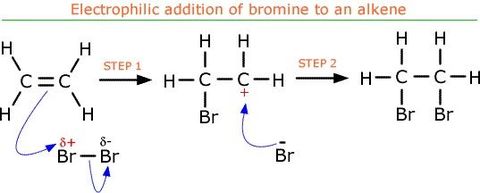
- 90HBr + propene mechanism
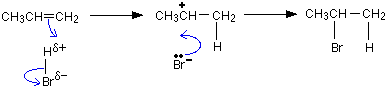
- 91Electrophilic addition in alkenes What type of bond fission occurs?heterolytic
- 92Addition polymerisation equation for phenylethene
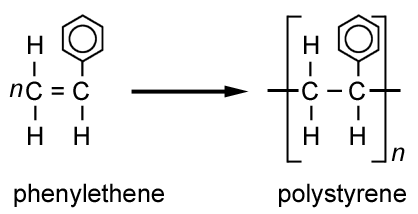
- 93Addition polymerisation equation for tetrafluoroethene
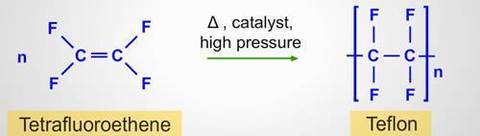
- 94Draw the monomer and name it.chloroethene
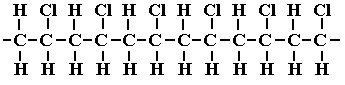
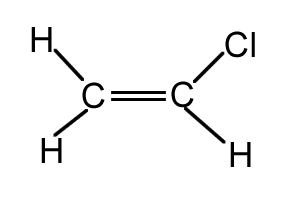
- 95Why are waste polymers a problem?Strong, covalent, non-polar bonds means that they are unable to broken down by chemicals or bacteria. Hard to dispose of.
- 96What are some alternatives to landfill for waste polymers?Incineration - energy production
Organic feedstock for production of new plastics & other organic chemicals - 97Problems for using waste polymers as an energy source through combustionsome plastics produce poisonous gases such as PVC produces HCl. Incinerators have to be fitted with gas scrubbers to prevent the toxins being released.
- 98Benefits to the environment of development of biodegradable and photodegradable polymers-sustainable - not using finite resources such as oil
-alleviating problems from disposal of persistent plastic waste
Informações
- Descrição
- A level Chemistry (Module 4: Core organic chemistry) FlashCards sobre 4.1 Basic concepts and hydrocarbons, criado por Zoe Mitchell em 23-02-2017.
- Criado por
- Zoe Mitchell
- Visualizações
- 1
- Avaliação