
Introduction to Organic Chemistry
592 resources created by 410 users
This Introduction to Organic Chemistry page on GoConqr gathers community-made quizzes, mind maps, flashcards, notes and slides, from functional groups and homologous series to isomerism, alcohols, esters and reaction mechanisms. It's built for school students revising a topic, university students and professional candidates filling gaps, and teachers after ready-made material. There are over 3,600 resources here, including more than 220 quizzes and over 1,600 mind maps, made by more than 2,200 contributors. Pick a topic, try a quiz to find your gaps, then make your own revision sets.
Top Introduction to Organic Chemistry resources
-
Mind map OCR Chemistry - F322 - Module 2 The entire module in detail
-
102 cardsOrganic Chemistry: 1,2,4,6,8,9,5,10
-
45 cardsOrganic Synthesis OCR Chemistry A All synthetic routes and reactions needed for OCR chemistry A exam for A level paper 2 and 3.
-
Mind map Organic Chemistry + Alkanes/Alkenes
-
123 cardsC7 revision What is crude oil made up of ?
-
Mind map Chemistry Unit 2- Alkenes and Haloalkanes
-
Mind map OCR 21st Century C7.2
-
64 cardsLevel 3 Organics Revision Entire Organics Paper revision flashcards
Quizzes
See all 114 quizzes-
43 questionsAQA Chemistry C4: Chapter 5: Compounds Containing the Carbonyl Group Salts formed from hydrolysis of fats and oils using NaOH are used in?
-
19 questionsCatalysts And Addition Reactions For Alkenes What catalyst is needed for the addition reaction of hydrogen to an alkene in a lab?
-
30 questionsAlkenes and Polymers Quiz on Alkenes for A-Level Chemistry. Scores are NOT dependent on how many correct answers there are!
-
21 questionsOCR A2 Organic Chemistry A chemist compares the rates of hydrolysis of 1-chloropropane and 1-bromopropane in ethanol. Which reagent ...
-
24 questionsC7 Quiz - Organic Chemistry What is 'Organic Chemistry'?
-
16 questionsAQA (9-1) Chemistry Only Paper 2 Alkenes have the general formula of CnH2n+2
-
25 questions0654 C14 Organic Chemistry Quiz What is not the correct use of the fraction named?
-
12 questionsAQA (9-1) Topic 7
Mind maps
See all 204 mind maps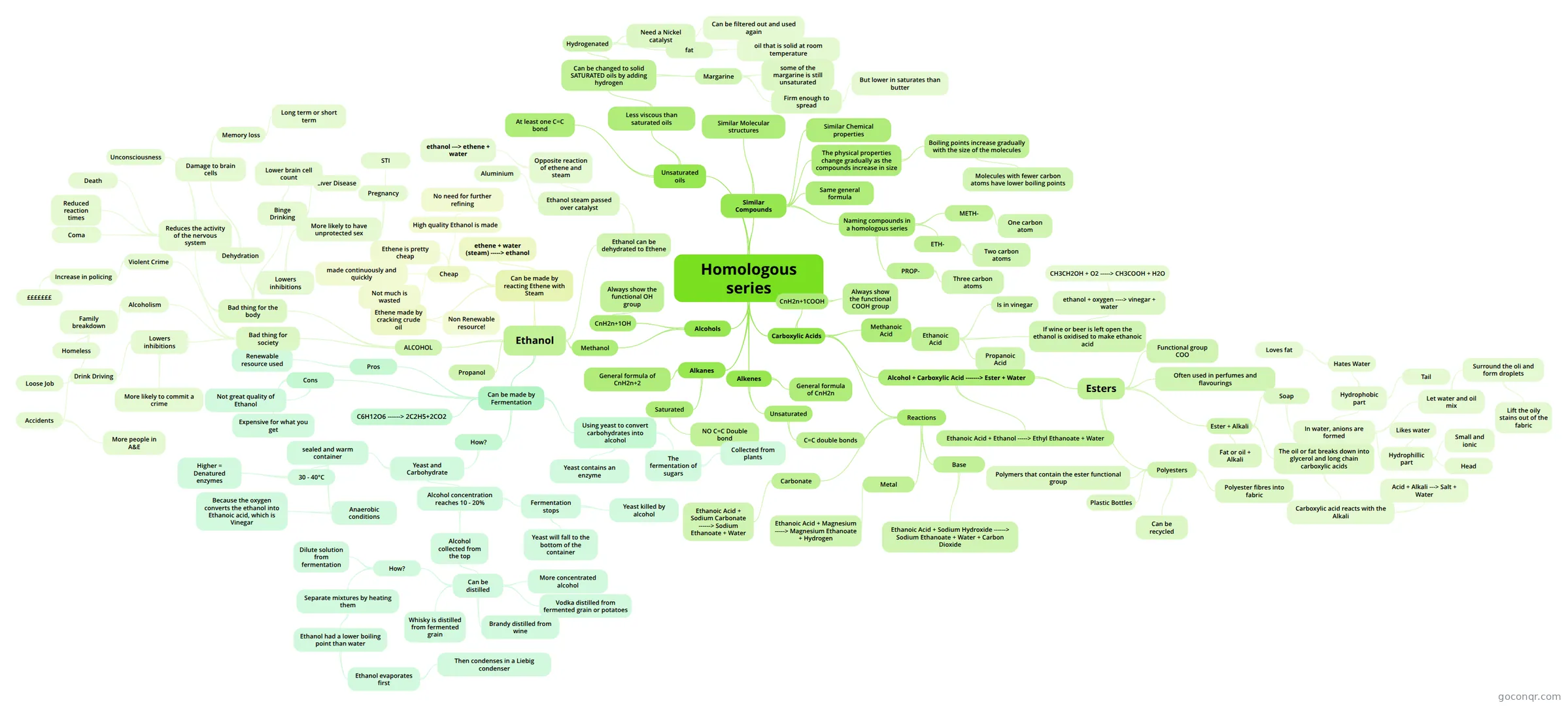
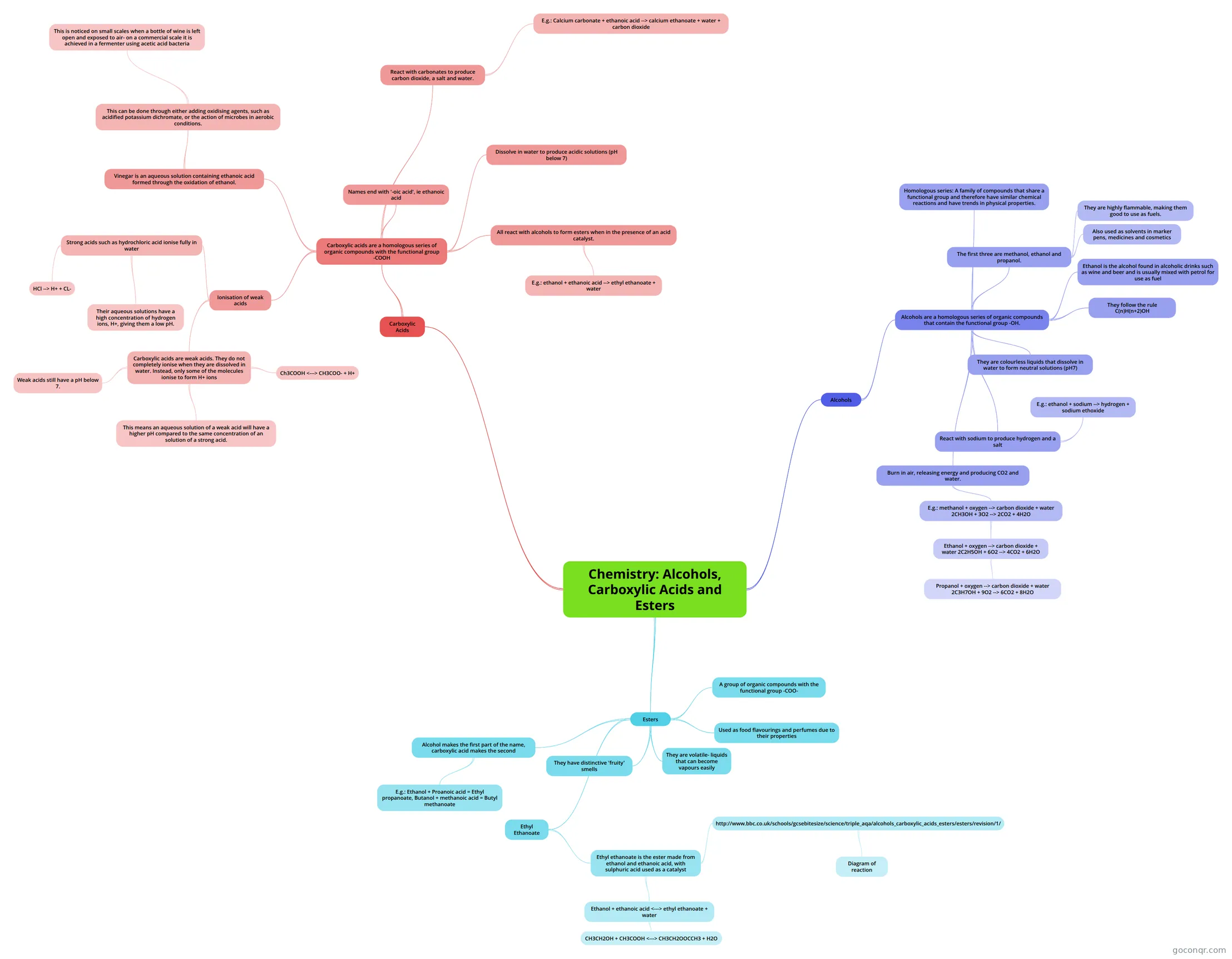
Flashcards
See all 238 flashcards-
102 cardsOrganic Chemistry: 1,2,4,6,8,9,5,10
-
45 cardsOrganic Synthesis OCR Chemistry A All synthetic routes and reactions needed for OCR chemistry A exam for A level paper 2 and 3.
-
123 cardsC7 revision What is crude oil made up of ?
-
64 cardsLevel 3 Organics Revision Entire Organics Paper revision flashcards
-
28 cardsAlkanes - questions and answers Alkanes (Questions and answers)
-
48 cardsSynthetic routes Synthetic routes (# means edit)
-
39 cardsOCR AS Chemistry A Organic Chemistry Revision What are hydrocarbons?
-
20 cardsBasic Concepts of Organic Chemistry Define the term 'Homologous Series'
Flowcharts
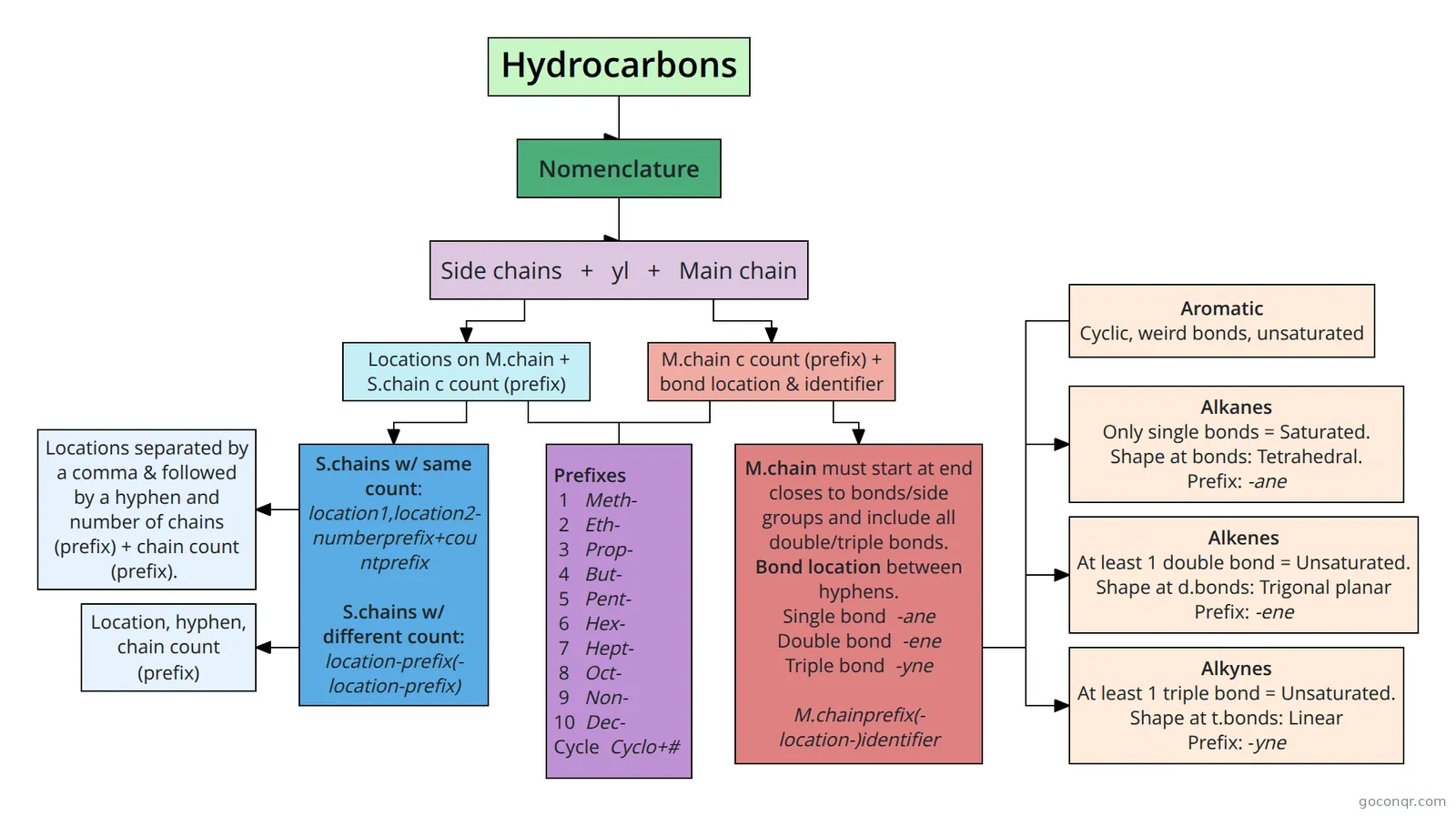
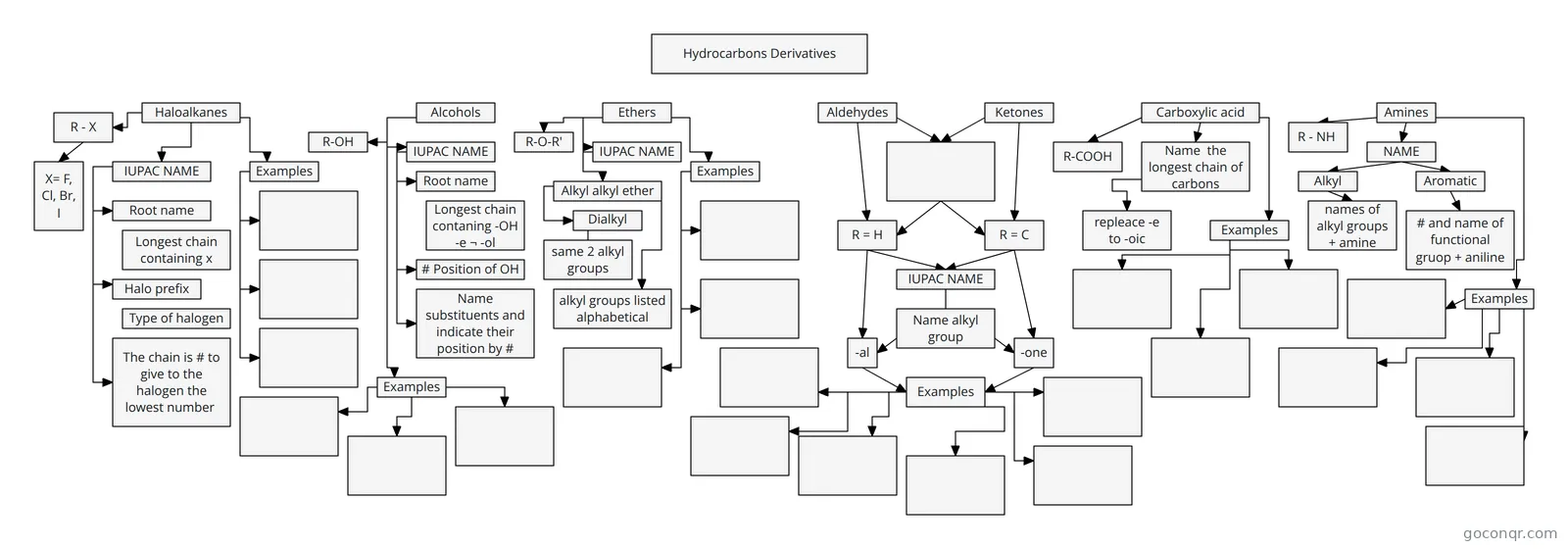
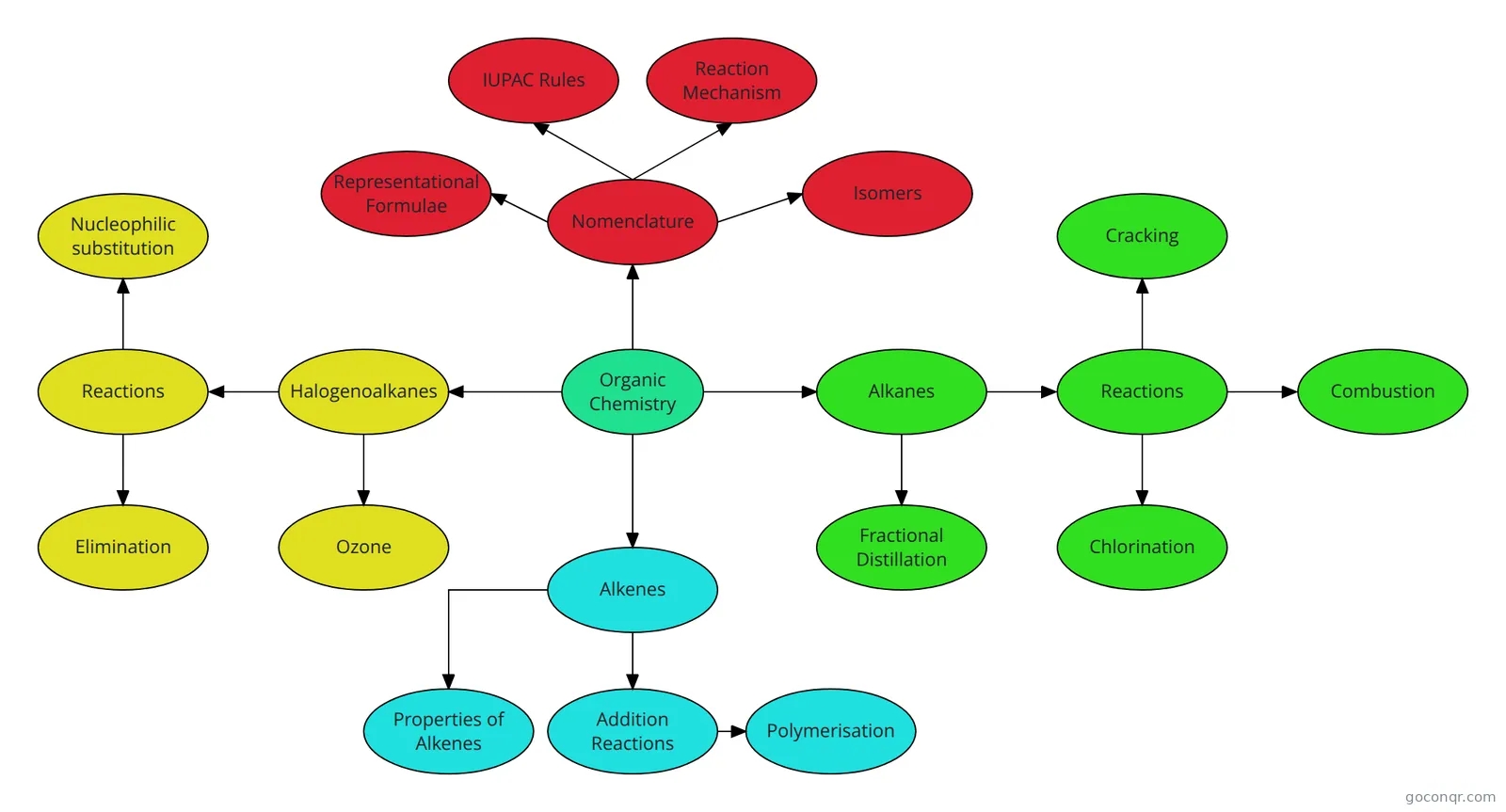
Notes
See all 25 notes-
A-Level Chemistry: Polymers PolyestersAn ester is formed and a small molecule lost when a carboxylic acid or acyl chloride reacts with an alcohol. For example:ethanoyl chloride + ethanol → ethyl ethan...
-
MCAT Chemistry - Organic Chem Sn2 Rate and Transition State The SN2 reaction is one of the most common in organic chemistry. CH3O- + CH3Br→CH3OCH3 + Br- The reaction of methoxide ion with methyl bromide procee...
-
10. Organic Chemistry Fundamentals of Organic Chemistry Naming Organic Compounds1. Prefix: longest continuous carbon chain 1: meth- 2: eth- 3: prop- 4: but- 5: pent- 6: hex- 7: hept- 8: oct-2. Identify type of bondsSingle: alkaneDouble: al...
-
Organic Chemistry Reaction Mechanism Organic Chemistry Reaction Mechanisms Every NEET Aspirant Should Know Let’s rewind a little. You're sitting at your study table. It’s 11:37 PM. There's a half-scribbled note that says something like "Aldol = alpha hyd...
-
OrgoLab: Experiment 1 Experiment 1 "Who's Got What I've Got"Purification of an Unknown Solid by Recrystallization and Identification by Melting PointLearning Objectives attempting to solve an identification of an unknown compound (limited ...
-
Haloalkanes Haloalkanes Haloalkanes are alkanes with halogen functional groups The general formula is CnH2n+1X They are often used in the production of synthetic products such as PVC, as a solvent in dry cleaning and ...
-
Chem 2.2 AlcoholsStrong hydrogen bonds Lower volatility than alkanes of similar lengthRelatively high melting and boiling pointHydrogen bonds form between the Hydrogen of water and the lone pair of the oxygen in an alcoho...
-
Amino Acids Amino Acids have an Amino Group and a carboxyl groupAn amino acids has a basic amino group (NH2) and an acidic carboxyl group (COOH).This makes the amphoteric - they've got both acidic and basic properties. They're ca...
Slides
More Chemistry topics
About Introduction to Organic Chemistry
GoConqr OriginalWhat the unit covers
The resources here start with the basics and build towards reactions and synthesis. The mind map Organic Chemistry + Alkanes/Alkenes opens with why carbon forms so many compounds: four outer electrons, four covalent bonds, stable and non-polar. Other maps and decks cover homologous series, hydrocarbons, alcohols, esters, carbonyl compounds, nitrogen compounds and aromatic compounds.
Where to start
Begin with the basics. The flashcard deck Introduction to organic chemistry and the deck on general formulas and functional groups set up the vocabulary. The deck Organic Chemistry: 1,2,4,6,8,9,5,10 runs through the functional groups, from alkanes and alkenes to amines, nitriles and thiols. Then move to Homologous Series and Hydrocarbon Nomenclature, a flowchart on naming.
Moving on to reactions
- Read the ISOMERISM mind map, then test yourself with the Stereoisomers deck, which asks how to tell an E-isomer from a Z-isomer.
- Look at Free Radical Substitution and Nucleophilic substitution for mechanisms.
- Work through Alcohols and Esters, then the Hydrolysis of esters flowchart.
- Finish with Synthetic routes, which is a flowchart and a flashcard deck, to link the reactions together.
Using quizzes and maps together
Read a mind map first to see the shape of a topic. Then take a quiz on it, such as Esters Quiz or Chemistry Functional Groups Quiz. Wrong answers show you which branch of the map to revisit. For harder practice, OCR A2 Organic Chemistry asks about comparing hydrolysis rates of haloalkanes.
Exam boards and where this fits
Many resources name their course, including OCR, AQA, CIE, IB and MCAT material, so look for your own. This unit sits in the Organic Chemistry strand of Chemistry. Teachers can pick ready-made maps and decks for class. Choose one topic today and see how much you can recall.
Frequently asked questions
Which resource should I open first?
Start with the flashcard deck Introduction to organic chemistry or the mind map Organic Chemistry + Alkanes/Alkenes. Both cover the basics, such as why carbon bonds so widely and how compounds are grouped. After that, move on to functional groups and homologous series before tackling reaction mechanisms.
What do the mind maps cover?
The mind maps range from broad overviews to single topics. You will find maps on alcohols, esters, isomerism, carbonyl compounds, nitrogen compounds, aromatic compounds, nucleophilic substitution and polymers. Some follow a named course, such as the OCR Chemistry F322 modules and the AQA GCSE organic topics.
Which exams and levels do these resources suit?
Most resources are aimed at school students, with a smaller share for university students. Titles and excerpts mention A-level Chemistry, GCSE Chemistry, IGCSE Chemistry, IB Chemistry, SQA Higher Chemistry, National 5 Chemistry and MCAT, among others. Check the resource title or description to match it to your course.
Are the resources free to use?
Yes. Every resource listed here is free to open, study and take, with no account needed. They were made by GoConqr users, not by GoConqr itself, so it is worth checking that a resource matches your course. A free account also saves your quiz scores and lets you make your own quizzes, mind maps, flashcards and notes.
Is there anything for practising reaction mechanisms?
Yes. The deck CIE AS Level organic chemistry mechanisms, the deck Block 6 organic reaction mechanisms and the notes Organic Chemistry Reaction Mechanism all focus on how reactions proceed. Free Radical Substitution covers homolytic fission and the stages of the process, which is a good first step.
What if I cannot find my topic?
Try a nearby title, since many topics appear under different names, such as hydroxy compounds for alcohols or carboxylic acid derivatives for esters. Because the resources are made by GoConqr users, you can also build your own mind map or flashcards to fill any gap.