Flashcards
Lecture 48 - Post-translational modification of proteins (a focus on newly synthesized proteins)
Flashcards do conjunto (13)
- 1Learning objectives• Protein modification by glycosylation
• Protein modification by lipidation
• Protein modification by acetylation: recall histone acetylation
• Protein modification by methylation: recall histone methylation
• Protein modification by phosphorylation: recall histone phosphorylation - 2Co-translational and post-translational modification of proteins • As the polypeptide chain grows and folds, enzymes that modify the nascent chain start to function. These are called __-____ modifications. • Modifications that happen after completion of polypeptide synthesis are called ___-___ modifications.co-translational
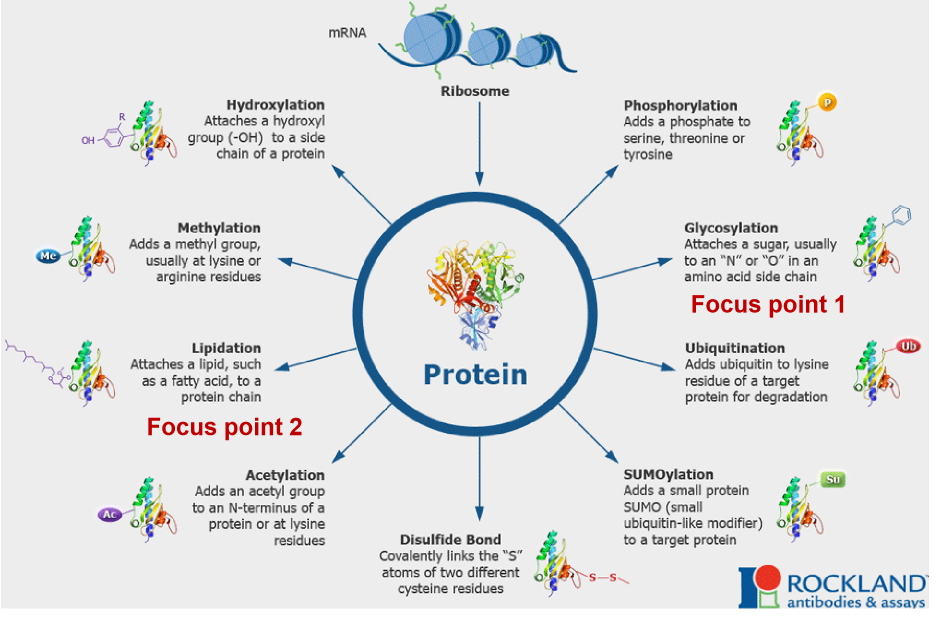
post-translational - 3Types of post-translational modifications of proteins
- 4Protein modification by glycosylation While N-linked glycosylation starts in the __ before translation is complete, O-linked oligosaccharides are added in the ___ ___ The enzymes that catalyze these reactions are called _____ and are integral transmembrane proteins of the ER or Golgi with their catalytic region facing the lumen of each organelle.ER (co-translational)
Golgi apparatus (post-translational)
glycosyltransferases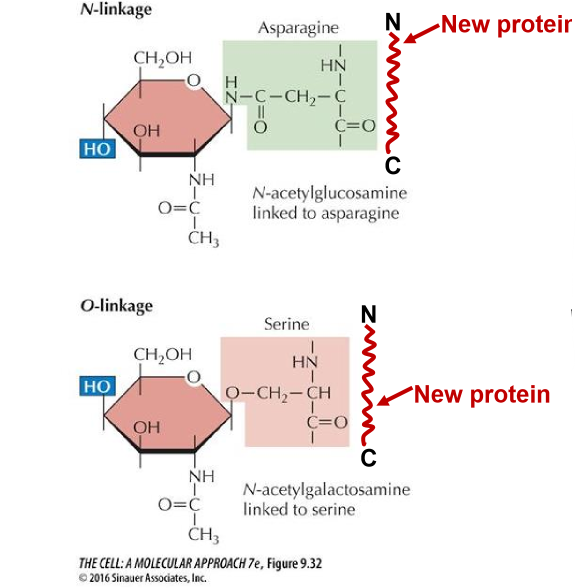
- 5Glycosylation in the ER; it can be more ___ Note branched oligosaccharide arranged on dolichol phosphate is transferred to ___complex
Asn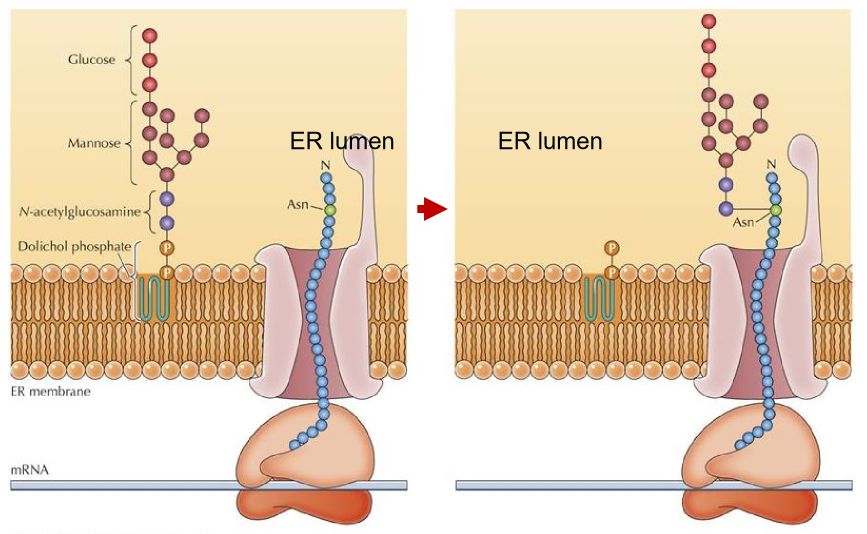
- 6O-linked glycosylation mainly takes place in the __ ___ Note: Similar to N-linked, O-linked glycosylation also involves the transfer of branched oligosaccharide arranged on dolichol phosphate to ___Golgi apparatus
Ser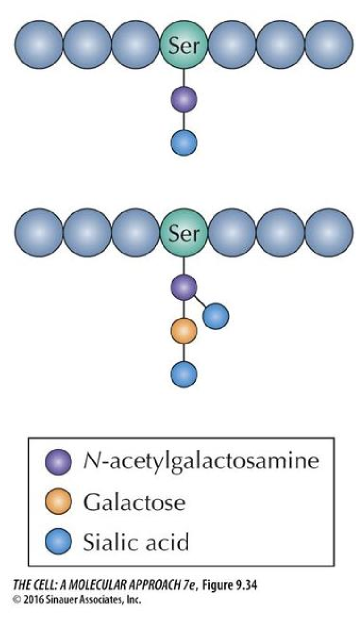
- 7Activation of the four sugars used in protein modification Activation: conjugation to ___. The ester bond between the phosphate residue and the carbon atom in the sugar is a __-___ bond with a ΔG°' of hydrolysis of about —5 kcal/mol. Thus the transfer of the sugar residue to an acceptor hydroxyl group, on a serine or threonine residue or on another sugar residue, is energetically ____.nucleotides
high-energy
favored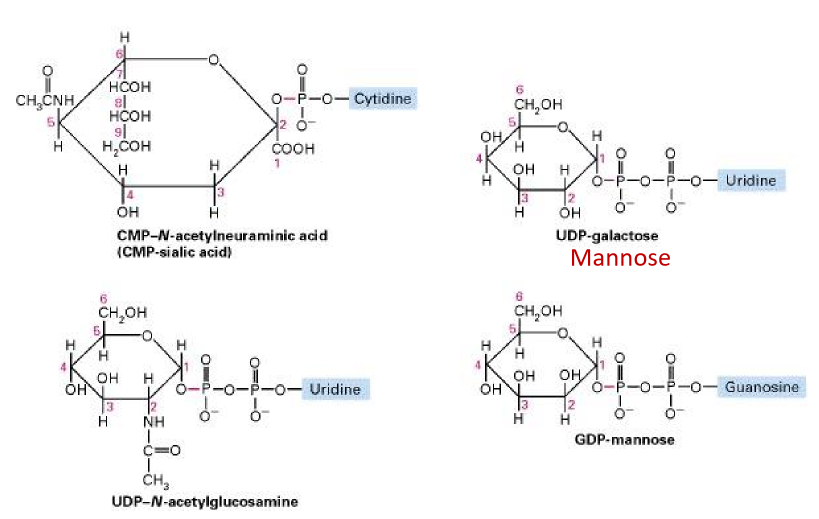
- 8Reaction catalyzed by ___ ____- adding more sugar A specific ___ catalyzes the addition of a galactose residue from UDP-galactose to carbon atom 3 of N-acetylgalactosamine attached to a protein forming a __--> __ linkagegalactosyltransferase
glycosyltransferase
β1-->3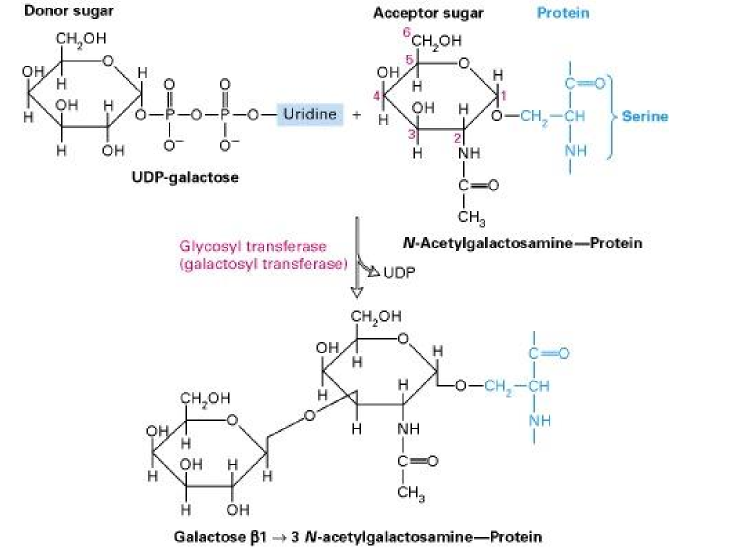
- 9Modification by lipidation which helps them anchor to the plasma membrane Myristoylation at N-terminal ___ N-myristoylation (14 carbon) is catalyzed by NMT (_-___ __), a 50 kDa cytosolic enzyme that is expressed in most organisms as one or two gene products (e.g. NMT1 and NMT2 in humans). The reaction typically occurs __-____ and is facilitated by binding of NMT to ribosomes.Gly
N-myristoyl transferase
co-translationally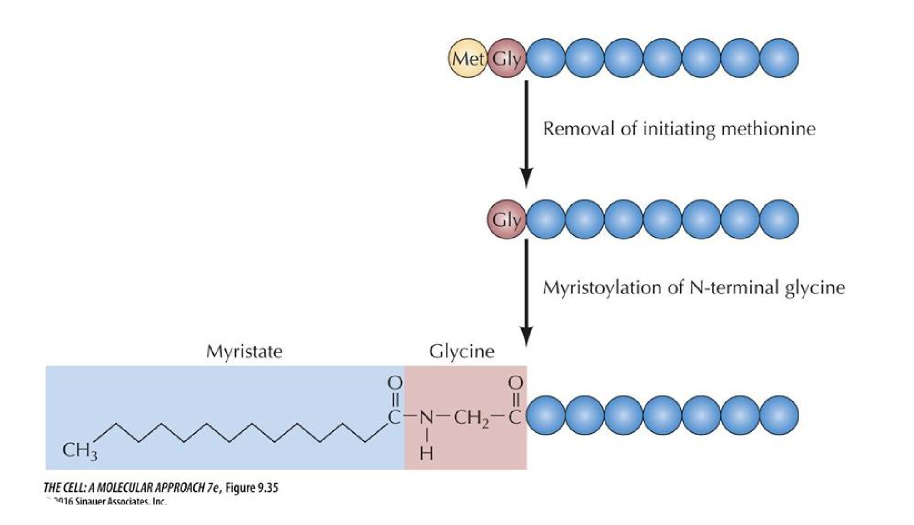
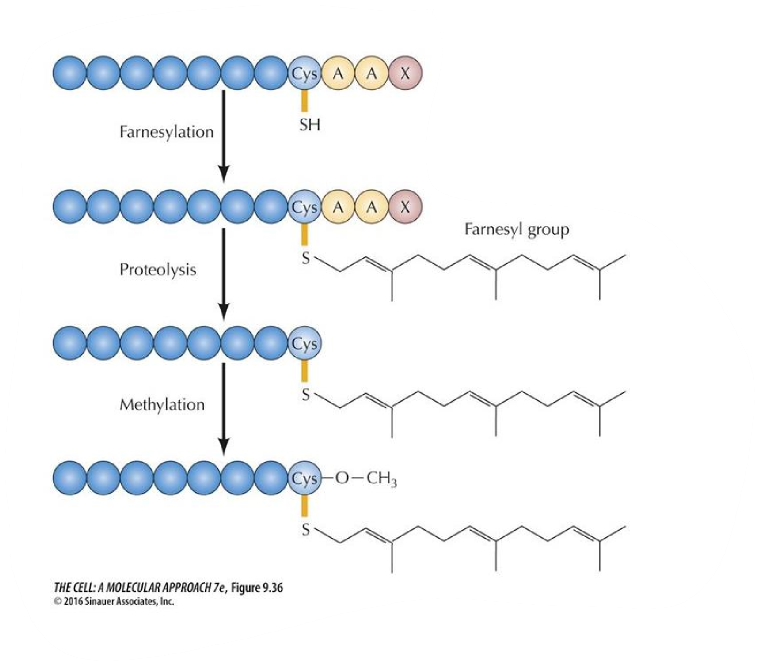
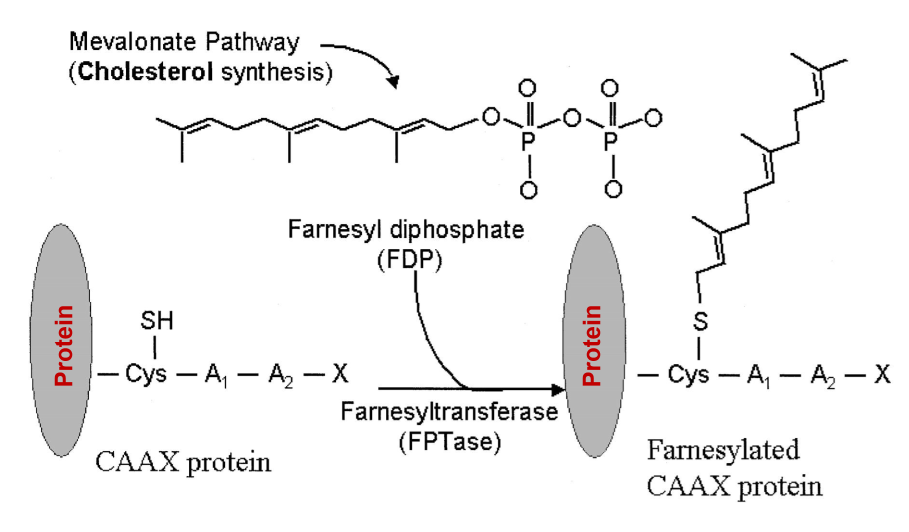
- 10Note for the next two slides — farnesylation Farnesyl is a 15-carbon isoprenoid group that is attached post-translationally to proteins. The farnesylation reaction results in a thioether linkage between farnesyl and a ___ residue at or near the C-terminus of the modified protein. A hallmark of most farnesylated proteins is the presence of a "____" sequence (__-__-__-__) at the C-terminus. Farnesylation enhances the interaction of the modified protein with the ER, where two additional processing steps take place — removal of "___" and ___ of the newly generated C-terminal CYS. For instance, Rce1 (Ras converting enzyme l) proteolytically removes the "AAX" sequence, then Icmt (isoprenylcyteine carboxymethyltransferase) carboxymethylates the newly generated C-terminal __cysteine
CAAX
cysteine-aliphatic-aliphatic-X
AAX
methylation
Cys - 11Lipidation by farnesylation via attachment to the Sulfur atom of Cys near the C- terminus
- 12Slide showing farnesylation reactions
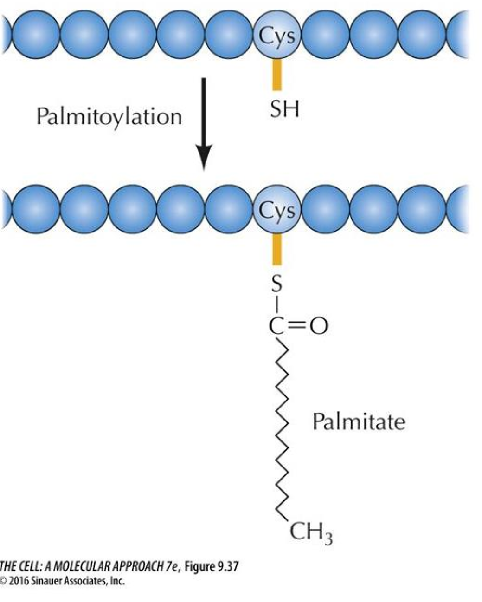
- 13Modification by _____ (16 carbon FA) via attachment to the Sulfur atom of internal Cys residues A family of cysteine-rich domain ___ acyltransferases (PATs), termed DHHC for the conserved sequence __-__-__-__ in the active site, are primarily responsible for S-palmitoylation of intracellular proteins. DHHC PATS are ___ membrane proteins with 4—6 transmembrane domains and are localized to the ER, the Golgi, and the plasma membrane. Transfer of palmitate from the donor, ___ __, to the protein substrate proceeds via an acyl-enzyme intermediate.palmitoylation
palmitoyl
Asp-His-His-Cys
multipass
palmitoyl CoA