
Mapa mental
ozymandias
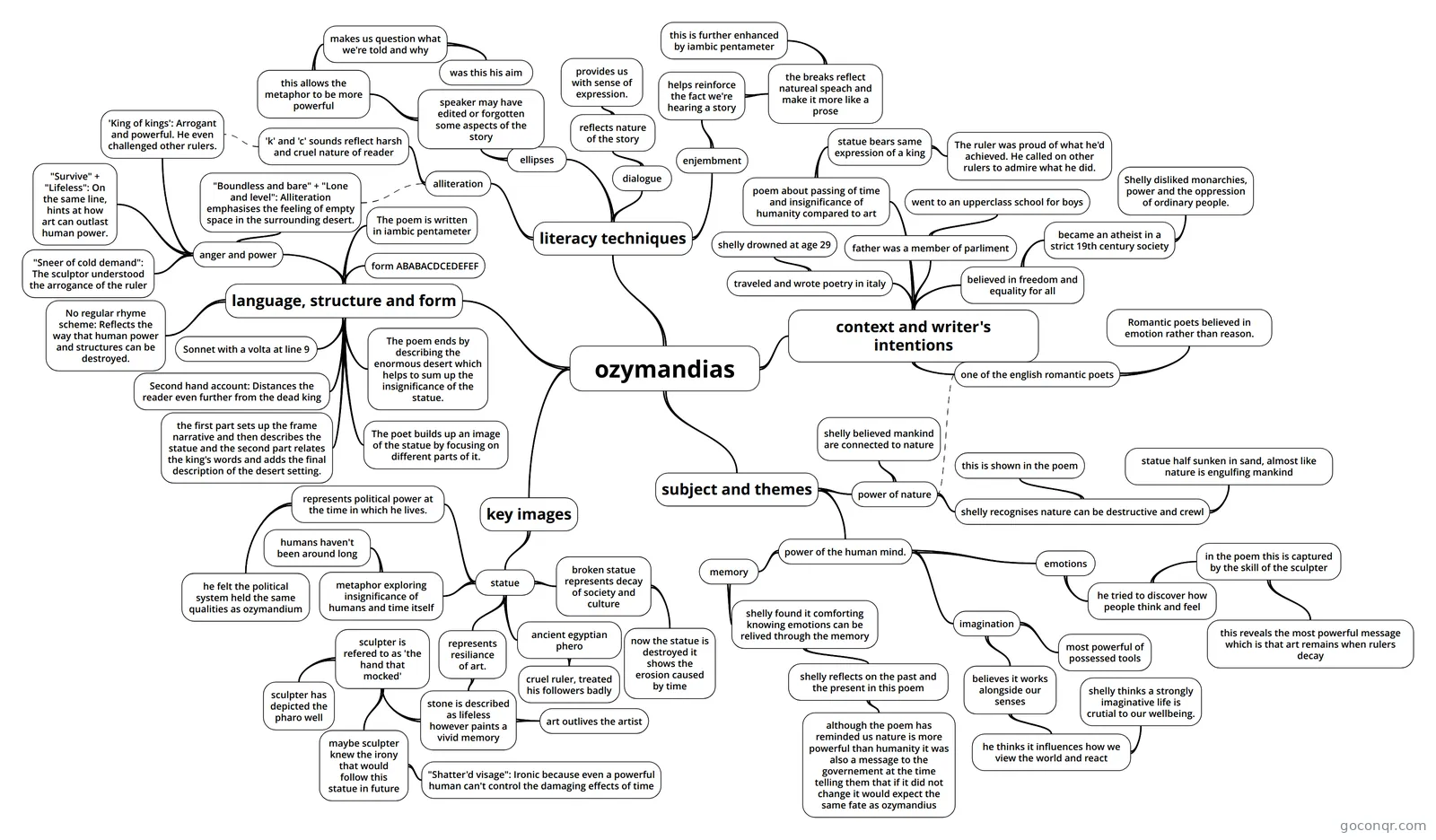
Mind map: Ozymandias poem analysis
Conteúdo do mapa
ozymandias
context and writer's intentions
- one of the english romantic poets
- Romantic poets believed in emotion rather than reason.
- father was a member of parliment
- went to an upperclass school for boys
- believed in freedom and equality for all
- became an atheist in a strict 19th century society
- Shelly disliked monarchies, power and the oppression of ordinary people.
- became an atheist in a strict 19th century society
- traveled and wrote poetry in italy
- shelly drowned at age 29
- poem about passing of time and insignificance of humanity compared to art
- statue bears same expression of a king
- The ruler was proud of what he'd achieved. He called on other rulers to admire what he did.
- statue bears same expression of a king
- one of the english romantic poets
subject and themes
- power of nature
- shelly believed mankind are connected to nature
- shelly recognises nature can be destructive and crewl
- this is shown in the poem
- statue half sunken in sand, almost like nature is engulfing mankind
- power of the human mind.
- emotions
- he tried to discover how people think and feel
- in the poem this is captured by the skill of the sculpter
- this reveals the most powerful message which is that art remains when rulers decay
- in the poem this is captured by the skill of the sculpter
- he tried to discover how people think and feel
- imagination
- most powerful of possessed tools
- believes it works alongside our senses
- he thinks it influences how we view the world and react
- shelly thinks a strongly imaginative life is crutial to our wellbeing.
- he thinks it influences how we view the world and react
- memory
- shelly found it comforting knowing emotions can be relived through the memory
- shelly reflects on the past and the present in this poem
- although the poem has reminded us nature is more powerful than humanity it was also a message to the governement at the time telling them that if it did not change it would expect the same fate as ozymandius
- shelly reflects on the past and the present in this poem
- shelly found it comforting knowing emotions can be relived through the memory
- emotions
- power of nature
key images
- statue
- ancient egyptian phero
- cruel ruler, treated his followers badly
- broken statue represents decay of society and culture
- now the statue is destroyed it shows the erosion caused by time
- metaphor exploring insignificance of humans and time itself
- humans haven't been around long
- represents political power at the time in which he lives.
- he felt the political system held the same qualities as ozymandium
- represents resiliance of art.
- stone is described as lifeless however paints a vivid memory
- art outlives the artist
- sculpter is refered to as 'the hand that mocked'
- sculpter has depicted the pharo well
- maybe sculpter knew the irony that would follow this statue in future
- "Shatter'd visage": Ironic because even a powerful human can't control the damaging effects of time
- stone is described as lifeless however paints a vivid memory
- ancient egyptian phero
- statue
language, structure and form
- The poet builds up an image of the statue by focusing on different parts of it.
- The poem ends by describing the enormous desert which helps to sum up the insignificance of the statue.
- Sonnet with a volta at line 9
- Second hand account: Distances the reader even further from the dead king
- No regular rhyme scheme: Reflects the way that human power and structures can be destroyed.
- anger and power
- 'King of kings': Arrogant and powerful. He even challenged other rulers.
- "Sneer of cold demand": The sculptor understood the arrogance of the ruler
- "Boundless and bare" + "Lone and level": Alliteration emphasises the feeling of empty space in the surrounding desert.
- "Survive" + "Lifeless": On the same line, hints at how art can outlast human power.
- the first part sets up the frame narrative and then describes the statue and the second part relates the king's words and adds the final description of the desert setting.
- The poem is written in iambic pentameter
- form ABABACDCEDEFEF
literacy techniques
- enjembment
- helps reinforce the fact we're hearing a story
- the breaks reflect natureal speach and make it more like a prose
- this is further enhanced by iambic pentameter
- the breaks reflect natureal speach and make it more like a prose
- helps reinforce the fact we're hearing a story
- dialogue
- reflects nature of the story
- provides us with sense of expression.
- reflects nature of the story
- ellipses
- speaker may have edited or forgotten some aspects of the story
- this allows the metaphor to be more powerful
- makes us question what we're told and why
- was this his aim
- makes us question what we're told and why
- this allows the metaphor to be more powerful
- speaker may have edited or forgotten some aspects of the story
- alliteration
- 'k' and 'c' sounds reflect harsh and cruel nature of reader
- enjembment
Informações
- Descrição
- GCSE english Mapa Mental sobre ozymandias, criado por Katie louise em 04-02-2019.
- Criado por
- Katie louise
- Visualizações
- 1
- Avaliação
Mais sobre Percy Bysshe Shelley