Mapa mental
Social development theory
Conteúdo do mapa
Social development theory
Lev Vygotsky
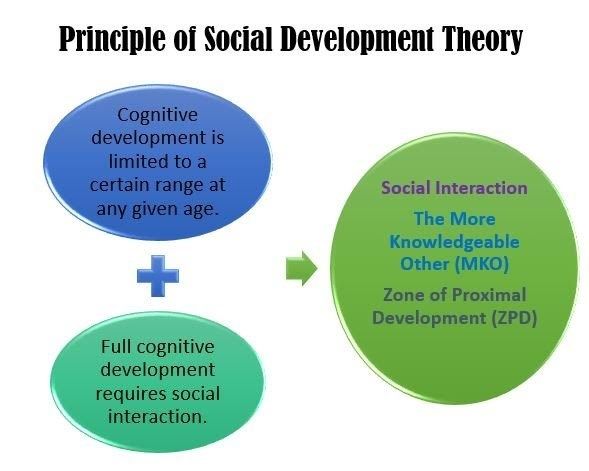
- Social interaction plays a fundamental role in the development of cognition.
- Every function in the child’s cultural development appears twice
- irst, on the social level, and later, on the individual level
- First, between people (interpsychological) and then inside the child (intrapsychological). This applies equally to voluntary attention, to logical memory, and to the formation of concepts. All the higher functions originate as actual relationships between individuals.
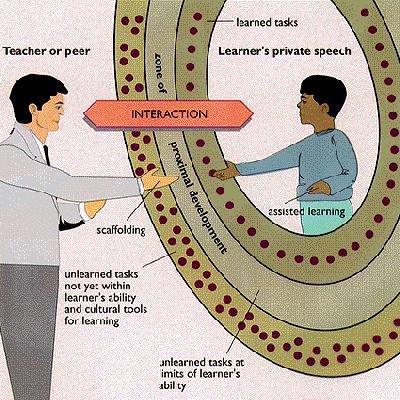
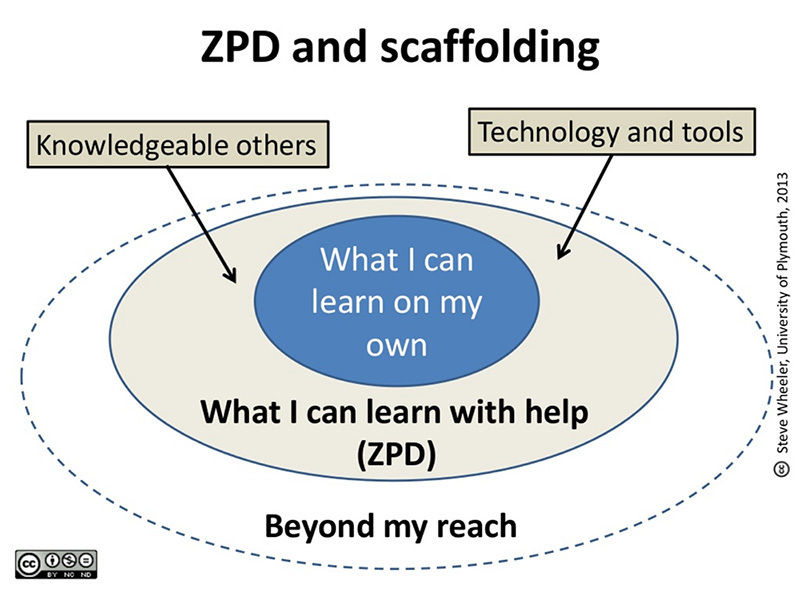
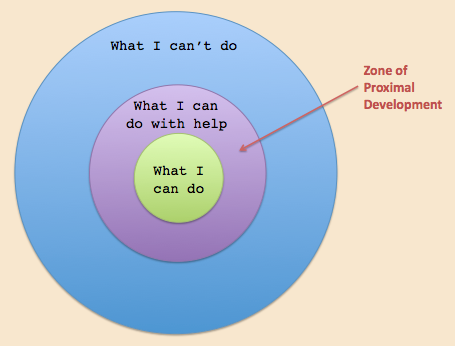
- A second aspect of Vygotsky’s theory is the idea that the potential for cognitive development depends upon the “zone of proximal development” (ZPD)
- (ZPD): a level of development attained when children engage in social behavior. Full development of the ZPD depends upon full social interaction. The range of skill that can be developed with adult guidance or peer collaboration exceeds what can be attained alone.
- Vygotsky’s theory was an attempt to explain consciousness as the end product of socialization.
- For example, in the learning of language, our first utterances with peers or adults are for the purpose of communication but once mastered they become internalized and allow “inner speech”.
- Application
- This is a general theory of cognitive development. Most of the original work was done in the context of language learning in children (Vygotsky, 1962), although later applications of the framework have been broader (see Wertsch, 1985).
- Role of Social Interaction in Cognitive Development
- The Social Development Theory (SDT) mainly asserts that social interaction has a vital role in the cognitive development process.
- Vygotsky's theory opposes that of Jean Piaget's Cognitive Development Theory because Piaget explains that a person undergoes development first before he achieves learning, whereas Vygotsky argues that social learning comes first before development.
- Vygotsky states that the cultural development of a child is firstly on the social level called interpsychological, and secondly on the individual or personal level called intrapsychological.
- The More Knowledgeable Other (MKO)
- The MKO is any person who has a higher level of ability or understanding than the learner in terms of the task, process or concept at hand. Normally, when we think of an MKO we refer to an older adult, a teacher or an expert.
- Vygotsky's theory differs from that of Piaget in a number of important ways:
- Vygotsky places more emphasis on culture affecting cognitive development
- This contradicts Piaget's view of universal stages and content of development (Vygotsky does not refer to stages in the way that Piaget does).
- Vygotsky places considerably more emphasis on social factors contributing to cognitive development.
- Piaget maintains that cognitive development stems largely from independent explorations in which children construct knowledge of their own
- Vygotsky places more (and different) emphasis on the role of language in cognitive development.
- According to Piaget, language depends on thought for its development (i.e., thought comes before language).
- According to Vygotsky adults are an important source of cognitive development.
- Piaget emphasizes the importance of peers as peer interaction promotes social perspective taking.
- "Elementary mental functions'"
- 1.Attention 2.Sensation 3.Perception 4.Memory
- Vygotsky places more emphasis on culture affecting cognitive development
- Vygotsky's theory differs from that of Piaget in a number of important ways:
- The MKO is any person who has a higher level of ability or understanding than the learner in terms of the task, process or concept at hand. Normally, when we think of an MKO we refer to an older adult, a teacher or an expert.
- The More Knowledgeable Other (MKO)
- Vygotsky states that the cultural development of a child is firstly on the social level called interpsychological, and secondly on the individual or personal level called intrapsychological.
- Vygotsky's theory opposes that of Jean Piaget's Cognitive Development Theory because Piaget explains that a person undergoes development first before he achieves learning, whereas Vygotsky argues that social learning comes first before development.
- The Social Development Theory (SDT) mainly asserts that social interaction has a vital role in the cognitive development process.
- Role of Social Interaction in Cognitive Development
- This is a general theory of cognitive development. Most of the original work was done in the context of language learning in children (Vygotsky, 1962), although later applications of the framework have been broader (see Wertsch, 1985).
- Application
- For example, in the learning of language, our first utterances with peers or adults are for the purpose of communication but once mastered they become internalized and allow “inner speech”.
- Vygotsky’s theory was an attempt to explain consciousness as the end product of socialization.
- (ZPD): a level of development attained when children engage in social behavior. Full development of the ZPD depends upon full social interaction. The range of skill that can be developed with adult guidance or peer collaboration exceeds what can be attained alone.
- A second aspect of Vygotsky’s theory is the idea that the potential for cognitive development depends upon the “zone of proximal development” (ZPD)
- First, between people (interpsychological) and then inside the child (intrapsychological). This applies equally to voluntary attention, to logical memory, and to the formation of concepts. All the higher functions originate as actual relationships between individuals.
- irst, on the social level, and later, on the individual level
- Every function in the child’s cultural development appears twice
- Social interaction plays a fundamental role in the development of cognition.