
Mapa mental
Philosophy
Conteúdo do mapa
Philosophy
Epistemology
- Reason and Experience
- Rationalism
- A priori
- Analytic
- Deductive
- At least some knowledge is known innately
- Innatism
- Empiricism
- A posteriori
- Synthetic
- Inductive
- All knowledge is gained through experience
- Tabula rasa
- Locke
- Hume
- Innate Concepts
- Maths
- Plato's Meno
- God
- Grammar
- Maths
- Rationalism
- Definition of Knowledge
- JTB
- Sufficient
- Gettier
- Jane's vase
- Gettier
- Necessary
- The self-doubting student
- Sufficient
- Gettier
- Man with ten coins
- Henry's barns
- Additional conditions
- Causal condition
- Valid Justification
- JTB
- Theories of Perception
- Direct Realism
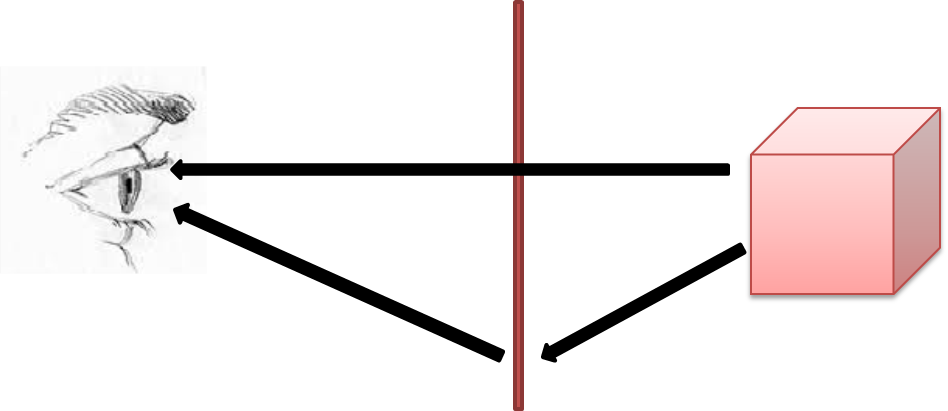
- Being in direct contact with a mind independent reality
- Aristotle
- Indirect Realism
- The Veil of Perception
- Primary Qualities
- Shape
- Size
- Movement
- Don't change
- Pass straight through the veil
- Secondary Qualities
- Colour
- Smell
- Sound
- Reflect off of the veil before being percieved
- Changable
- powers
- Primary Qualities
- Locke
- Being in indirect contact with a mind independent reality
- Locke
- This can lead to sceptism about the existence of an external world
- The Veil of Perception
- Idealism
- The only things that exist are minds and ideas
- I Think Therefore I Am
- Direct Realism
- Reason and Experience
Philosophy of Religion
- Arguments for the existence of God
- Teleological
- A posteriori, synthetic and inductive
- Paley's Watch Analogy
- When walking upon a heath kicking stones, a man comes across a watch. He picks it up and admires it. He claims that this watch is so complex and intricate, that it must have had a designer, a watch-maker. He then thought about the world and in a similar way he said, the world is so complex that it too must have a designer, a world-maker, God.
- Against
- Evolution
- Provides an alternative theory as to how the world became so complex.
- Evolution
- Ontological
- Analytic
- Against
- Kant
- Existence is not a predicate
- Guanilo's Island
- Kant
- Anselm
- God is that than no greater can be concieved
- Real>Imaginairy
- God is that than no greater can be concieved
- Descartes
- God is perfect
- Cosmological
- Kalam et al
- Everything that begins to exist has a cause, the universe began to exist, therefore something must have caused the universe.
- Relies on contingency
- Red Shift
- Against
- Brute fact
- What caused God?
- Aquinas
- Kalam et al
- Teleological
- Implications of the existence of God
- Problem of Evil
- 1. God is omnibenevolent
- 2. God is omnipotent
- 3. There is evil
- Therefore God does not exist
- 3. There is evil
- 2. God is omnipotent
- Against
- Additional premises
- 1a. A good thing eliminates a bad thing as far as it can
- 2a. There is no limit to what an omnipotent thing can do
- 3a. Good is opposed to evil
- Therefore a good, omnipotent thing eliminates evil completely
- Therefore God does exist
- Therefore a good, omnipotent thing eliminates evil completely
- 3a. Good is opposed to evil
- 2a. There is no limit to what an omnipotent thing can do
- Omniscience
- God does not exist
- 1a. A good thing eliminates a bad thing as far as it can
- Free Will Defence
- The only way to make all good people, is to deny them free will.
- Natural Evil is due to fallen angels.
- Against
- Mackie
- Swinburne
- Evil exists for the greater good
- Additional premises
- 1. God is omnibenevolent
- Religious Language
- Verification
- If a statement cannot be proved analytically or empirically, then it is meaningless.
- Statement fails under it's own conditions
- If a statement cannot be proved analytically or empirically, then it is meaningless.
- Falsification
- The Gardener
- Two explorers came across a clearing. The first explorer saw the flowers and trees and said, "there must be a gardener of this beautiful garden". The second explorer sees the weeds and disagrees. They wait all day and all night, they set up electric fences and sniffer dogs. But the gardener doesn't show up. The first explorers is constantly adding attributes to his gardener, "He's invisible, unsmellable and intangible". The second explorer asks, "How is your invisible, unsmellable, intangible gardener any different from an imaginairy one?".
- Flew
- Cannot be falsified and so is meaningless
- Against
- The Partisan
- Mitchell
- During the time of a war a Partisan meets a stranger claiming to be the leader of the resistance. The stranger urges the Partisan to have faith in him, even if he is seen to be acting against the Partisan's interests. The Partisan is committed to a belief in the stranger's integrity, but his friends think that he is a fool to do so. The original encounter with the stranger gives the Partisan sufficient confidence to hold onto his faith in him.
- The Lunatic
- Hare
- The Partisan
- Disproving something by proving it can't be
- James in the library
- The Gardener
- Verification
- Problem of Evil
- Attributes of God
- Omnipotent
- All powerfull
- The stone
- The square circle
- Transcendent
- Beyond any experience or concept
- In and Out of time
- Euthyphro
- God < > Good
- Omnipotent
- Arguments for the existence of God
Imagens e arquivos do mapa
Informações
- Descrição
- Mind Map showing the topics of AS level philosophy.
- Criado por
- Rebecca Harbury · mar 2015
- Atualizado
- 6 abr 2018
- Visualizações
- 561
- Tags
- Avaliação