
Mapa mental
UNIT 7
Conteúdo do mapa
UNIT 7
Three-Dimensional forms
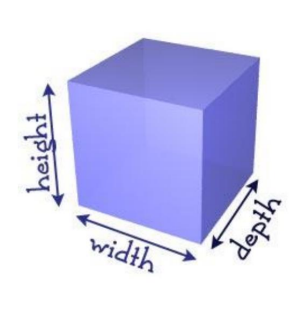
- We are surrounded by three-dimensional objects. We define a three-dimensional form as any form that has three dimensions. What are these three dimensions? They are width, height and depth. Look around you, you are looking at a threedimensional objects. You see that it takes up space front and back, sideways, and up and down. Objects in real-life have three spatial dimensions, so it is helpful for us to understand some of the fundamental aspects of three-dimensional geometry. In many ways, three- dimensional geometry is just an extension of two-dimensional geometry; many of the same principles apply.
- We are surrounded by three-dimensional objects. We define a three-dimensional form as any form that has three dimensions. What are these three dimensions? They are width, height and depth. Look around you, you are looking at a threedimensional objects. You see that it takes up space front and back, sideways, and up and down. Objects in real-life have three spatial dimensions, so it is helpful for us to understand some of the fundamental aspects of three-dimensional geometry. In many ways, three- dimensional geometry is just an extension of two-dimensional geometry; many of the same principles apply.
Polyhedra and Platonic Solids
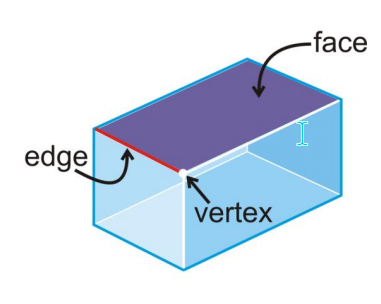
- Solids have properties (special things about them), such as: Volume (think of how much water it could hold) surface area (think of the area you would have to paint) how many vertices (corner points), faces and edges they have. We can also connect polygons to form three-dimensional solids – these are called Polyhedra. 61 The sides of a polyhedron are called faces, the lines where faces meet are called edges, and the corners where edges meet are called vertices.
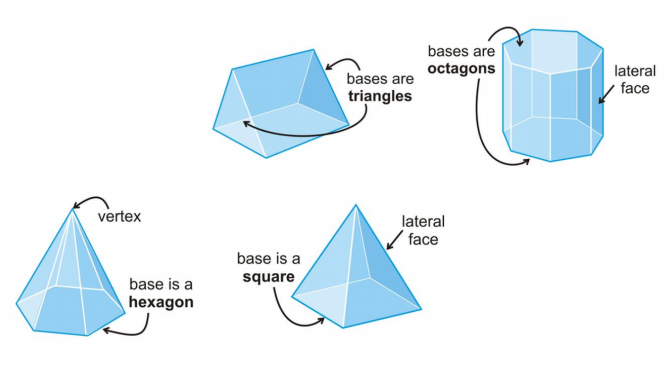
- Examples of polyhedrons include a cube, prism, or pyramid. Cones, spheres, and cylinders are not polyhedrons because they have surfaces that are not polygons. The following are more examples of polyhedrons:
- Examples of polyhedrons include a cube, prism, or pyramid. Cones, spheres, and cylinders are not polyhedrons because they have surfaces that are not polygons. The following are more examples of polyhedrons:
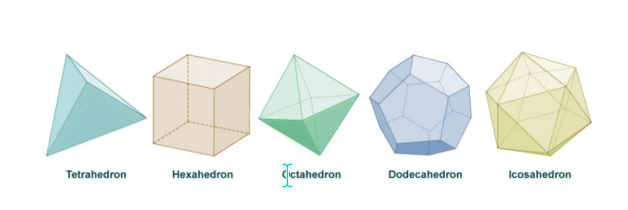
- Platonic solids are particularly “regular” polyhedra. They are the only polyhedra whose faces are all exactly the same. Every face is identical to every other face. For instance, a cube is a Platonic solid because all six of its faces are congruent squares. 62 The same number of faces meet at each vertex. Every vertex has the same number of adjacent faces as every other vertex. For example, three equilateral triangles meet at each vertex of a tetrahedron. No other polyhedra satisfy both of these conditions. They are named after the Greek philosopher Plato, who discovered that there are only five polyhedra with these properties. Their names are derived from the Greek name for the number of faces (“tetra”, for example, means “four”). Tetrahedron: A 4-faced polyhedron and all the faces are equilateral triangles. Hexahedron or cube: A 6-faced polyhedron and all the faces are squares. Octahedron: An 8-faced polyhedron and all the faces are equilateral triangles. Dodecahedron: A 12-faced p.
- Solids have properties (special things about them), such as: Volume (think of how much water it could hold) surface area (think of the area you would have to paint) how many vertices (corner points), faces and edges they have. We can also connect polygons to form three-dimensional solids – these are called Polyhedra. 61 The sides of a polyhedron are called faces, the lines where faces meet are called edges, and the corners where edges meet are called vertices.
Non Polyhedra
- Non-polyhedra describes any geometric solid that has any surface that is not flat, like a sphere, cone, or cylinder.
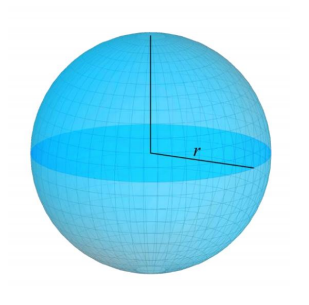
- Sphere: • It is perfectly symmetrical • All points on the surface are the same distance "r" from the center • It has no edges or vertices (corners) • It has one Surface
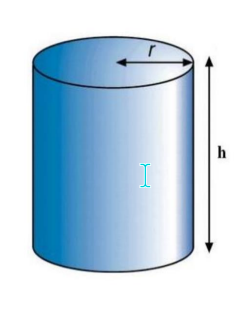
- Cylinder • It has a flat base and aflat top • The base is the same as the top • From base to top the shape stays the same • It has one curved side
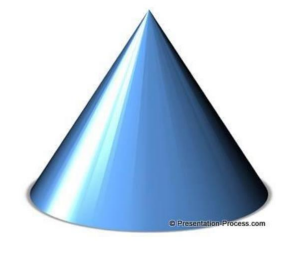
- Cone • It has one curved side • The pointy end of a cone is called the apex • The flat part is the base
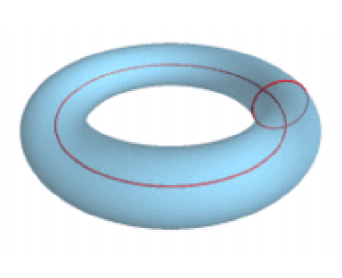
- Torus • it can be made by revolving a small circle (radius r) along a line made by a bigger circle (radius R). • It has no edges or vértices
- Torus • it can be made by revolving a small circle (radius r) along a line made by a bigger circle (radius R). • It has no edges or vértices
- Cone • It has one curved side • The pointy end of a cone is called the apex • The flat part is the base
- Cylinder • It has a flat base and aflat top • The base is the same as the top • From base to top the shape stays the same • It has one curved side
- Sphere: • It is perfectly symmetrical • All points on the surface are the same distance "r" from the center • It has no edges or vertices (corners) • It has one Surface
- Non-polyhedra describes any geometric solid that has any surface that is not flat, like a sphere, cone, or cylinder.
Form
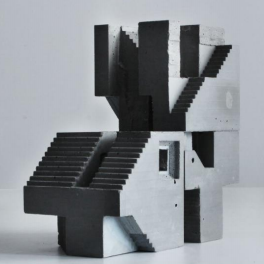
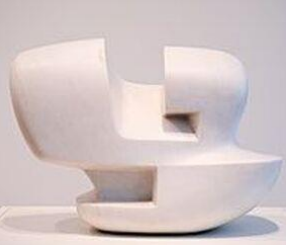
- Convex áreas that stand out Will be highlights.
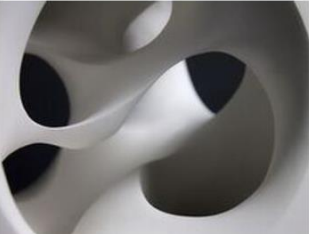
- Concave areas and openings will create shadows.
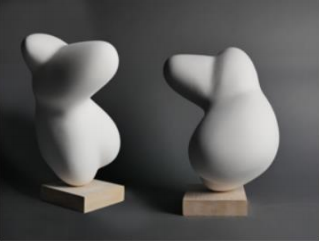
- Closed Form sculpture- A Solid Mass with the focus on how the sculpture occupies space.Positive space.
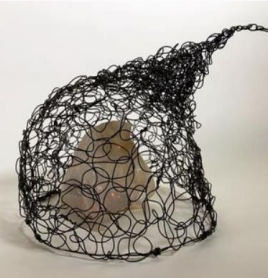
- Negative space is the activating force .Open forms interact with the environment.
- Closed independent form. Solid material taking up space.
- Closed independent form. Solid material taking up space.
- Negative space is the activating force .Open forms interact with the environment.
- Closed Form sculpture- A Solid Mass with the focus on how the sculpture occupies space.Positive space.
- Concave areas and openings will create shadows.
- Convex áreas that stand out Will be highlights.
Imagens e arquivos do mapa
Informações
- Descrição
- Mapa Mental sobre UNIT 7, criado por Noa Tello Martín em 18-05-2021.
- Criado por
- Noa Tello Martín · mai 2021
- Atualizado
- 18 mai 2021
- Visualizações
- 0
- Avaliação