
Mapa mental
Second Language Acquisition Processes and Theories
Conteúdo do mapa
Second Language Acquisition Processes and Theories
Jim Cummins' Theories of Bilingualism & Cognition
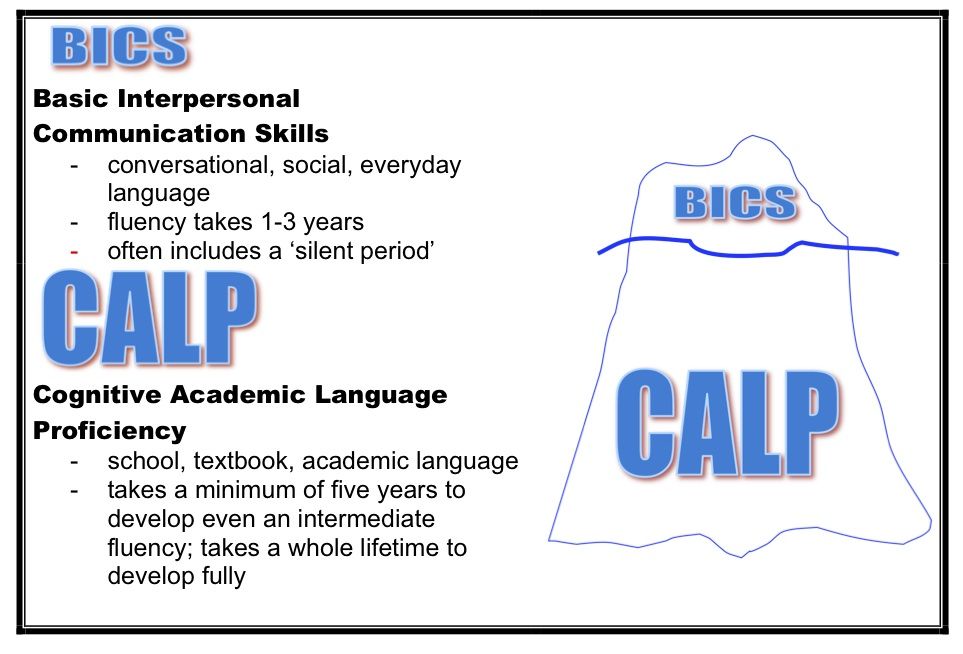
- Cognitive Academic Language Proficiency
- The language necessary to understand and discuss content in the classroom
- More abstract language
- Helps teachers identify and teach the type of language that students need to acquire for academic success in the classroom
- Cognitive Approach to Language
- Learners already have considerable knowledge of the world
- Critical Literacy
- Component of educational reform
- Literacy requires the literate consumers of text to adopt a critical and questioning approach.
- Component of educational reform
- Coercive vs. Collaborative Relations of Power
- Coercive- the exercise of power by a dominant group to the detriment of a subordinated group
- Collaborative- power can be generated in interpersonal relations
- Basic Interpersonal Communicative Skills
- Language children acquire in early years of life
- Conversational Fluency
- Cognitive Academic Language Proficiency
Noam Chomsky and Universal (or Transformational) Grammar
- "All human language rests on innate building blocks of expression"
- Every language...
- Can have its own unique features
- Shares the same basics of verbs, nouns, adjectives, etc.
- Language is a set of rules that human beings unconsciously know and use
- The goal of transformational grammar is to understand and describe these internalized rules
- Thought that children do not need to be taught language
- Examples of this in the classroom could be comparing the same phrase in multiple languages
Dell Hymes and Communicative Competence
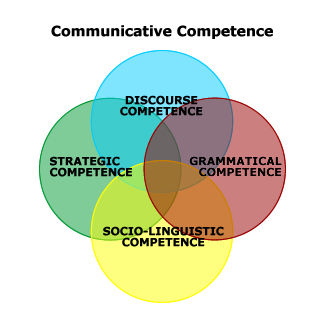
- The knowledge that enables language users to "convey and interpret messages and to negotiate meanings interpersonally within specific contexts."
- Involves social functions of language...
- Like requesting, agreeing, refusing, telling a story, etc.
- Task-Based Learning
- Students use real life language as they perform authentic activities that accomplish content objectives of the lesson
- Examples of using this in the classroom include role play, games and communicative activities
- Code-switching
- The alternating use of two languages on the word, phrase, or sentence level
- Used...
- To emphasize a point
- For ease and efficiency of expression
- Because a word is unknown in one of the languages
Lev Vygotsky and Social Constructivism
- Emphasizes the role of social interaction in the development of language and thought, where language joins with thought to create meaning
- Takes into account the role language plays in social interaction
- Zone of Proximal Development
- The distance between the actual developmental level as determined by independent problem solving and the level of potential development... under adult guidance or in collaboration with more capable peers
- Social interaction between adults and students occurs in this zone
- Examples of this in the classroom are when teachers have to adapt to the level of the student and provide guidance to help students work with eachother
- All teaching and learning takes place within the... found in families
- Memories
- Experiences
- Cultural habits
Larry Selinker's Interlanguage Theory
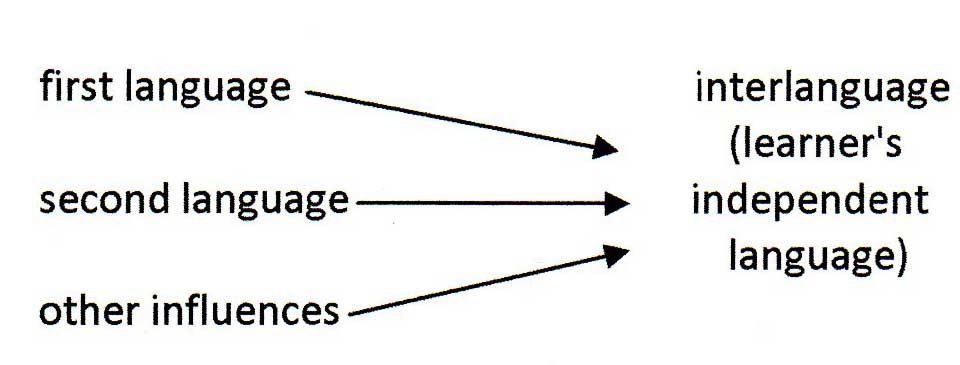
- Thought that in SLA, learners use 4 types of knowledge...
- Knowledge about the second language
- Competence in the native language
- Ability to use the functions of language
- General word knowledge
- The hypothesis asserted that the learners language should be viewed as creative and not as an incomplete form of the target language
- Second language learners draw from 3 sources of information...
- The rules of their own language
- A general knowledge about the way languages work
- Rules of the new language they acquire gradually
- Compatible with error analysis and data-driven teaching
- The teacher can use the errors the student makes when speaking or writing in the classroom to gain insight into the instruction that must follow later on in the class.
- Thought that in SLA, learners use 4 types of knowledge...
Stephen Krashen's Monitor Model
- Acquisition Learning Hypothesis
- Distinguishes SLA from learning
- Natural Order Hypothesis
- There is a predictable order of acquisition of English morphemes
- Children acquire correct usage of grammatical structures in their second language gradually
- Monitor Hypothesis
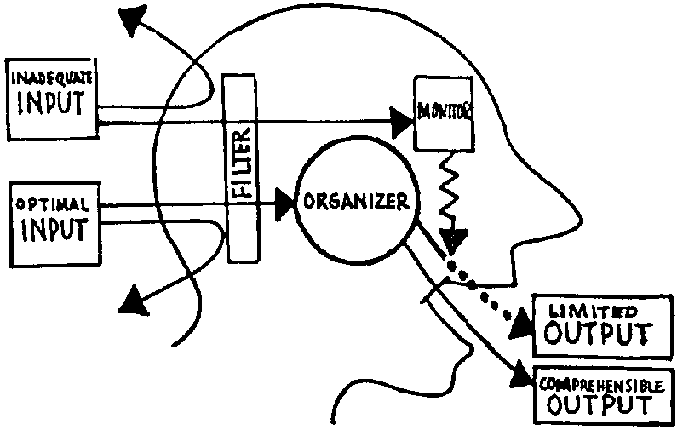
- The monitor is an error detecting mechanism
- It scans for accuracy and edits the utterance either before or after attempted communication
- It cannot always be used
- The monitor is an error detecting mechanism
- Input Hypothesis
- "Comprehensible" input
- Language is acquired in an "amazingly simple way-when we understand messages"
- Affective Filter Hypothesis
- Addresses emotional variables that can block input from reaching the language-acquisition device
- This model is best seen in classrooms where an encouraging environment promotes learning and raises self-esteem as students learn English
- Acquisition Learning Hypothesis
Imagens e arquivos do mapa


Informações
- Descrição
- CTRD week 3 assignment
- Criado por
- Catherine Wolfe
- Visualizações
- 59
- Tags
- Avaliação