
Mapa mental
OCR 21st Century C4
Conteúdo do mapa
OCR 21st Century C4
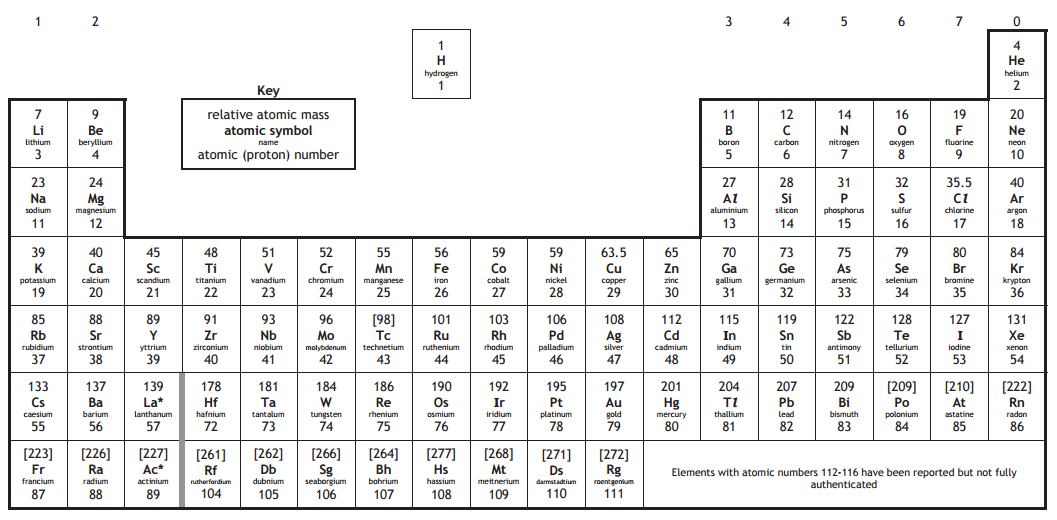
The Periodic table
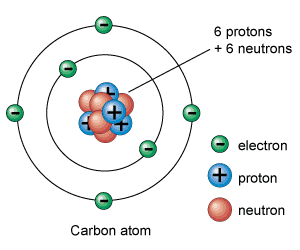
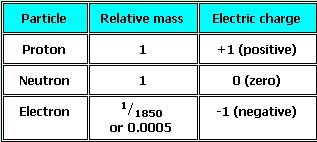
- protons
- atoms of each element have different proton numbers
- arranging the elements in order of their proton numbers gives repeating patterns in the properties of elements
- RAM= Protons + Neutrons
- atoms of each element have different proton numbers
- History
- Döbereiner- law of triads. He noticed that there were a number of groups where three elements have similar properties (calcium, strontium and barium). He also noticed that the relative atomic mass of the middle element was the mean of the relative atomic masses of the other two
- Newlands- Law of Octaves. He arranged all the elements known at the time into a table in order of relative atomic mass. When he did this, he found a pattern among the early elements. The pattern showed that each element was similar to the element eight places ahead of it. This only worked for the first 16th chemicals
- By ordering strictly, Newlands forced some elements into groups which did not match their chemical properties. E.g. He put iron (Fe), which is a metal, in the same group as oxygen (O) and sulphur (S) (non-metals).
- As a result, his table was not accepted by other scientists
- Mendeleev- Also arranged the elements known at the time in order of relative atomic mass
- He left gaps for unpredicted elements
- He predicted the properties of undiscovered elements
- He left gaps for unpredicted elements
- By ordering strictly, Newlands forced some elements into groups which did not match their chemical properties. E.g. He put iron (Fe), which is a metal, in the same group as oxygen (O) and sulphur (S) (non-metals).
- early attempts to find connections between the chemical properties of the elements and their relative atomic mass were dismissed by the scientific community
- Newlands- Law of Octaves. He arranged all the elements known at the time into a table in order of relative atomic mass. When he did this, he found a pattern among the early elements. The pattern showed that each element was similar to the element eight places ahead of it. This only worked for the first 16th chemicals
- Döbereiner- law of triads. He noticed that there were a number of groups where three elements have similar properties (calcium, strontium and barium). He also noticed that the relative atomic mass of the middle element was the mean of the relative atomic masses of the other two
- Period=Row
- Group=Column
- protons
Chemical Patterns
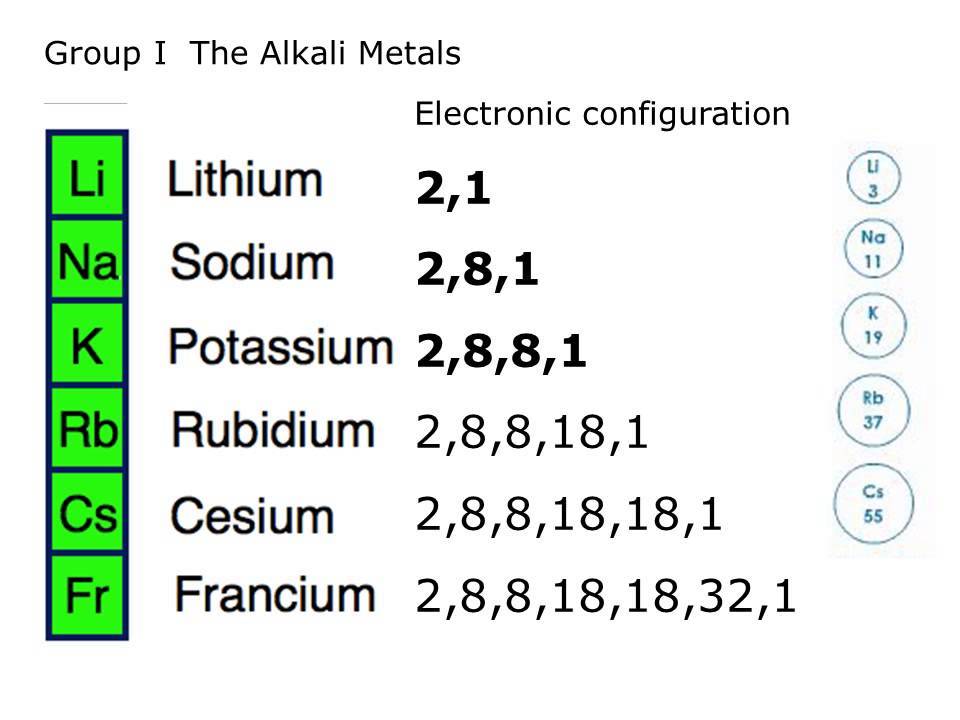
Group 1- The Alkali metals
- alkali metals are shiny when freshly cut but tarnish rapidly in moist air due to reaction with oxygen
- alkali metals react with water to form hydrogen and an alkaline solution of a hydroxide with the formula MOH
- alkali metals react vigorously with chlorine to form colourless, crystalline salts with the formula MCl
- When lithium is added to water, lithium floats. It fizzes steadily and becomes smaller, until it eventually disappears.
- When sodium is added to water, the sodium melts to form a ball that moves around on the surface. It fizzes rapidly, and the hydrogen produced may burn with an orange flame before the sodium disappears.
- When potassium is added to water, the metal melts and floats. It moves around very quickly on the surface of the water. The hydrogen ignites instantly. The metal is also set on fire, with sparks and a lilac flame. There is sometimes a small explosion at the end of the reaction.
- When sodium is added to water, the sodium melts to form a ball that moves around on the surface. It fizzes rapidly, and the hydrogen produced may burn with an orange flame before the sodium disappears.
- Reactivity
- The reactivity increases as you travel down the group. This is because the atomic radius increases, therefore as the distance between the positive nucleus and negative electrons increases, the electrostatic forces weaken meaning that it is easier for a valence electron to disassociate itself and react with another element
- Sweat from your skin is enough moisture to cause a reaction=corrosive hydroxide=blistering.
- Store in oil to prevent a reaction
- Dry aparatus
- Store in oil to prevent a reaction
- As you travel down they have a lower MP/BP and a higher density because the atoms have more mass
Hazard Symbols
- Explosive-
- Highly Flammable- Catches fire easily
- e.g. Ethanol and petrol
- Oxidising-Provides oxygen which allows other materials to burn more fiercly
- E..g liquid oxygen
- Toxic-Can cause death by swallowing, breathing in, absorption through skin etc.
- E.g. Lead oxide and hydrogen cyanide
- Corrosive- Attacks and destroys living tissues including eyes and skin.
- Gloves
- Goggles
- fume cupboard
- mask
- face shield
- wash
- safety screens
The Halogens
- The Halogens produce poisonous vapours that irritate the respiratory system and eyes. Fume Cupboard to be used.
- Liquid Bromine is corrosive
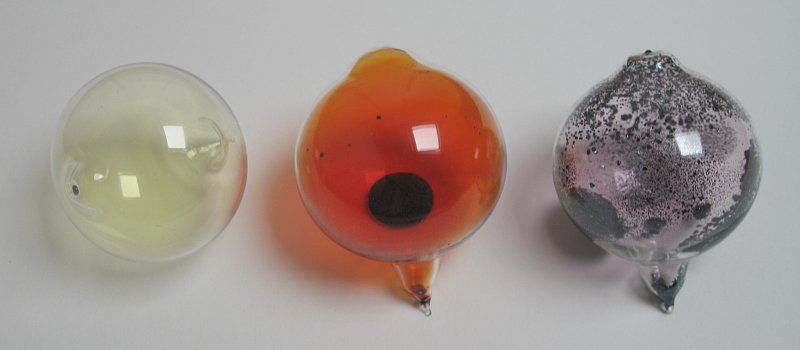
- Fluorine- Poisonous yellow gas
- Chlorine- Posionous Pale dense Green gas
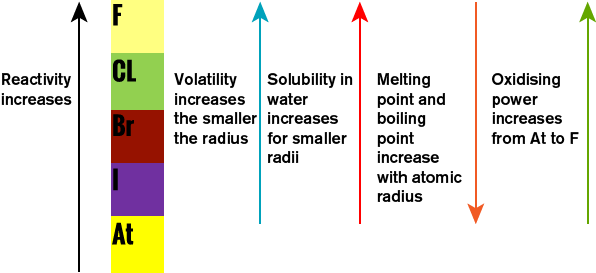
- The reactivity decreases as you travel down the group. This is because the valence electrons are further from the pull of the nucleus so additional electrons are attracted less strongly. Higher MB/BP down the group.
- The halogens react with alkali metals to form salts called metal halides e.g. NaCl, KBr and Lil. They react with iron to form coloured solids=iron halides.
- A displacement reaction is where a more reactive element pushes out (displaces) a less reactive element from a compound. Chlorine+Potassium Iodide-->Potassium Chloride+Iodine
- CL2(aq) + 2NaBr(aq)-->2NaCl(aq) + Br2(aq)
- A displacement reaction is where a more reactive element pushes out (displaces) a less reactive element from a compound. Chlorine+Potassium Iodide-->Potassium Chloride+Iodine
- As fluorine has fewer shells, it has enough force to attract other elctrons
- The halogens react with alkali metals to form salts called metal halides e.g. NaCl, KBr and Lil. They react with iron to form coloured solids=iron halides.
- The reactivity decreases as you travel down the group. This is because the valence electrons are further from the pull of the nucleus so additional electrons are attracted less strongly. Higher MB/BP down the group.
- Chlorine- Posionous Pale dense Green gas
- Bromine- Dense Poisonous orange volatile liquid. Orange gas
- Iodine- dark grey crystalline solid with a purple vapour
- All exist diatomically
- The Halogens produce poisonous vapours that irritate the respiratory system and eyes. Fume Cupboard to be used.
Atomic Structure
- number of electrons=number of protons
- all the atoms of the same element have the same number of protons
- a shell (or energy level) fills with electrons across a period
- the chemical properties of an element are determined by its electron arrangement
- a shell (or energy level) fills with electrons across a period
- all the atoms of the same element have the same number of protons
- number of electrons=number of protons
Spectroscopy
- some elements emit distinctive flame colours when heated
- Li
- Na
- K
- When elements are heated, the electrons are excited and release energy as light
- The wavelengths can be recorded as a line spectrum which is unique to each element as each element has a different electron configuration
- Spectroscopy has been used to discover new elements , some wouldn't have been discovered otherwise
- Helium in the spectra of the sun
- Caesium and Rubidium
- Helium in the spectra of the sun
- Spectroscopy has been used to discover new elements , some wouldn't have been discovered otherwise
- The wavelengths can be recorded as a line spectrum which is unique to each element as each element has a different electron configuration
- some elements emit distinctive flame colours when heated
Ionic Bonding
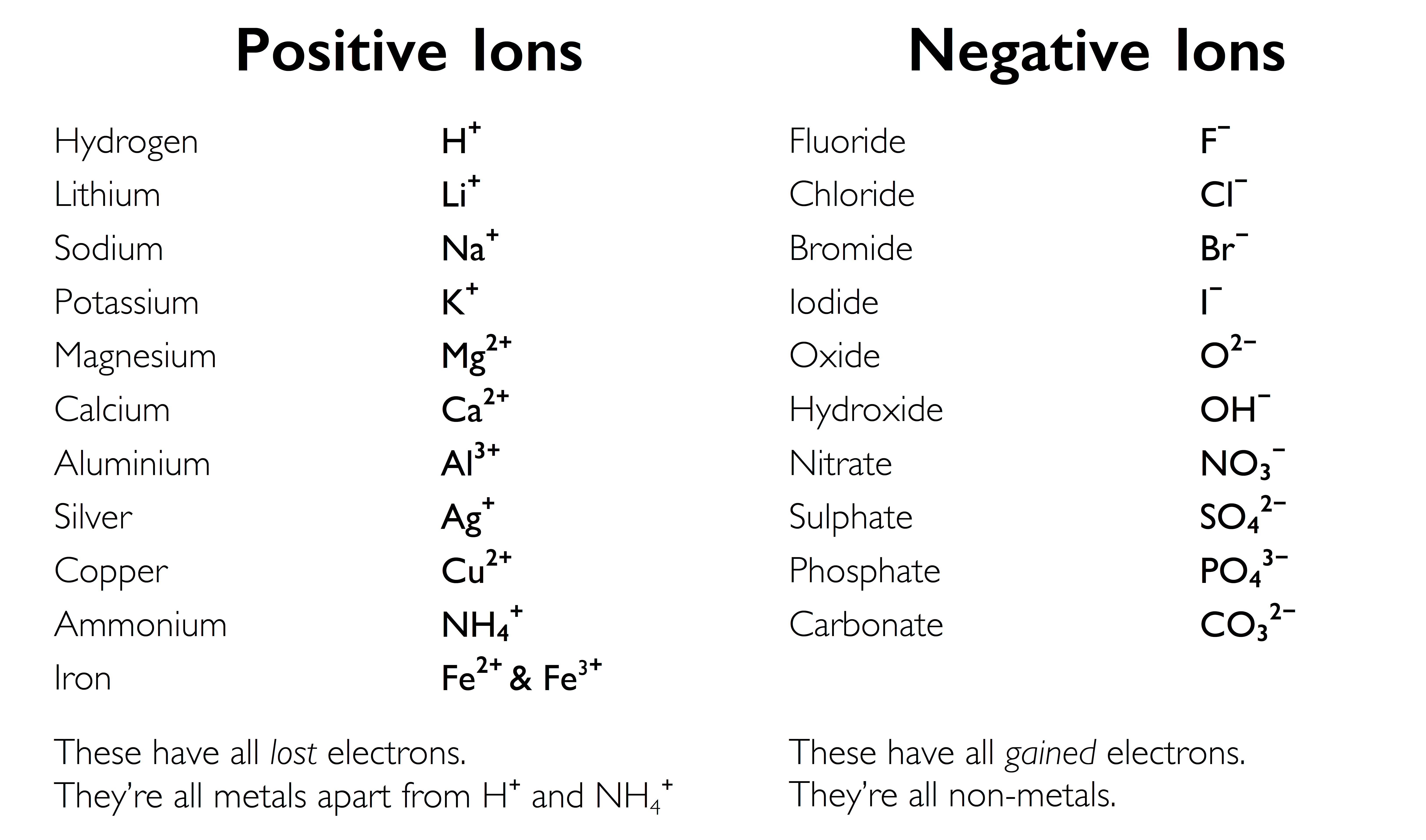
- ion is an atom (or group of atoms) that has gained or lost electrons and so has an overall charge
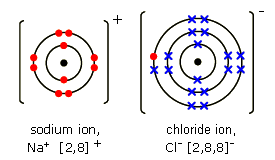
- G1 want to lose their outer electron to form a full shell. +
- G7 want to gain an electron to form a full shell. -
- Oppositely charged ions are strongly attracted to each other
- Therefore they tend to form ionic bonds
- E.g. A Na+ ion reacts with a Cl- ion to form NaCl
- Compounds formed between G1&G7 elements are held together by ionic bonds. They're ionic compunds
- Solid ionic compounds (NaCl) are made up of a giant ionic lattice. Each lattice forms a single crystal
- Ionic compounds can carry a charge when molten/dissolved as ions are free to move
- that fact that molten compounds of metals & non-metals conduct electricity is evidence that they are made up of ions
- Ionic compounds can carry a charge when molten/dissolved as ions are free to move
- Solid ionic compounds (NaCl) are made up of a giant ionic lattice. Each lattice forms a single crystal
- Therefore they tend to form ionic bonds
- ion is an atom (or group of atoms) that has gained or lost electrons and so has an overall charge
Ionic Formulas
- Iron (III) sulphate= Fe2(SO4)2
- Fe3+ & SO42-
- Iron (III) sulphate= Fe2(SO4)2
Imagens e arquivos do mapa


Informações
- Descrição
- GCSE Chemistry Mapa Mental sobre OCR 21st Century C4, criado por Pritesh Patel em 02-04-2016.
- Criado por
- Pritesh Patel
- Visualizações
- 5
- Avaliação