
Mapa mental
Cholera
Conteúdo do mapa
Cholera
Prokaryotic cells
- 'Before nucleus'
- No nucleus or nucleolus
- Only a diffuse area of nuclear material
- Circular strands of DNA and a plasmid but no chromosomes
- No membrane-bound organelles
- Smaller 70S ribosomes
- Cell wall made of peptidoglycan
- 'Before nucleus'
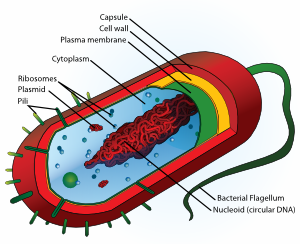
Bacterial cell
- Cell wall
- Protects against mechanical damage
- Excludes certain substances
- Made of peptidoglycan
- Capsule
- Slime layers that protects bacterium
- Sticks cells together
- Cell-surface membrane
- Differentially permeable membrane
- Flagellum
- Rigid, corkscrew shape
- Movement
- Circular DNA
- Genetic information for replication
- Plasmid
- Genes to aid survival (antibacterial resistance)
- Cell wall
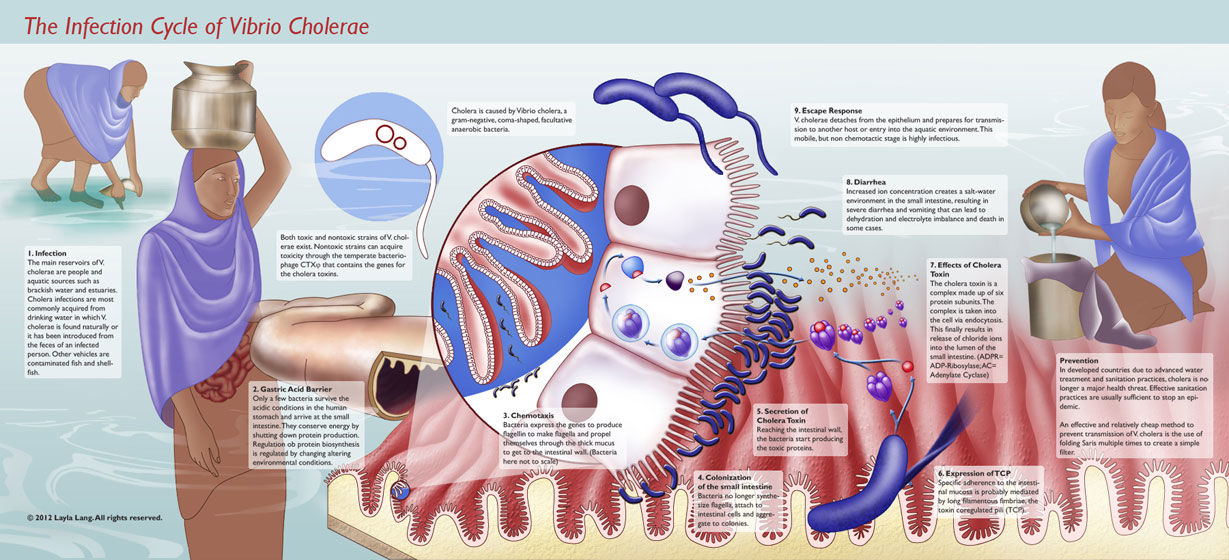
Vibrio cholerae
- Transmitted through water ingested and contaminated with faecal matter
- Most killed in stomach acid
- Produces a toxin
- Causes loss of microvilli
Mechanism of infection
- 1. Bacterium enters the small intestine and flagellum propels itself into mucus
- 2. Produces a toxin made up of two parts
- 3. One part binds to specific glycoprotein receptors of epithelial cells
- 4. The other toxic part enters the cells and causes chloride channel ions to open
- 5. Chloride ions flow into lumen of the small intestine
- 6. This raises the cells water potential and lowers the lumen's water potential
- 7. Ions move into the epithelial cells from the surrounding tissues and blood due to conc. gradient and loss of chloride ions
- 8. Water moves by osmosis from the cells and other tissues into the lumen
Symptoms
- Diarrhoea
- Dehydration
- Some show no symptoms
Treatment
- Oral rehydration threapy
- Makes use of alternative carrier proteins in epithelial cells
- Stimulates sodium ion uptake
- Drinking water is ineffective as intestine isn't absorbing water
- Water
- Rehydrate cells
- Sodium
- Make optimum use of sodium-glucose channel proteins
- Glucose
- Energy and sodium ion uptake
- Potassium
- Stimulate appetite
- Other electrolytes
- Prevent imblanace
- Oral rehydration threapy
Imagens e arquivos do mapa
Informações
- Descrição
- Overview of Cholera and treatment using ORT from AQA AS Biology Nelson Thornes book
- Criado por
- charharrison
- Visualizações
- 158
- Tags
- Avaliação