
Mapa mental
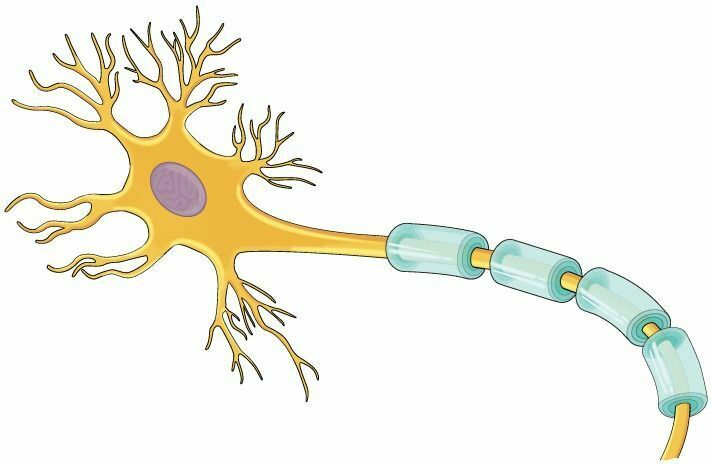
Axons
Conteúdo do mapa
Axons
Axon Hillock
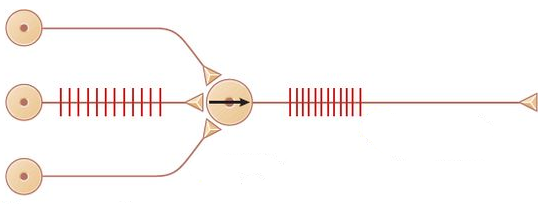
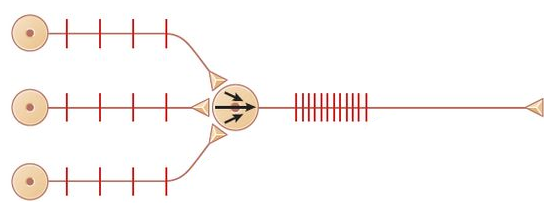
- Summation
- Temporal
- High-frequency stimulation by one presynaptic neuron
- Spacial
- Simultaneous stimulation by multiple presynaptic neurons
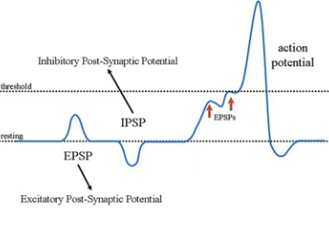
- IPSP: Inhibitory Post Synaptic Potentials
- Moves membrane potential further from threshold
- EPSP: Excitatory Post Synaptic Potentials
- Moves membrane potential closer to threshold
- Process of adding together multiple electrical impulses at the axon hillock to initiate an AP
- Temporal
- Action potentials
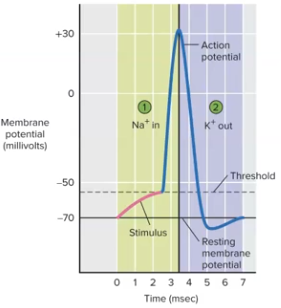
- Resting membrane potential = 70mV
- 1. Depolarization
- Occurs when stimulus causes membrane potential to reach -55mV (threshold), which triggers Na+ influx
- -55 mV → +30 mV
- Occurs when stimulus causes membrane potential to reach -55mV (threshold), which triggers Na+ influx
- 2. Repolarization
- Occurs when Na+ channels deactivate and K+ channels open, causing K+ efflux
- +30 mV → -70mV
- Occurs when Na+ channels deactivate and K+ channels open, causing K+ efflux
- 3. Hyperpolarization
- Occurs due to continued K+ efflux, membrane potential overshoots resting membrane potential
- -70 mV → -85 mV
- Occurs due to continued K+ efflux, membrane potential overshoots resting membrane potential
- 4. Recovery
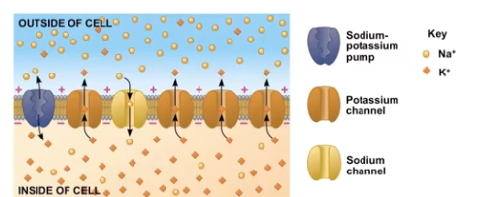
- Occurs when voltage gated channels close and Na+/K+ pump reestablishes resting membrane potential
- -85 mV → -70 mV
- Occurs when voltage gated channels close and Na+/K+ pump reestablishes resting membrane potential
- 1. Depolarization
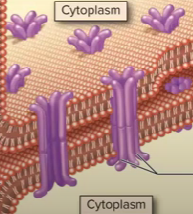
- Ion channels
- Leakage
- Channels that are always open
- Gated
- Ligand-gated
- Channels that open when a ligand binds to them
- Voltage-gated
- Channels that are closed at -70 mV and open by depolarization
- Na+: open at -55 mV
- K+: open at +30
- Channels that are closed at -70 mV and open by depolarization
- Ligand-gated
- Leakage
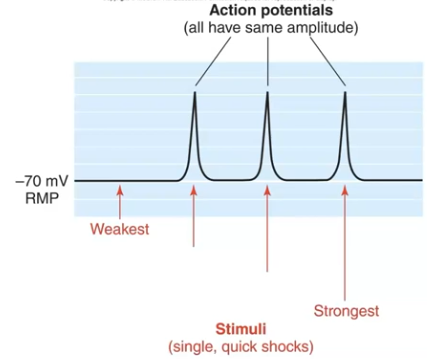
- All-or-None Law
- When stimulus intensity increases, action potentials increase in frequency and not in amplitude.. AP will occur if threshold is reached.
- Resting membrane potential = 70mV
- Summation
Axon Terminals
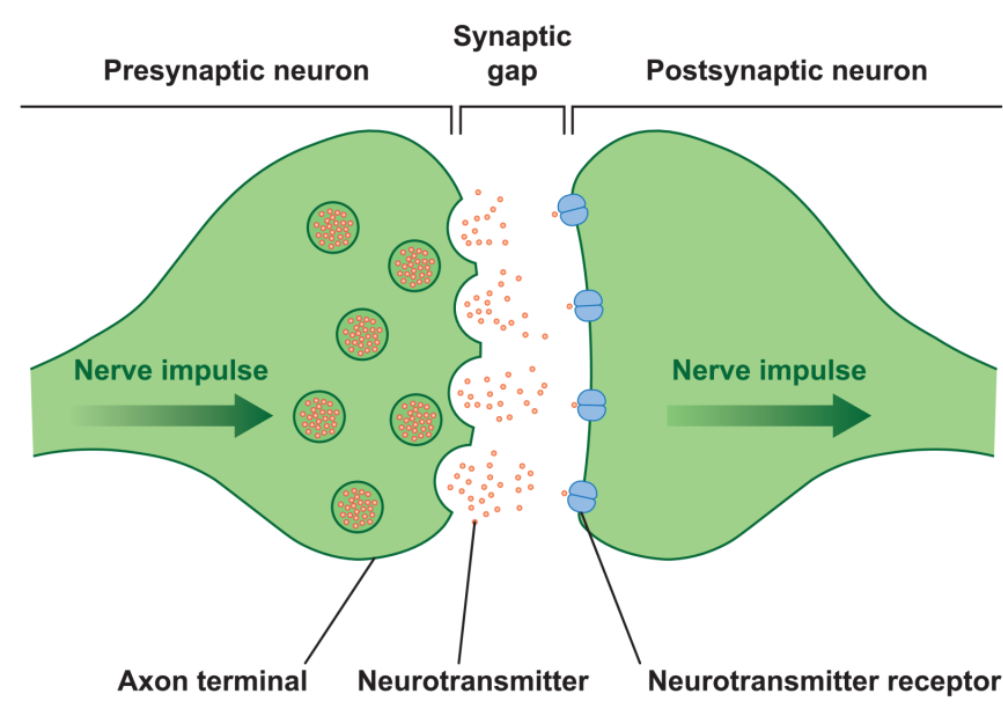
- Synapse
- Chemical
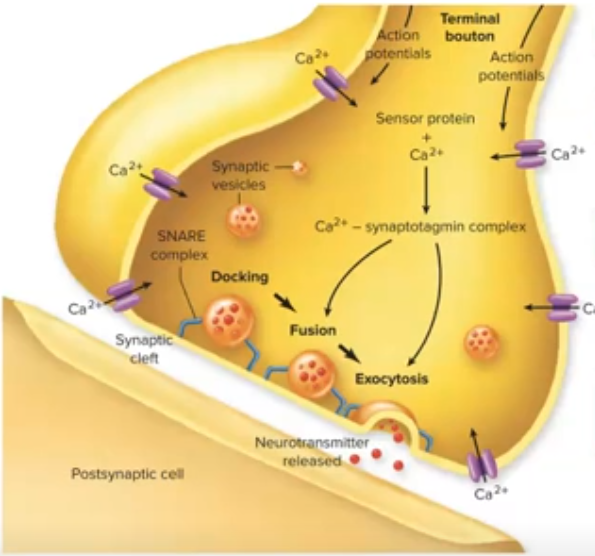
- Process:
- 1. Action potential reaches axon terminal
- 2. Calcium influx due to opened voltage-gated channels
- 3. Calcium binds to synaptotagmin
- 4. Vesicles with NT docked to membrane by SNARE
- 5. Vesicle fuses with membrane
- 6. NT released
- 5. Vesicle fuses with membrane
- 4. Vesicles with NT docked to membrane by SNARE
- 3. Calcium binds to synaptotagmin
- 2. Calcium influx due to opened voltage-gated channels
- 1. Action potential reaches axon terminal
- Neurotransmitters
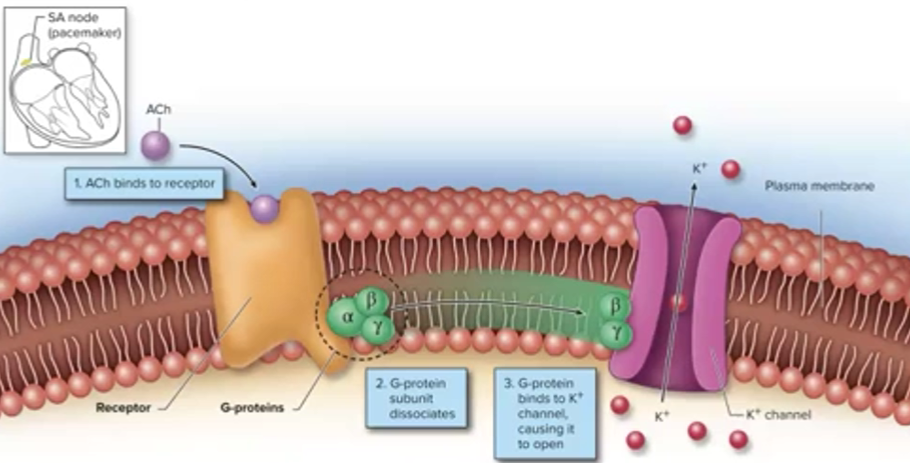
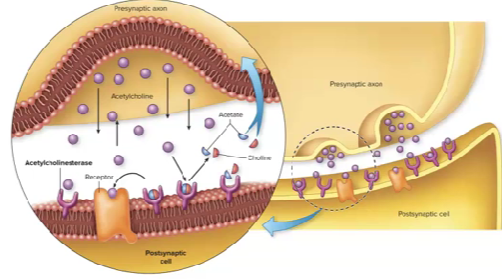
- Acetylcholine
- ACh reuptake
- Acetylcholinesterase inactivates ACh into acetate and choline; reused in presynaptic cell
- Muscarinic
- G-protein coupled receptors that can be both excitatory when closed or inhibitory when open
- Locations: Smooth & Cardiac muscle, Glands, & CNS
- Nicotinic
- Excitatory ligand-gated receptors
- Locations: Autonomic ganglia, Neuromuscular junctions, & Some CNS pathways
- Excitatory ligand-gated receptors
- ACh reuptake
- Agonists
- Drugs that stimulate a receptor
- Ex, Nicotine & Muscarine
- Antagonists
- Drugs that inhibit a receptor
- Ex, Curare & Atropine
- Monoamines, amino acids, neuropeptides, endocannabinoids, gases, & purines
- Acetylcholine
- Receptor Channels
- Ligand-gated
- NT binding directly opens channel
- G-protein coupled
- NT binding indirectly opens channel, uses G-proteins
- Ligand-gated
- Transfer across synaptic cleft
- Process:
- Electrical
- Gap Junctions
- Connexin proteins that allow for ions and molecules to pass between cells
- Direct cell-cell ion transfer
- Found in smooth & cardiac muscle, between some brain neurons & glial cells
- Gap Junctions
- Gap between Axon terminals and dendrites of another neuron
- Chemical
- Axon endings AKA terminal boutons
- Synapse
Myelin sheath
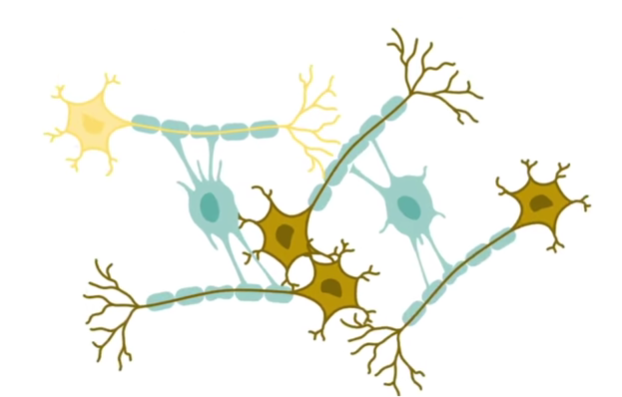
- Oligodendrocytes
- Form myelin sheaths around CNS axons
- Schwann cells
- Form myelin sheaths around peripheral axons
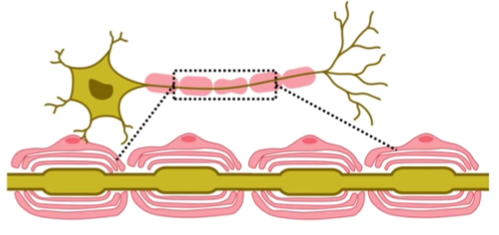
- Nodes of Ranvier
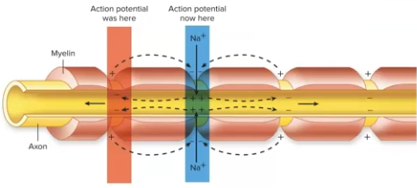
- Gaps in myelin that allow for increased conduction speed
- ↓
- ↓
- Insulating layer surrounding axons
- Oligodendrocytes
Nerve Impulse Conduction
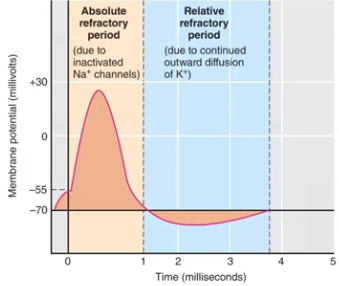
- Refractory period
- Absolute
- Voltage gated Na+ channels are temporarily inactivated; neuron incapable of firing another AP
- Relative
- Neuron capable of firing a second AP with a stronger stimulus due to some recovered Na+ channels & K+ efflux; occurs during hyperpolarization
- Absolute
- Saltatory conduction
- Allow Na+ and K+ to skip from node of Ranvier to node of Ranvier, speeding the speed of the action potential
- Axon diameter
- Reduces resistance, speeding up the speed of the action potential
- AP at one region serves as depolarization stimulus for the next region
- Refractory period
Imagens e arquivos do mapa

Informações
- Descrição
- Biology Mapa Mental sobre Axons, criado por Yusra Mostafa em 28-09-2024.
- Criado por
- Yusra Mostafa
- Visualizações
- 2
- Avaliação