
Mapa mental
CYOA-Concepts of Ch. 2
Conteúdo do mapa
CYOA-Concepts of Ch. 2
Changes in Energy and Chemical Reactions
- Chemical Reactions involve changes in bonds
- 9. How reactions occur
- Reactions that release energy occur on their own
- Reactions that absorb energy need an outside source
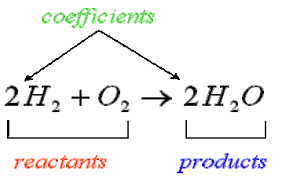
- 10. Parts of a reaction
- Chemical reaction - process that changes one set of chemicals into another
- Reactants - Elements/Compounds entering a chemical reaction
- Products - Elements/Compounds produces by a chemical reaction
- Activation energy - Energy needed to start a reaction
- Organisms must have a source of energy in order to carry out chemical reactions
Functions of Enzymes
- What enzymes are
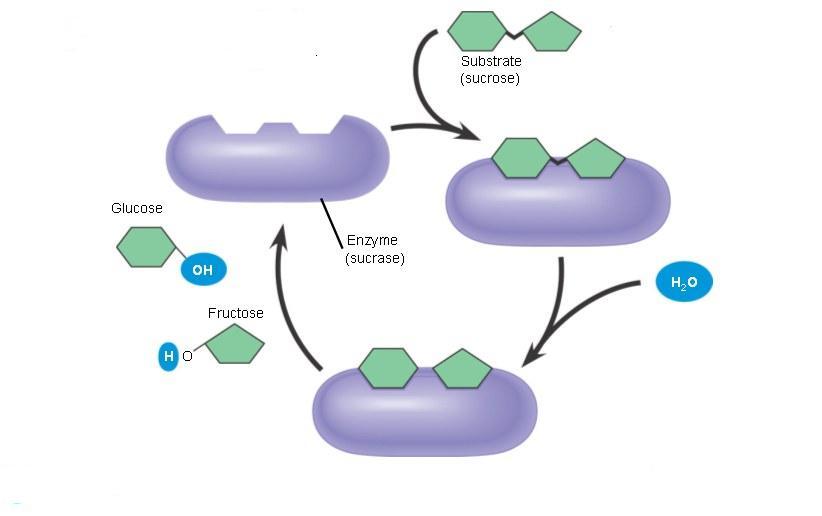
- Substrates - reactants of enzyme reactions, bind to active site of enzymes
- Provide a site where reactants are brought together to react
- Are biological catalysts, are in cells
- Catalyst - Substance that speeds up rate of Chemical Reaction
- Uses of enzymes
- Make needed materials
- Transfer information
- Control chemical pathways
- release energy
- 8. How enzymes are affected
- Activity can be affected by temperature, pH, and regulatory molecules
- Can be switched "on" and "off" by regulatory molecules
- What enzymes are
Qualities of Carbon
- Carbon bonds
- 1. Elements it can bond with
- Can bond with many elements including H, O, P, S, and N
- Can form molecules of life with these elements
- 2. Types of bonds
- Can form strong covalent bonds
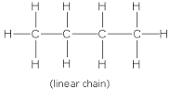
- Carbons can bind to each other, forming chains
- Can form single, double, or triple covalent bonds
- 1. Elements it can bond with
- Have 4 valence electrons
- Carbon bonds
The four groups of macromolecules
- Smaller units - monomers - join to form larger units - polymers
- Carbohydrates
- Consist of C,H, and O
- 3. Uses of Carbs
- Main source of energy
- Also used for structure
- Is sugar, stored as starch
- 4. Types of sugar molecules
- Polysaccharides - molecules composed of several sugars - includes glycogen
- Monosaccharides - molecules that are only one sugar - includes glucose, galactose, fructose
- Lipids
- consist of mostly C and H
- Uses of lipids
- Another form of energy storage
- Also used for waterproofing
- Are formed when glycerol combines with fatty acids
- 6. Types of lipids
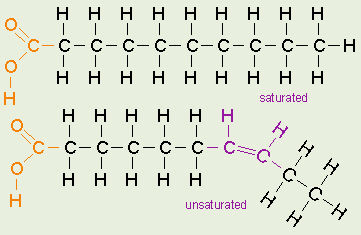
- Saturated - fatty acids cannot hold any more H atoms
- Unsaturated - Contains at least 1 C=C bond
- Proteins
- Consist of N, C, H, and O
- made of amino acids - made of an amino acid group and a carboxyl group
- 7. Uses of proteins
- Control rate of reactions
- Form important cellular structures
- Regulate cell processes
- Transport substances in and out of cells
- Fight disease
- Amino acid bonding
- Any amino acid can join with another
- By bonding an amino group to a carboxyl group
- Nucleic Acids
- Store and transmit genetic information
- Are DNA and RNA
- 5. What they are made of
- Consists of H, O, N, C, and P
- Made of nucleotides - made of 5-carbon sugar, P group, and nitrogenous base
Imagens e arquivos do mapa
Informações
- Descrição
- Overview of Chapter 2, 2.3-2.4
- Criado por
- epicmcjaguar
- Visualizações
- 46
- Tags
- Avaliação